
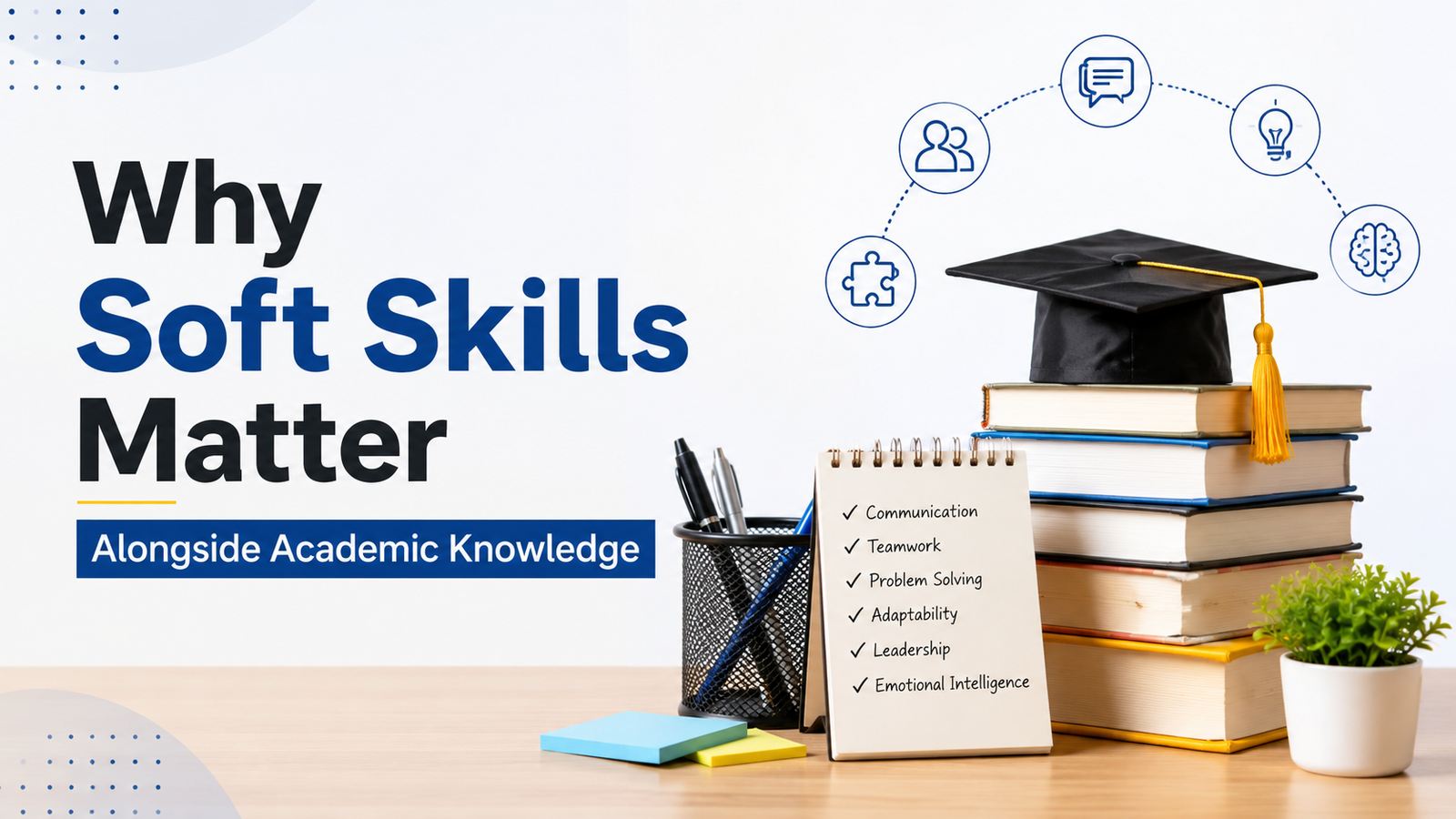
Success in today's world requires more than excellent grades. While academic knowledge provides the foundation for learning, soft skills such as communication, teamwork, leadership, problem-solving, and adaptability help students apply that knowledge effectively in real-life situations. This blog explores why soft skills are just as important as academic achievement, how they improve employability and personal growth, and practical ways students and educational institutions can develop these essential life skills for long-term success.
For decades, academic excellence has been regarded as the primary measure of a student's success. High grades, top exam scores, and impressive qualifications have traditionally opened doors to higher education and promising career opportunities. While academic knowledge remains the foundation of learning, today's rapidly evolving world requires much more than textbook expertise.
Modern workplaces and educational institutions increasingly value individuals who can communicate effectively, collaborate with others, solve complex problems, and adapt to change. These qualities, known as soft skills, complement technical knowledge and help individuals succeed in both their personal and professional lives.
In today's competitive environment, academic achievements may help students secure opportunities, but soft skills enable them to excel. Developing a balance between the two is essential for long-term success.
Soft skills are personal attributes and interpersonal abilities that influence how individuals interact, communicate, and work with others. Unlike technical or academic skills, soft skills are not tied to a specific subject or profession. Instead, they shape how effectively a person performs in different situations.
Some of the most valuable soft skills include:
These skills help students become confident learners and prepare them for future academic, professional, and personal challenges.
Academic knowledge equips students with theoretical understanding and subject expertise. However, success in real life often depends on how effectively individuals apply that knowledge.
A student may score exceptionally well in examinations but struggle during interviews because of poor communication skills. Likewise, an employee with excellent technical expertise may find it difficult to advance if they cannot work effectively within a team or manage workplace relationships.
Today's employers seek professionals who can:
The gap between classroom learning and workplace expectations continues to grow. Therefore, students must develop both academic knowledge and practical soft skills to remain competitive.
Communication is one of the most essential life skills. Whether presenting ideas in class, participating in discussions, attending interviews, or interacting with colleagues, clear communication creates confidence and builds trust.
Effective communication involves:
Strong communicators often become better leaders, collaborators, and decision-makers.
Success rarely happens in isolation. Most academic projects and professional assignments require collaboration with others.
Teamwork helps students:
Students who actively participate in group activities become more adaptable and cooperative.
Leadership is not limited to managerial positions. It involves taking initiative, inspiring others, and making responsible decisions.
Students develop leadership by:
Leadership skills increase confidence and prepare students for future career opportunities.
Academic knowledge provides information, while soft skills help apply that information effectively.
Problem-solving requires students to:
Employers highly value individuals who can solve problems independently and efficiently.
Technology, industries, and work environments continue to evolve rapidly. Students who embrace change are better prepared for future challenges.
Adaptability enables learners to:
Lifelong learning has become an essential part of career success.
Developing soft skills offers numerous advantages throughout a student's educational journey.
Students become more confident in asking questions, sharing opinions, and participating in discussions.
Time management, organization, and effective communication contribute to improved learning outcomes.
Public speaking, teamwork, and leadership opportunities help students overcome self-doubt.
Good interpersonal skills foster positive relationships with classmates, teachers, mentors, and peers.
Students become more comfortable delivering presentations, participating in debates, and explaining ideas.
Employers consistently rank soft skills among the most important qualities they seek in new hires.
In today's job market, employers recognize that technical skills can often be taught through training. Soft skills, however, are more difficult to develop and are essential for long-term success.
Organizations value employees who can:
Candidates who combine technical expertise with strong interpersonal abilities often enjoy faster career growth and better leadership opportunities.
Educational institutions play a vital role in shaping well-rounded individuals. Beyond academics, schools and colleges can provide opportunities that encourage personal growth.
Effective methods include:
Students learn collaboration, communication, and responsibility through team assignments.
Public speaking activities improve confidence, critical thinking, and persuasion skills.
Regular presentations strengthen communication and reduce stage fear.
Sports, cultural events, music, drama, and competitions promote discipline, teamwork, and creativity.
Participation in clubs encourages networking, leadership, and organizational skills.
Community service develops empathy, responsibility, and social awareness.
Student councils and leadership workshops prepare learners to manage responsibilities effectively.
Internships expose students to professional environments where they apply both academic knowledge and soft skills in real-world situations.
Developing soft skills requires consistent practice and self-awareness. Students can begin with simple daily habits.
Small improvements made consistently can lead to significant personal growth over time.
Many students unknowingly limit their potential by overlooking the importance of soft skills.
Some common mistakes include:
Recognizing these habits is the first step toward becoming a more capable and confident learner.
Academic knowledge and soft skills should not be viewed as competing priorities. Instead, they work together to create successful individuals.
Academic knowledge provides:
Soft skills provide:
Students who master both are better prepared to navigate higher education, workplace challenges, and lifelong career growth.
A university student with excellent grades also volunteered as the president of a student club. Through organizing events and leading teams, they developed communication and leadership skills that impressed recruiters during campus placements.
An engineer possessed strong technical expertise but gained promotions because of exceptional teamwork, adaptability, and the ability to manage client relationships. Their soft skills distinguished them from equally qualified colleagues.
Students who complete internships often gain valuable experience by working with professionals, meeting deadlines, solving practical problems, and communicating effectively. These experiences bridge the gap between classroom learning and industry expectations.
Academic excellence remains an essential part of education, providing students with the knowledge and technical expertise needed to pursue their goals. However, knowledge alone is no longer enough in today's dynamic and interconnected world.
Soft skills such as communication, teamwork, leadership, adaptability, emotional intelligence, and problem-solving empower students to apply their academic learning effectively in real-life situations. These skills not only enhance classroom performance but also improve employability, career progression, and personal development.
For students, parents, educators, and educational institutions, the goal should not be to choose between academics and soft skills but to nurture both equally. When knowledge is combined with confidence, collaboration, and strong interpersonal abilities, students become well-rounded individuals who are prepared to succeed in education, the workplace, and life.
