

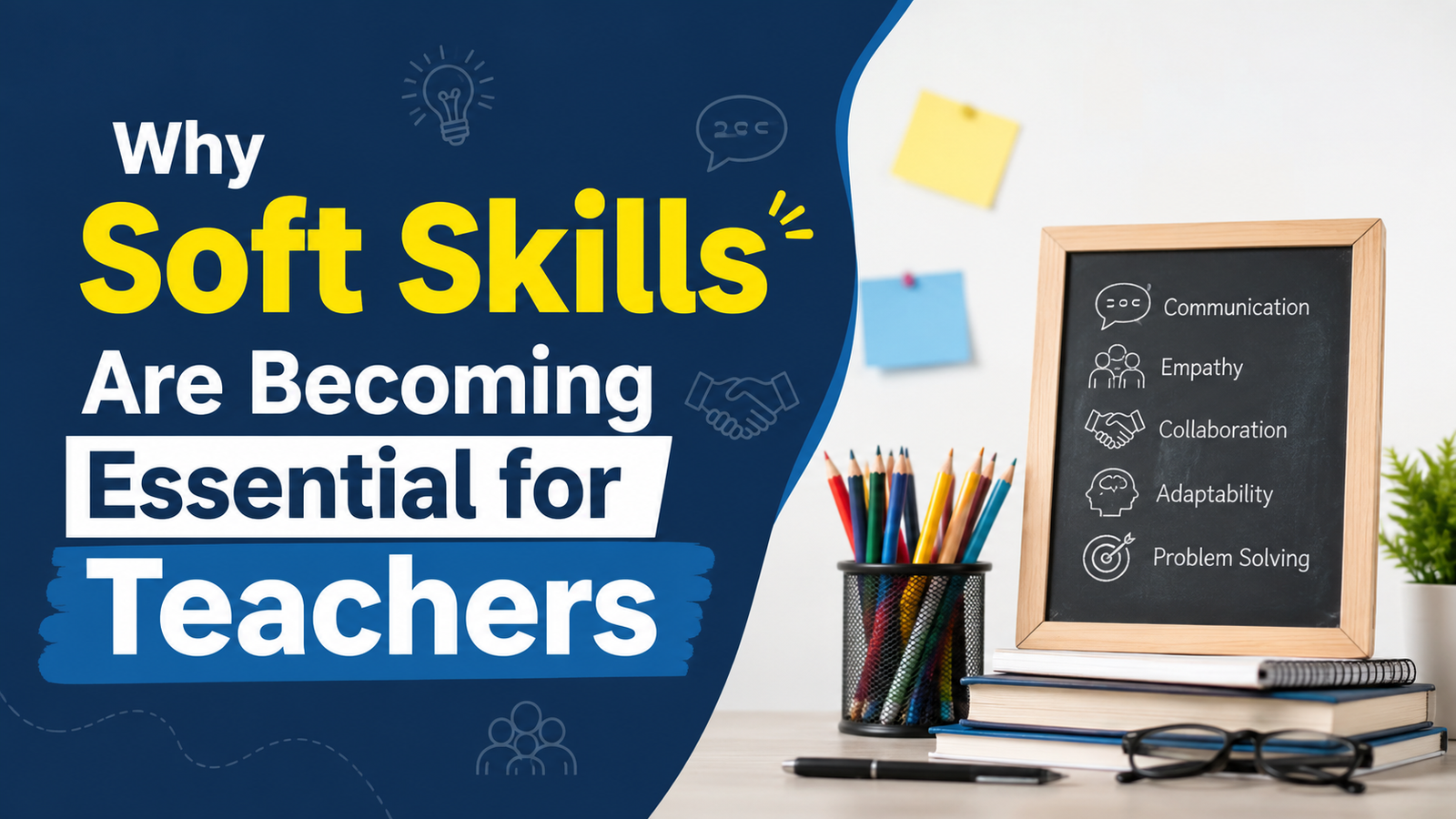
Modern teaching demands more than academic knowledge. Soft skills like communication, empathy, adaptability, and leadership enable teachers to connect with students, manage diverse classrooms, and create meaningful learning experiences. Discover why these essential skills are shaping the future of education and helping educators thrive in today's dynamic classrooms.
Teaching has always been about more than delivering lessons and grading assignments. In today's rapidly evolving educational landscape, teachers are expected to be mentors, motivators, communicators, problem-solvers, and role models. With advancements in technology, diverse classrooms, and changing student expectations, the role of educators has expanded far beyond traditional instruction.
While subject expertise remains the foundation of effective teaching, it is no longer enough on its own. Students today need guidance that extends beyond academics, requiring teachers to build meaningful relationships, encourage collaboration, and create inclusive learning environments. This is where soft skills come into play.
Soft skills—such as communication, emotional intelligence, adaptability, and leadership—help teachers connect with students, manage classrooms effectively, and foster positive learning experiences. As education continues to evolve, these interpersonal skills are becoming just as valuable as technical teaching abilities. In this article, we'll explore why soft skills are now essential for teachers and how they contribute to better educational outcomes.
Soft skills are personal attributes and interpersonal abilities that enable individuals to communicate effectively, collaborate with others, solve problems, and adapt to changing situations. Unlike technical or subject-specific knowledge, soft skills focus on how people interact, build relationships, and respond to challenges.
Understanding the difference between soft skills and hard skills is important for educators.
Hard Skills include:
Soft Skills include:
While hard skills help teachers deliver content effectively, soft skills enable them to create engaging, supportive, and motivating learning environments.
Education is fundamentally about human interaction. Every classroom is filled with students who have different learning styles, personalities, backgrounds, and emotional needs. Teachers with strong soft skills can better understand these differences, encourage participation, and build trust with their students.
These abilities not only improve classroom management but also inspire confidence, curiosity, and lifelong learning.
Modern education is experiencing significant transformation due to technological advancements, evolving teaching methods, and increasing expectations from society.
Artificial Intelligence (AI), smart classrooms, and digital learning platforms are reshaping education. While technology automates administrative tasks and provides personalized learning experiences, it cannot replace the empathy, encouragement, and human connection that teachers provide.
As technology handles routine processes, teachers must focus more on communication, mentorship, and emotional support.
Today's classrooms emphasize active participation rather than passive listening. Students are encouraged to ask questions, collaborate, solve problems, and think critically.
Teachers must guide discussions, facilitate teamwork, and adapt their teaching strategies based on students' individual needs.
Schools now welcome students from different cultural, linguistic, and educational backgrounds. Inclusive education also ensures equal opportunities for students with varying learning abilities.
Teachers need empathy, patience, cultural awareness, and strong communication skills to create welcoming classrooms where every student feels valued.
Parents expect teachers to support not only academic growth but also emotional development and life skills. Educational institutions increasingly seek teachers who can lead, collaborate, and build strong relationships with students and families.
Soft skills help educators meet these growing expectations successfully.
Clear communication helps teachers explain concepts effectively, encourage discussions, and provide constructive feedback. Strong communication also builds trust with parents, colleagues, and school administrators.
Emotional intelligence enables teachers to understand their own emotions while recognizing and responding appropriately to students' feelings. It helps create emotionally safe classrooms where students feel respected and supported.
Education is constantly changing. Teachers often adjust lesson plans, adopt new technologies, or manage unexpected classroom situations. Adaptability allows educators to respond confidently to these changes.
Every classroom presents unique challenges, from learning difficulties to behavioral issues. Teachers with strong problem-solving skills can identify solutions quickly while maintaining a positive learning environment.
Teachers lead classrooms every day. Effective leadership includes setting expectations, motivating students, managing behavior, and fostering responsibility among learners.
Education is a collaborative effort involving teachers, parents, counselors, administrators, and support staff. Teamwork ensures students receive comprehensive guidance and support.
Teachers juggle lesson planning, grading, meetings, extracurricular activities, and professional development. Effective time management improves productivity while reducing stress.
Creative teaching methods make lessons engaging and memorable. Innovative educators use storytelling, technology, group activities, and project-based learning to inspire curiosity and critical thinking.
Disagreements among students, misunderstandings with parents, or classroom conflicts require calm and constructive resolution. Teachers who manage conflicts effectively maintain a positive learning atmosphere.
Critical thinking enables teachers to analyze situations objectively, evaluate teaching strategies, and make informed decisions that improve student learning.
Teachers who communicate effectively and encourage participation create classrooms where students actively engage in learning rather than simply memorizing information.
Students perform better when they feel respected, understood, and supported. Positive relationships increase trust, participation, and academic motivation.
Supportive teachers encourage students to ask questions, share ideas, and embrace challenges without fear of failure. This boosts self-confidence and resilience.
Students are more likely to succeed academically when they learn in positive environments where teachers provide encouragement, clear guidance, and constructive feedback.
Teachers who model teamwork and communication help students develop collaboration skills that are essential for higher education and future careers.
Strong communication and classroom management skills minimize misunderstandings, behavioral challenges, and unnecessary conflicts.
Soft skills improve collaboration with colleagues, school leaders, and parents, creating a supportive professional environment.
Educational institutions increasingly value teachers who demonstrate leadership, teamwork, and strong interpersonal skills. These qualities often lead to promotions and leadership roles.
Positive relationships with students and colleagues contribute to greater fulfillment and motivation throughout a teaching career.
Teachers with excellent soft skills often become department heads, instructional coaches, mentors, or school administrators.
Digital learning has made soft skills even more important.
Online classes require teachers to actively encourage participation through discussions, polls, collaborative projects, and interactive activities.
Clear instructions, timely responses, and regular feedback help students stay connected and motivated in virtual learning environments.
Without face-to-face interaction, students may lose focus or confidence. Teachers who demonstrate empathy and encouragement help maintain motivation and accountability.
Online classroom management requires patience, organization, adaptability, and effective communication to ensure productive learning experiences.
Attending professional development programs helps teachers strengthen leadership, communication, and classroom management skills.
Specialized workshops provide practical techniques for improving emotional intelligence, conflict resolution, and collaborative teaching.
Observing experienced educators and participating in mentoring programs allows teachers to learn effective interpersonal strategies.
Reflecting on classroom experiences helps teachers identify strengths, recognize improvement areas, and refine their teaching approaches.
Soft skills improve through consistent practice. Every classroom interaction presents opportunities to strengthen communication, empathy, and leadership.
Professional learning communities, educator networks, and online forums encourage collaboration, knowledge sharing, and continuous improvement.
Despite their importance, developing soft skills can be challenging.
Busy teaching schedules often leave little time for professional development and self-improvement.
Some educators may be hesitant to adopt new teaching approaches or develop unfamiliar interpersonal skills.
Not all schools provide structured programs focused on soft skill development.
While technology enhances learning, teachers must ensure digital tools do not replace meaningful human connections with students.
Recognizing these challenges is the first step toward overcoming them through ongoing learning and institutional support.
Education will continue to evolve with advancements in artificial intelligence, automation, and digital learning technologies. However, the human aspects of teaching will become even more valuable.
AI can personalize lessons, automate grading, and provide instant feedback, but it cannot replace empathy, encouragement, emotional understanding, or meaningful relationships.
Future-ready educators will combine technical expertise with exceptional interpersonal skills. Teachers who communicate effectively, adapt to change, inspire students, and foster inclusive learning environments will remain indispensable in modern education.
Soft skills are not replacing hard skills—they are enhancing them.
The role of teachers has transformed significantly in recent years. Beyond delivering academic content, educators are now expected to inspire, mentor, collaborate, and support students in ways that technology alone cannot.
Soft skills such as communication, emotional intelligence, adaptability, leadership, and creativity have become essential for building positive classroom environments and improving student outcomes. These skills help teachers connect with learners, navigate challenges, and prepare students for success both inside and outside the classroom.
As education continues to evolve, investing in soft skill development is no longer optional—it's a necessity. Teachers who embrace continuous learning and strengthen their interpersonal abilities will be better equipped to meet the demands of modern classrooms and make a lasting impact on the lives of their students.
After all, great teachers are remembered not only for what they teach but for how they inspire, encourage, and empower every learner they encounter.
