

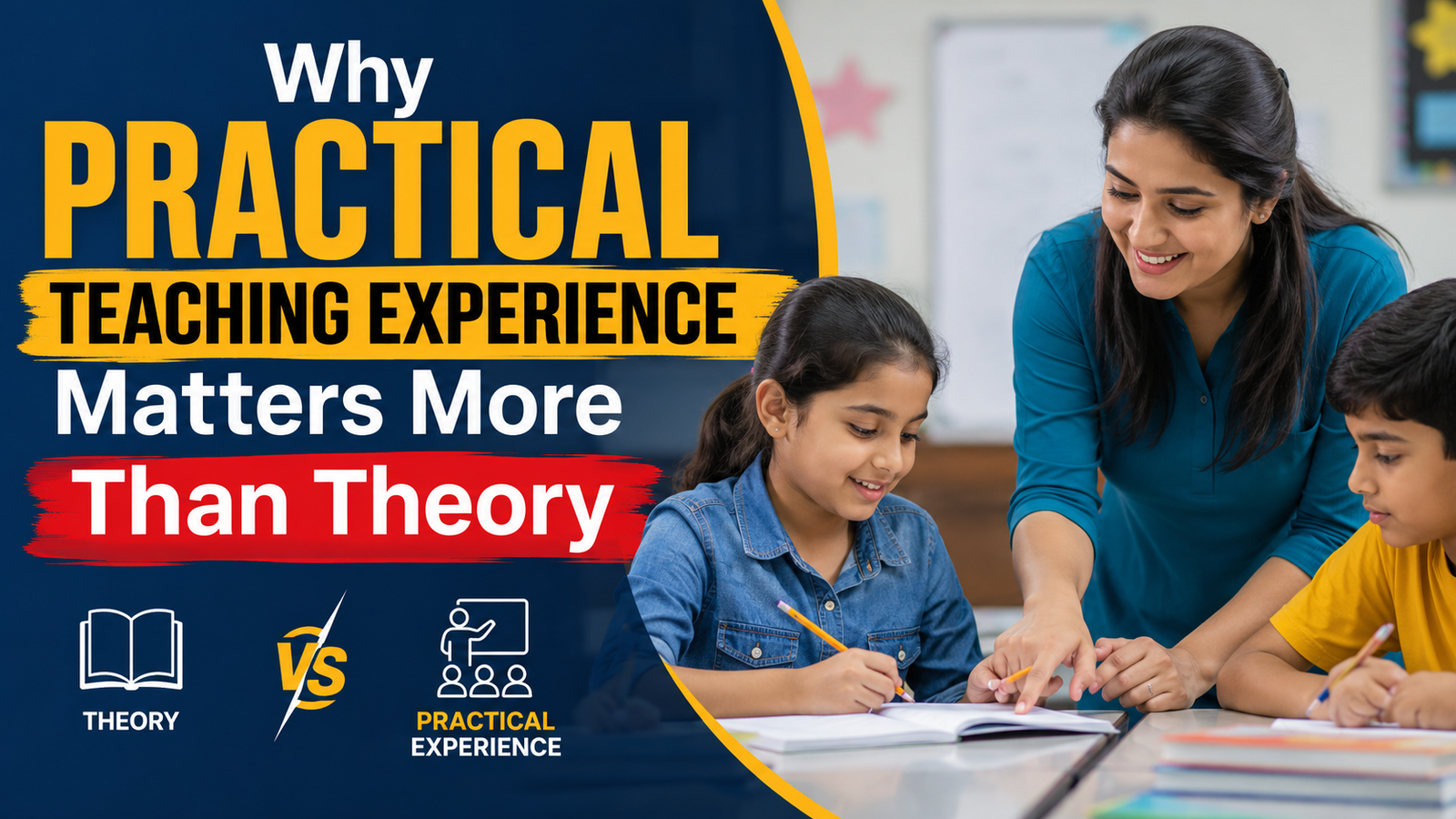
Great teachers aren't made by theory alone—they're shaped through real classroom experience. While educational theories provide essential knowledge and teaching frameworks, practical experience helps educators build confidence, manage classrooms effectively, adapt to diverse learning needs, and develop strong communication skills. In this article, explore why hands-on teaching experience is crucial for professional growth and how combining theory with practice creates confident, effective, and impactful educators.
Can someone become a great teacher simply by reading books? While educational theories provide valuable insights into how students learn, they cannot fully prepare teachers for the realities of a classroom. Every classroom is unique, filled with students who have different learning styles, personalities, and challenges. The ability to manage these dynamics comes not from textbooks alone but from real-world teaching experience.
Teaching is both an art and a science. Theory lays the foundation by introducing teaching principles, learning psychology, and instructional strategies. However, it is practical teaching experience that transforms these concepts into meaningful classroom practices. Through hands-on experience, teachers learn to adapt, communicate effectively, solve problems quickly, and build positive relationships with students.
In this article, we'll explore why practical teaching experience often matters more than theory, how it helps educators develop essential skills, and why the best teachers combine both knowledge and experience to create impactful learning environments.
Teaching theory refers to the educational principles, research, and methodologies that guide how teachers plan lessons, deliver instruction, and assess student learning. It provides educators with a framework for understanding how students think, learn, and develop.
Some well-known educational theories include:
These theories help teachers understand instructional strategies, curriculum planning, classroom assessment, and student motivation. They also introduce evidence-based practices that improve teaching effectiveness.
However, theory alone has limitations. Educational models often describe ideal classroom situations, while real classrooms are far more unpredictable. Students may respond differently than expected, lessons may not go as planned, and unexpected challenges arise every day. Without practical experience, it can be difficult to apply theoretical concepts effectively.
Practical teaching experience involves applying educational knowledge in real classroom settings. It allows aspiring teachers to interact directly with students, implement lesson plans, manage classrooms, and reflect on their teaching methods.
Common forms of practical teaching experience include:
During these experiences, teachers develop essential professional skills that cannot be learned through textbooks alone. They learn how to communicate with students, manage classroom behavior, adapt lessons to different learning needs, and respond confidently to unexpected situations.
Most importantly, practical teaching transforms theoretical understanding into real teaching competence.
Confidence develops through experience. Standing in front of a classroom for the first time can be intimidating, regardless of how much educational theory someone has studied.
Through practical teaching, educators gradually become comfortable with:
Each classroom experience builds confidence and prepares teachers for increasingly complex teaching situations.
One of the biggest challenges new teachers face is classroom management.
While theory explains different behavior management techniques, real classrooms require teachers to make immediate decisions based on student behavior and classroom dynamics.
Practical teaching helps educators learn how to:
These skills improve only through consistent classroom practice.
Effective teaching depends on clear communication.
Teachers must explain complex concepts in ways that students understand while encouraging participation and discussion.
Practical teaching develops communication skills by helping educators:
Strong communication creates better learning experiences and stronger student-teacher relationships.
No classroom operates exactly as planned.
Technology may fail, students may struggle with lessons, unexpected disruptions may occur, or lesson plans may require immediate adjustments.
Practical teaching teaches educators to:
Problem-solving becomes second nature through repeated classroom experiences.
Educational theories become meaningful only when teachers learn how to apply them effectively.
For example, a teacher may understand collaborative learning techniques but only practical experience reveals:
Practical teaching bridges the gap between educational knowledge and successful classroom implementation.
Successful teachers do much more than deliver lessons—they understand their students.
Practical teaching helps educators develop emotional intelligence by learning to:
These interpersonal skills contribute significantly to student success and classroom harmony.
Imagine a new teacher entering a classroom for the first time. Despite excellent academic preparation, students begin asking unexpected questions, classroom discussions take unexpected directions, and some learners lose focus.
Instead of following the lesson plan exactly, the teacher adjusts activities, changes explanations, and encourages participation. After class, a mentor provides constructive feedback that helps improve future lessons.
With each teaching session, confidence grows, classroom management improves, and instructional strategies become more effective.
This continuous learning process is one of the greatest advantages of practical teaching experience.
| Teaching Theory | Practical Teaching Experience |
|---|---|
| Provides educational concepts | Develops real teaching skills |
| Focuses on principles | Focuses on classroom application |
| Uses structured learning models | Deals with unpredictable situations |
| Builds academic understanding | Builds professional confidence |
| Explains what should be done | Demonstrates how to do it effectively |
Rather than competing with each other, theory and practice complement one another. However, practical experience often determines how successfully theoretical knowledge is applied.
Educational institutions increasingly value candidates who have practical classroom experience because they can adapt more quickly to school environments.
Teachers with practical experience typically demonstrate:
Schools spend less time training experienced educators because they already understand the realities of classroom teaching.
Future teachers don't need to wait until graduation to gain valuable classroom experience.
Some excellent opportunities include:
Internships provide supervised teaching opportunities where aspiring educators learn directly from experienced mentors.
Many teacher education programs include classroom placements that expose students to real teaching environments.
Community organizations, NGOs, and educational programs often welcome volunteer teachers.
Virtual teaching platforms help educators develop lesson planning, communication, and instructional skills.
Observing experienced teachers offers valuable insights into effective teaching techniques and classroom management.
Teaching fellow students builds confidence before entering professional classrooms.
Teaching workshops and seminars offer practical demonstrations and opportunities to practice instructional strategies.
Although practical experience is invaluable, theory remains essential.
Educational theories help teachers understand why certain teaching methods work, while practical experience teaches them how to apply those methods effectively.
The strongest educators continue learning throughout their careers by:
A combination of strong theoretical knowledge and continuous practical experience creates confident, adaptable, and effective teachers.
Teaching is a profession that cannot be mastered through books alone. While educational theory provides the knowledge needed to understand learning, practical teaching experience develops the confidence, communication, adaptability, and problem-solving skills required for success in the classroom.
Every lesson taught, every classroom challenge faced, and every interaction with students contributes to a teacher's professional growth. Practical experience transforms educational concepts into meaningful teaching practices that positively impact student learning.
For aspiring educators, the goal should not be to choose between theory and practice but to embrace both. A solid academic foundation combined with hands-on classroom experience creates teachers who are prepared to inspire, engage, and make a lasting difference in the lives of their students.
