

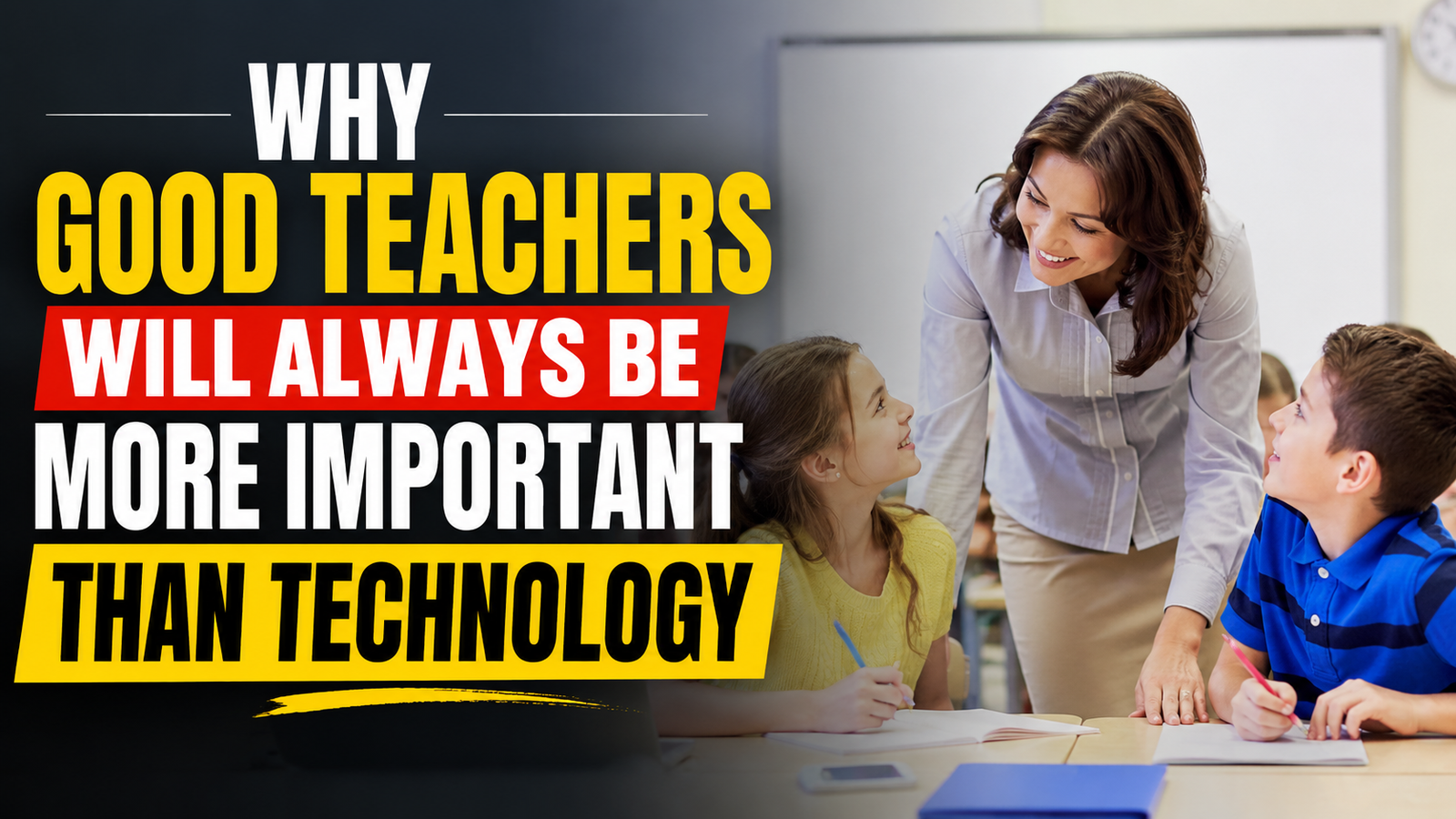
In today’s rapidly changing world, technology has transformed the way students learn. Smart classrooms, AI-powered learning tools, online courses, and personalized education platforms have made knowledge more accessible than ever before. However, as technology continues to advance, one important question remains: Can technology replace teachers? While digital tools can provide information, support learning, and improve classroom experiences, they cannot replace the human connection that a great teacher brings. Teachers do much more than deliver lessons—they inspire curiosity, understand individual student needs, build confidence, and help learners develop skills that go beyond academics. Technology may be the future of education, but teachers will always be at the center of meaningful learning. The combination of innovative tools and skilled educators creates a learning environment where students can truly grow, think critically, and reach their full potential. Because technology can provide resources, but only great teachers can inspire transformation.
Education has changed dramatically in the digital age. Classrooms that once depended only on textbooks and traditional teaching methods are now becoming more interactive, connected, and technology-driven. From smart classrooms and artificial intelligence (AI)-powered learning tools to online courses and personalized learning platforms, technology has opened new possibilities for students and educators around the world.
Today, students can access information instantly through digital resources. They can watch educational videos, participate in virtual classrooms, practice skills through learning apps, and use AI tools to receive personalized support. Technology has made learning more flexible, accessible, and engaging.
However, as technology continues to grow, an important question has emerged: Can technology replace teachers?
While technology can transform the way students learn, it cannot replace the role of a great teacher. Education is not only about delivering information; it is about inspiring curiosity, building confidence, understanding individual needs, and helping students develop into capable human beings.
Technology can support education, but good teachers remain the heart of meaningful learning.
The internet has made information available to almost everyone. With just a few clicks, students can find explanations, tutorials, research materials, and educational content on countless topics. Digital platforms can provide facts, demonstrate concepts through videos, and offer instant feedback.
But learning is not simply about collecting information. True learning requires understanding, interpretation, and the ability to apply knowledge in real-life situations.
A teacher plays a critical role in transforming information into meaningful understanding. They help students:
For example, a student may watch an online video explaining a difficult scientific concept, but a teacher can recognize where the student is struggling and provide a different explanation based on their needs.
Information is everywhere, but guidance turns information into knowledge.
Every student is unique. They come from different backgrounds, have different abilities, learn at different speeds, and face different challenges.
Technology can collect data about student performance, identify learning patterns, and suggest resources. However, it cannot fully understand a student's emotions, fears, confidence levels, or personal struggles.
A good teacher notices the small details:
Teachers provide something technology cannot fully offer: empathy and human connection.
A supportive teacher can make a student feel valued and understood. This emotional support often becomes the foundation for academic success.
Many successful people remember a teacher who encouraged them, believed in their abilities, or helped them discover their potential.
A teacher's influence often goes beyond textbooks and exams. A simple message like “You can do this” can change how a student sees themselves.
Great teachers inspire students by:
Technology can provide lessons and practice exercises, but it cannot replace the encouragement that comes from a teacher who genuinely cares about a student's growth.
Motivation is not created by software. It is created through human relationships.
Education is not only about achieving high grades. Schools also prepare students for life.
Teachers help students develop important skills such as:
These qualities are essential in personal and professional life.
A learning platform may teach a student how to solve a mathematical equation, but a teacher helps them develop patience, discipline, and confidence while solving problems.
Teachers shape character as much as they build knowledge.
Technology should not be viewed as a replacement for teachers. Instead, it should be seen as a powerful tool that helps teachers create better learning experiences.
The best education system combines:
For example, teachers can use AI tools to create personalized assignments based on student needs. Virtual simulations can make difficult concepts easier to understand. Online resources can provide additional practice and support outside the classroom.
When used correctly, technology allows teachers to spend more time focusing on what matters most: helping students learn and grow.
Technology is a powerful assistant, but it cannot replace a great teacher.
Artificial intelligence is becoming an important part of modern education. AI tools can help students practice skills, summarize information, and receive quick responses to questions.
However, the increasing use of AI makes teachers even more important.
Teachers help students:
In a world where information is increasing rapidly, students need guidance to understand what information matters and how to use it wisely.
AI can provide answers, but teachers teach students how to think.
Behind many successful individuals is often a teacher who influenced their journey.
Scientists, entrepreneurs, artists, and leaders frequently mention teachers who encouraged their curiosity and helped them discover their abilities.
A teacher may not always see the full impact of their work, but their influence can last for decades. A lesson taught in a classroom today can shape a student's choices, career, and future.
Teachers do more than prepare students for exams. They prepare them for life.
A great teacher can change a student's confidence, direction, and belief in what is possible.
Although technology offers many benefits, depending on it too heavily can create challenges.
Some possible concerns include:
Learning is a social experience. Students need conversations, collaboration, encouragement, and guidance.
A screen can deliver content, but it cannot create the same connection as a teacher who understands and supports students.
The goal should not be choosing between teachers and technology. The goal should be creating a balanced learning environment where both work together.
The future of education will not be about technology replacing teachers. Instead, it will be about teachers using technology to become more effective.
Future classrooms may include:
However, teachers will continue to play the most important role by guiding students, encouraging creativity, and building meaningful relationships.
The most successful educators will be those who combine human skills with digital innovation.
Technology can make education smarter, but teachers make education meaningful.
Technology has changed education in powerful ways. It has made learning more accessible, personalized, and engaging. However, education has never been only about information. It is about inspiration, guidance, confidence, and human connection.
Teachers bring qualities that technology cannot fully replace: empathy, creativity, encouragement, and the ability to understand each student's unique journey.
The classroom of the future will not be one where technology replaces teachers. It will be one where technology empowers teachers to make an even greater impact.
The best technology can enhance learning, but only a great teacher can transform a student's life.
