

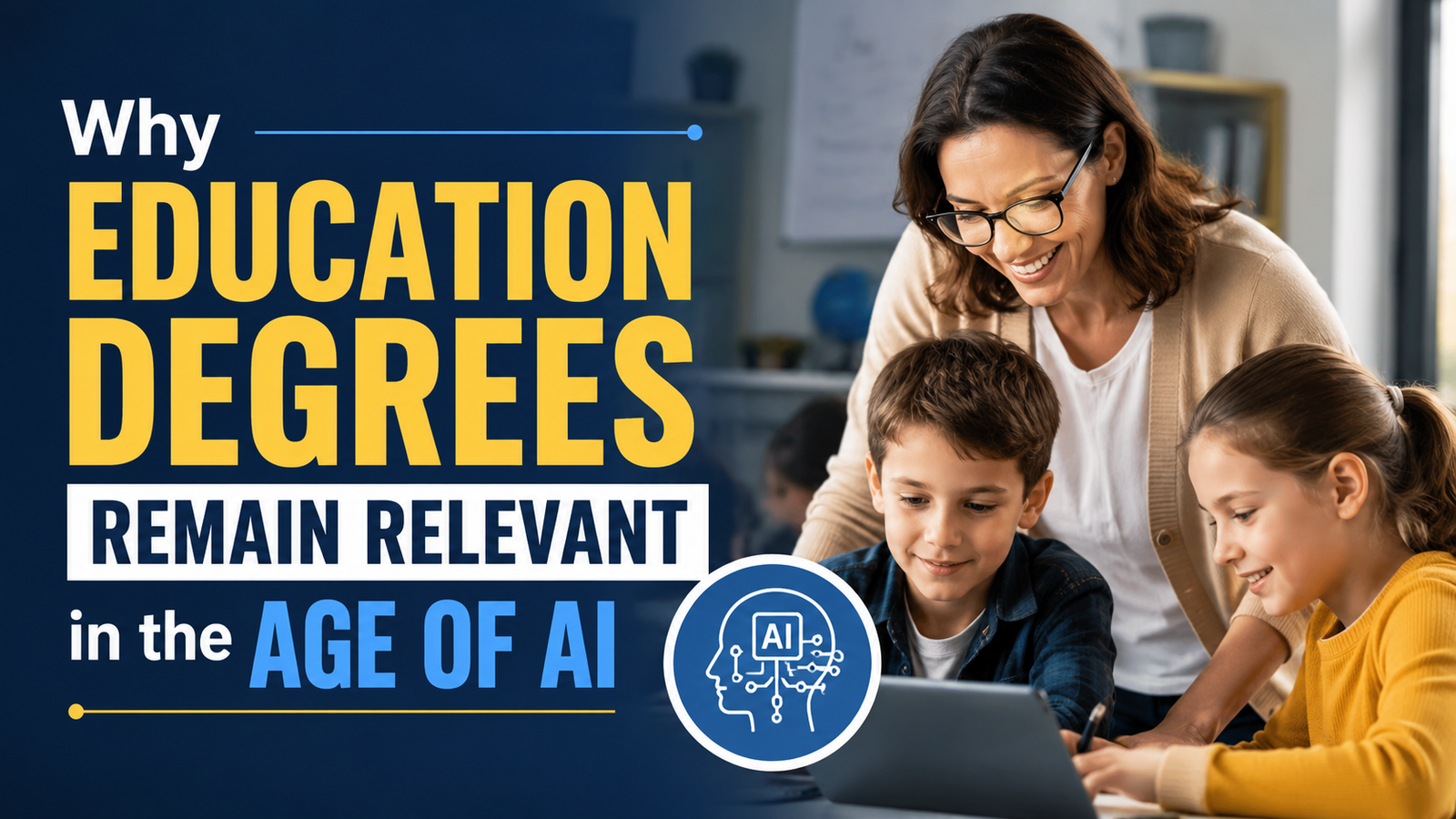
Artificial intelligence is transforming the way we learn, teach, and interact with knowledge. While AI-powered tools are making education more personalized and accessible, they are also raising an important question: Will AI replace teachers and reduce the value of education degrees? The answer is no. In the age of AI, educators are becoming more important than ever. Education degrees equip professionals with essential human skills such as emotional intelligence, creativity, communication, mentorship, and the ability to understand diverse learning needs—qualities that technology cannot replicate. As AI becomes a powerful learning assistant, teachers will play a critical role in guiding students to think critically, use technology responsibly, and develop skills needed for the future. This blog explores why education degrees remain relevant in an AI-driven world and how modern educators can combine human expertise with technology to create meaningful learning experiences.
Artificial intelligence (AI) is transforming almost every aspect of modern life, and education is no exception. From AI-powered learning platforms and automated assessment tools to personalized study assistants, technology is changing how students learn and how educators teach. Classrooms today are becoming more connected, data-driven, and adaptable than ever before.
However, this rapid advancement in technology has raised an important question: Will AI replace teachers and make education degrees less valuable?
The answer lies in understanding the true purpose of education. While AI can provide information, generate content, and support learning activities, it cannot replace the human expertise required to inspire, guide, and mentor students. Education is not only about transferring knowledge; it is about developing critical thinkers, confident individuals, and responsible citizens.
As AI continues to evolve, education professionals with strong pedagogical knowledge and technological awareness will become even more important. Education degrees remain relevant because they prepare educators to combine human understanding with technological innovation.
The rise of AI does not signal the end of teaching careers. Instead, it is transforming the role of teachers. Rather than replacing educators, AI is becoming a powerful assistant that helps teachers improve efficiency and create better learning experiences.
AI tools can help educators analyze student performance, generate learning resources, automate administrative tasks, and provide additional learning support. However, teachers remain responsible for making meaningful decisions about how students learn best.
Modern educators must help students use AI responsibly by teaching them:
The future of education belongs to teachers who understand both technology and human learning. Education degrees provide the foundation needed to combine teaching expertise with emerging digital tools.
Although AI has advanced significantly, there are essential human qualities that technology cannot replace. Education degrees focus on developing skills that are central to effective teaching and learning.
Teachers work closely with students and understand their emotions, challenges, and personal circumstances. They recognize when a student needs encouragement, additional support, or a different approach to learning.
AI can analyze data, but it cannot genuinely understand human emotions or build meaningful relationships.
Creating a positive learning environment requires leadership, patience, and adaptability. Teachers learn how to manage different personalities, resolve conflicts, and encourage collaboration among students.
A great teacher does more than deliver lessons—they inspire students to explore ideas, overcome challenges, and believe in their abilities.
Education programs develop strong communication skills that allow teachers to explain complex concepts clearly and connect with diverse groups of learners.
Every student learns differently. Education professionals are trained to recognize individual learning styles and create inclusive environments where every learner has the opportunity to succeed.
Teachers often serve as mentors, guiding students academically and personally. These leadership skills remain valuable regardless of technological advancements.
Education is not simply about delivering content; it is about shaping people.
As AI becomes more common in schools and universities, educators will have new responsibilities. Students need guidance to understand how technology works and how to use it effectively.
Teachers will play an important role in developing digital literacy by helping students:
For example, students can use AI tools to generate answers, but they still need teachers who can help them question, analyze, and apply that information.
The goal of education in the AI era is not just teaching students what to know but teaching them how to think.
Qualified educators are essential for developing curiosity, creativity, and critical reasoning skills that technology alone cannot provide.
One of the biggest advantages of AI in education is its ability to support personalized learning. AI-powered systems can analyze student performance, identify learning gaps, and recommend customized resources.
However, effective personalized learning requires human oversight.
Teachers are needed to:
AI may identify patterns in student data, but teachers understand the person behind the data.
A student struggling with a subject may not simply need more practice questions. They may need encouragement, confidence-building, or a different explanation. Human educators bring the understanding and empathy required to address these deeper needs.
An education degree no longer limits graduates to traditional classroom teaching. The growth of technology and online learning has created new career opportunities for education professionals.
Graduates can explore careers in areas such as:
Instructional designers create effective learning experiences by combining educational theories with technology.
Professionals in educational technology help schools and organizations implement digital learning solutions.
Curriculum specialists design learning programs that meet the changing needs of students and industries.
Learning experience designers focus on creating engaging and accessible learning environments.
Education graduates can move into leadership positions where they guide institutions, teachers, and learning strategies.
Many organizations need education professionals to design employee training and professional development programs.
The growth of digital learning has increased demand for professionals who can manage online courses and virtual learning platforms.
An education degree opens doors to a wide range of opportunities in a technology-driven world.
As AI becomes integrated into education, responsible use becomes increasingly important. Technology brings opportunities, but it also creates challenges related to privacy, fairness, and academic integrity.
Educators play a critical role in guiding ethical AI adoption by addressing issues such as:
Teachers and institutions must ensure that student information is protected when using digital tools.
AI systems may produce biased results based on the data they are trained on. Educators help students recognize and question these limitations.
Teachers must help students understand the difference between using AI as a learning tool and relying on it to avoid genuine learning.
Educators ensure that technology supports learning goals rather than replacing meaningful educational experiences.
Technology should serve learners—not the other way around. Educators provide the guidance needed to maintain this balance.
Despite technological advancements, human connection remains one of the most important parts of education.
Teachers do more than explain lessons. They:
Many students remember teachers not only because of what they taught but because of how those teachers made them feel.
Learning is a human relationship, not just an exchange of information. AI can support education, but teachers create the relationships that make learning meaningful.
To remain effective in the changing educational landscape, future educators should develop both traditional teaching skills and technological awareness.
Important steps include:
Teachers should understand how AI tools work, their benefits, and their limitations.
Familiarity with digital platforms and learning technologies can help educators create engaging lessons.
Education is constantly evolving. Successful educators continue developing their skills throughout their careers.
The most effective educators will use technology to enhance teaching while maintaining the human connection that students need.
The future teacher will not compete with AI—they will learn how to use it effectively.
Artificial intelligence is transforming education, but it is not eliminating the need for educators. Instead, it is creating new opportunities for teachers who can combine human expertise with technological innovation.
Education degrees remain valuable because they develop skills that machines cannot replace: empathy, leadership, communication, creativity, and the ability to inspire others.
As schools and organizations continue adapting to an AI-driven world, the demand for skilled, adaptable, and technology-aware educators will continue to grow.
The educators of tomorrow will not simply teach students how to use technology—they will help students understand, question, and use technology responsibly. In the age of AI, education professionals will play a crucial role in preparing future generations for success.
