

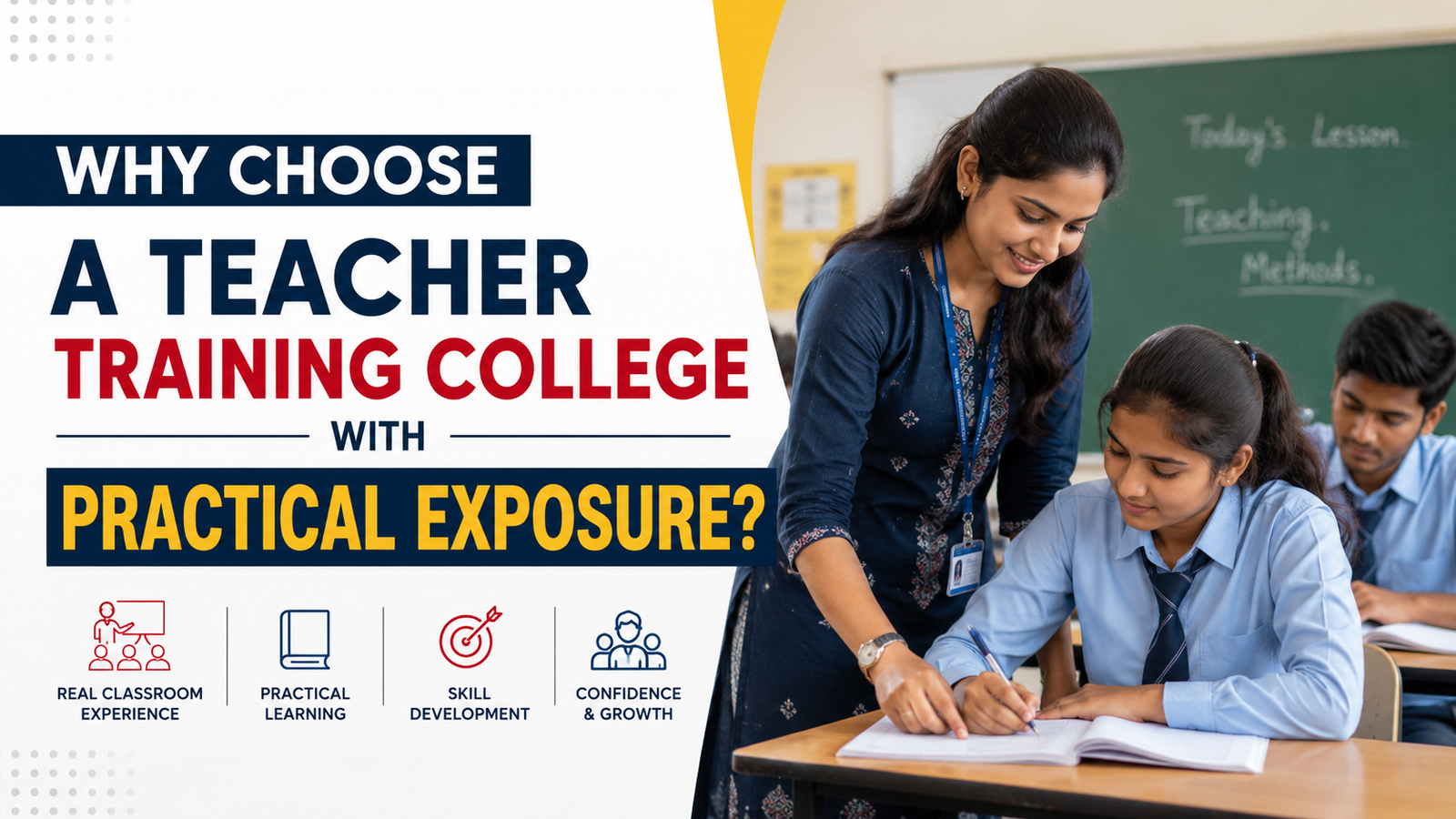
Choosing a teacher training college with practical exposure can shape your success as an educator. Beyond theoretical knowledge, hands-on experiences such as teaching internships, classroom observations, lesson planning, and micro-teaching sessions help aspiring teachers build confidence, develop classroom management skills, and adapt to modern teaching practices. In this blog, discover why practical training is essential, the key benefits it offers, and what to look for when selecting a teacher training college that prepares you for a rewarding teaching career.
Teaching is more than delivering lessons—it's about inspiring young minds, creating engaging learning environments, and helping students reach their full potential. As the education landscape continues to evolve, schools are looking for teachers who are not only academically qualified but also confident, adaptable, and ready to manage real classroom situations from day one.
This growing demand has made practical exposure one of the most important factors when choosing a teacher training college. While theoretical knowledge provides the foundation for effective teaching, practical experience enables aspiring educators to apply that knowledge in real classroom settings. From lesson planning and classroom management to student interaction and technology integration, hands-on learning helps future teachers develop the skills needed for a successful career.
If you're planning to pursue a teaching profession, selecting a teacher training college that prioritizes practical exposure can make a significant difference in your professional journey.
Practical exposure refers to the hands-on learning experiences that allow teacher trainees to apply educational theories in real-life classroom environments. Instead of relying solely on lectures and textbooks, students actively participate in teaching activities that prepare them for professional responsibilities.
Unlike theoretical learning, which focuses on educational concepts, child psychology, and teaching methodologies, practical training helps students understand how these concepts work in actual classrooms. It develops confidence, enhances communication skills, and prepares future teachers to respond effectively to various classroom situations.
Practical exposure typically includes:
These experiences provide valuable insights into the daily responsibilities of teachers while helping students build essential professional competencies.
A successful teacher requires more than subject knowledge. They must know how to engage students, manage classrooms, communicate effectively, and adapt to different learning needs. Practical exposure helps develop these essential abilities before entering the teaching profession.
Teaching in real classrooms allows aspiring educators to overcome nervousness and gain confidence. The more opportunities they receive to teach, the better prepared they become for handling independent classrooms.
Managing a classroom is one of the biggest challenges for new teachers. Practical training teaches students how to maintain discipline, encourage participation, manage time effectively, and create a positive learning environment.
Teachers interact with students, parents, colleagues, and school administrators every day. Practical exposure strengthens verbal communication, presentation skills, active listening, and interpersonal relationships.
Every classroom presents unique challenges. Practical experience teaches future educators how to respond to unexpected situations, modify lesson plans, and address different learning styles with confidence.
Educational theories become meaningful only when they are applied in real teaching situations. Practical exposure enables students to understand how theoretical concepts translate into effective classroom practices.
One of the greatest advantages of practical training is the opportunity to teach real students under the guidance of experienced mentors. This experience helps aspiring teachers become comfortable with classroom instruction before beginning their professional careers.
Teaching practice also allows students to receive constructive feedback, identify areas for improvement, and continuously refine their teaching methods.
Every classroom consists of students with diverse personalities, learning abilities, and behavioral patterns. Practical training equips future teachers with strategies to:
These skills are difficult to develop through textbooks alone.
Effective teaching begins with well-structured lesson planning.
Through practical assignments, teacher trainees learn how to:
Regular practice helps future teachers become more organized and effective in delivering meaningful lessons.
Communication lies at the heart of successful teaching. Practical exposure helps aspiring educators improve:
As confidence grows, teachers become better communicators and stronger classroom leaders.
Today's classrooms are increasingly technology-driven and learner-centered. Teacher training colleges with practical exposure often introduce students to modern instructional practices, including:
These approaches help teachers create engaging learning experiences that meet the expectations of modern education systems.
Practical exposure creates opportunities to connect with experienced educators, school administrators, mentors, and fellow trainees.
These professional relationships can lead to:
Networking during teacher training often benefits graduates throughout their careers.
Schools increasingly prefer candidates who already possess classroom experience. Graduates from colleges offering extensive practical training often stand out during recruitment because they demonstrate:
Hands-on experience also strengthens resumes and improves interview performance, increasing employment opportunities.
Selecting the right institution is essential for building a successful teaching career. Consider the following features before making your decision:
A college that combines academic excellence with practical learning provides a stronger foundation for long-term success.
| Aspect | Teacher Training with Practical Exposure | Traditional Teacher Education |
|---|---|---|
| Learning Approach | Hands-on learning combined with theory | Primarily classroom-based theoretical learning |
| Classroom Readiness | High confidence before graduation | Limited real teaching experience |
| Confidence Level | Builds confidence through regular practice | Confidence develops only after employment |
| Teaching Skills | Developed through internships and live teaching | Mostly learned through lectures and assignments |
| Employment Opportunities | Higher due to practical experience | May require additional training after recruitment |
| Student Engagement | Learns interactive and activity-based teaching methods | Focuses more on theoretical instructional concepts |
Modern education requires teachers to be flexible, technologically proficient, and capable of addressing diverse classroom needs.
Teacher trainees learn to use digital teaching platforms, smart boards, educational applications, multimedia presentations, and online learning tools to enhance classroom engagement.
Practical exposure prepares teachers to support students with different backgrounds, abilities, and learning styles, creating equitable learning environments where every student feels valued.
For aspiring teachers in India, practical training aligns with the objectives of the National Education Policy (NEP) 2020, which emphasizes experiential learning, competency-based education, critical thinking, multidisciplinary teaching, and skill development.
Future educators understand how to design interactive learning experiences through projects, discussions, group activities, and real-world applications rather than relying solely on memorization.
Practical learning encourages reflective teaching, lifelong learning, and continuous improvement—qualities that help educators remain effective throughout their careers.
Before enrolling, consider asking these important questions:
The answers to these questions can help determine whether the college genuinely emphasizes practical learning.
Choosing a teacher training college based solely on advertisements or affordability may affect long-term career growth. Avoid these common mistakes:
Lower fees may seem attractive, but quality education and practical opportunities should remain the priority.
Teaching internships provide invaluable classroom experience that employers highly value.
Review the college's placement support and graduate success stories before enrolling.
Experienced faculty members offer practical insights, mentorship, and professional guidance that significantly enhance learning.
Institutions with strong partnerships with schools provide richer internship experiences and better professional exposure.
Making an informed decision today can positively impact your future teaching career.
A teaching degree is only the beginning of a successful educational career. What truly distinguishes an exceptional educator is the ability to apply knowledge confidently in real classroom settings. This is where practical exposure becomes invaluable.
By choosing a teacher training college that emphasizes hands-on learning, teaching internships, classroom observations, and modern instructional practices, aspiring teachers gain the confidence, competence, and professional skills required to succeed in today's dynamic education environment.
If you're planning to build a rewarding career in education, prioritize institutions that combine academic excellence with meaningful practical experiences. The right teacher training college won't just prepare you to earn a qualification—it will prepare you to inspire, educate, and make a lasting impact on the lives of future generations.
