
preloader

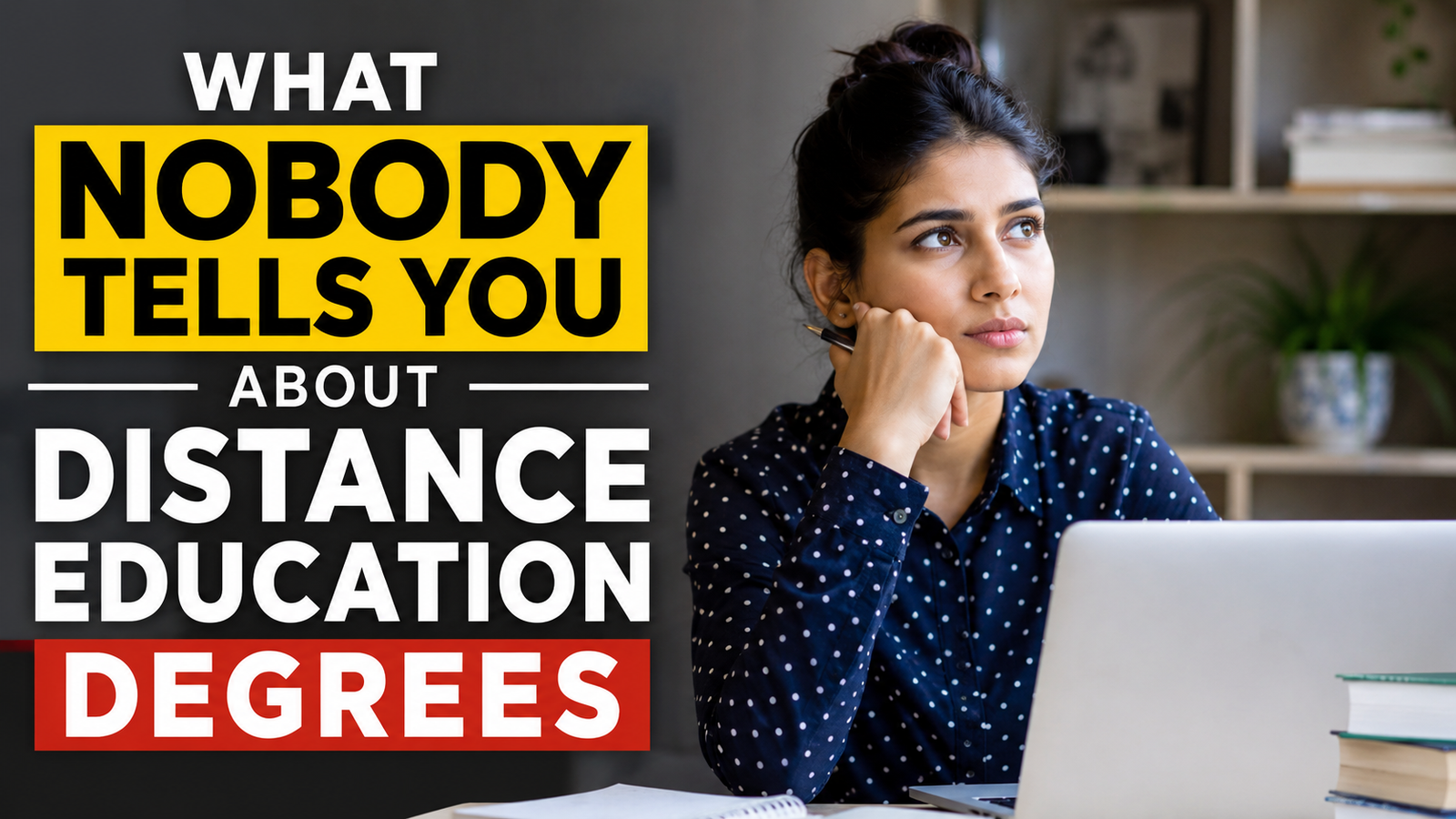
What Nobody Tells You About Distance Education Degrees

Distance education has become one of the most popular pathways for students and working professionals who want to continue their studies without attending a traditional college full-time. It promises flexibility, affordability, and accessibility—but the reality is more complex than most advertisements suggest. This blog breaks down the lesser-known truths about distance education so you can make an informed decision before enrolling.


Distance education is often marketed as completely flexible—study anytime, anywhere, at your own pace. While this is technically true, it creates a misleading expectation.

Many students assume:

  • There are no fixed schedules
  • There is minimal workload
  • Exams are easy or optional

In reality, distance education still follows structured academic requirements. Assignments, deadlines, exams, and coursework are very real and often strict.

This guide is for:

  • Students considering flexible higher education
  • Working professionals upgrading qualifications
  • Career switchers seeking affordable degrees

 Distance Education Is Not “Easier” Than Regular Degrees

One of the biggest misconceptions is that distance education is less demanding.

The truth:

  • The syllabus is often identical to regular programs
  • Exams require serious preparation
  • Assignments must meet academic standards

The main difference is not difficulty—it’s independence. You are responsible for your own learning without daily classroom pressure.

 Time Management Becomes Your Biggest Challenge

Without fixed class schedules, procrastination becomes the biggest enemy.

Common challenges include:

  • Delaying study sessions due to work or personal commitments
  • Cramming before exams instead of consistent learning
  • Losing track of assignment deadlines

Successful students usually:

  • Create weekly study schedules
  • Set fixed daily learning hours
  • Treat study time like a job commitment

 Limited Face-to-Face Interaction Can Affect Learning

Unlike traditional classrooms, distance education offers limited real-time interaction with teachers.

This can lead to:

  • Delayed clarification of doubts
  • Dependence on recorded lectures or forums
  • Reduced classroom discussions and engagement

While some programs offer online sessions, they may not fully replace in-person academic support.

 Recognition and Accreditation Matter More Than You Think

This is one of the most critical factors—especially in India.

Always check whether the institution is recognized by the University Grants Commission (UGC) or other relevant authorities.

Why this matters:

  • Unrecognized degrees may not be valid for jobs or higher studies
  • Some employers reject non-approved qualifications
  • Fake institutions still exist in the distance education space

Before enrolling, verify approval status carefully.

 Self-Motivation Is the Real “Admission Requirement”

No one will remind you daily to study. There are no regular classroom checks or teacher pressure.

This leads to:

  • Higher dropout rates among unmotivated students
  • Missed assignments and exam delays
  • Inconsistent learning habits

Success depends heavily on:

  • Personal discipline
  • Goal setting
  • Internal motivation

 Technology Becomes Your Classroom

Distance education is heavily dependent on digital platforms.

You will regularly use:

  • Learning Management Systems (LMS)
  • Online lecture portals
  • Video conferencing tools like Zoom
  • Digital exams and submissions

This also means:

  • Reliable internet is essential
  • A functional laptop or smartphone is necessary
  • Basic digital skills are required

 Networking Opportunities Are Limited

One major drawback is reduced exposure to peers and faculty.

Compared to traditional college:

  • Fewer campus interactions
  • Limited group projects or live discussions
  • Reduced professional networking opportunities

To compensate, students should:

  • Use LinkedIn actively
  • Join online study communities
  • Attend webinars and virtual workshops

 Cost Benefits vs Hidden Costs

Distance education is usually cheaper than regular degrees, but it’s not “cost-free.”

Visible savings:

  • Lower tuition fees
  • No hostel or travel expenses

Hidden costs include:

  • Internet and device upgrades
  • Exam reattempt fees
  • Printed study materials (in some programs)
  • Time cost of self-study alongside work

 Career Impact: Reality Check

Distance degrees can be valuable—but their impact depends on how you use them.

They work well for:

  • Skill enhancement
  • Promotions in existing jobs
  • Government or private sector eligibility requirements

They may be less effective for:

  • Highly competitive fields requiring campus placements
  • Roles that prioritize full-time university exposure

Ultimately, skills often matter more than the mode of education.

 Who Should Actually Choose Distance Education?

Distance education is ideal for:

  • Working professionals upgrading qualifications
  • Students needing flexible schedules
  • Individuals unable to attend regular college

It may not be suitable for:

  • Students who need structured daily guidance
  • Those who struggle with self-discipline
  • Learners relying heavily on classroom interaction

 Tips to Succeed in Distance Learning

To succeed in distance education, you need strategy, not just enrolment.

Effective habits include:

  • Creating a fixed weekly timetable
  • Using digital tools for notes and reminders
  • Joining peer learning groups online
  • Revising consistently instead of last-minute study

Consistency is the key factor that separates successful students from struggling ones.

 Conclusion

Distance education is neither perfect nor ineffective—it is simply different.

It offers:

  • Flexibility
  • Accessibility
  • Affordability

But it also demands:

  • Discipline
  • Self-motivation
  • Strong time management

If you understand these realities before enrolling, you can turn distance education into a powerful tool for career growth. If not, it can quickly become overwhelming.

The decision isn’t just about choosing a degree—it’s about choosing a learning style that matches your discipline and goals.