

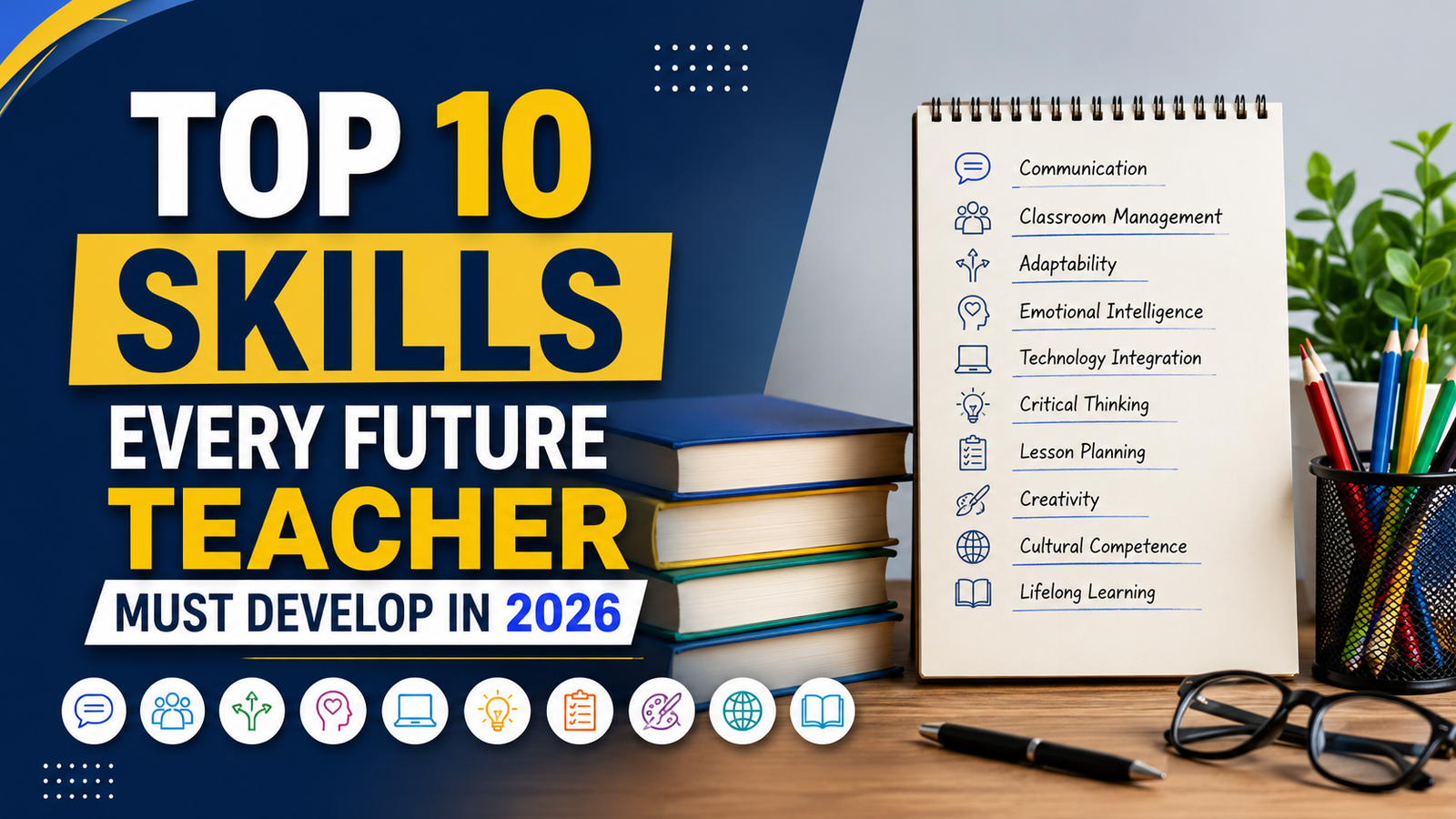
The role of teachers is evolving rapidly in 2026 as artificial intelligence, digital learning, and changing student expectations reshape modern classrooms. Today's educators need more than subject expertise—they must be skilled in technology, communication, emotional intelligence, adaptability, and inclusive teaching practices. This blog explores the top 10 essential skills every future teacher should develop to thrive in the education landscape, create engaging learning experiences, and prepare students for a fast-changing world. Whether you're an aspiring teacher or an experienced educator, these future-ready skills will help you stay relevant and make a lasting impact.
The teaching profession is undergoing one of the most significant transformations in history. As we move through 2026, classrooms are no longer confined to four walls, textbooks are no longer the only source of knowledge, and students expect learning experiences that are engaging, interactive, and personalized. Artificial Intelligence (AI), digital technologies, and evolving educational standards have reshaped how teachers teach and how students learn.
Today's educators are expected to do much more than deliver lessons. They are mentors, facilitators, technology integrators, problem-solvers, and lifelong learners. They must inspire creativity, foster collaboration, and prepare students for careers that may not even exist yet.
The future belongs to teachers who embrace change and continuously develop new skills. Whether you're an aspiring educator, a student pursuing a Bachelor of Education (B.Ed.), or an experienced teacher looking to stay relevant, developing future-ready skills is essential for long-term success.
In this article, we'll explore the Top 10 Skills Every Future Teacher Must Develop in 2026 and discover how these competencies can help educators thrive in modern classrooms.
Education has evolved dramatically over the past few years, driven by technological advancements and changing learner expectations. Understanding these shifts helps teachers prepare for the future.
Artificial Intelligence is becoming a valuable classroom assistant. AI tools can automate grading, generate lesson plans, personalize assignments, and provide real-time feedback. Teachers who understand how to integrate AI responsibly can save time while improving student outcomes.
Every student learns differently. Modern classrooms increasingly combine face-to-face instruction with digital learning environments. Teachers must adapt lessons to meet individual learning styles while effectively managing both online and offline education.
Rather than focusing solely on memorization, schools now emphasize practical skills such as communication, collaboration, critical thinking, and creativity. Teachers must guide students toward mastering these competencies.
Educational trends, technologies, and teaching methods continue to evolve. Successful educators understand that learning doesn't stop after graduation. Continuous professional development is now a key part of every teaching career.
Digital literacy has become one of the most essential teaching skills in 2026. Teachers are expected to confidently use educational technologies and integrate AI tools into everyday teaching.
Future-ready educators should know how to:
AI should complement—not replace—the teacher's expertise. Educators who understand ethical AI usage can create more personalized and efficient learning experiences while maintaining academic integrity.
The future workforce demands individuals who can analyze situations, solve complex problems, and think independently. Teachers must cultivate these abilities in students by moving beyond rote learning.
Ways to develop critical thinking include:
Rather than simply providing answers, teachers should guide students toward discovering solutions themselves.
Teaching is fundamentally about people. Emotional intelligence enables teachers to understand, manage, and respond effectively to emotions—their own and those of their students.
Teachers with strong emotional intelligence can:
Students learn best when they feel respected, valued, and understood.
Communication is at the heart of successful teaching. Future educators must communicate clearly across multiple platforms—both in person and online.
Strong communication involves:
Excellent communication strengthens relationships among students, parents, and colleagues.
Education changes rapidly, and teachers must be prepared to adapt. Whether responding to curriculum updates, technological innovations, or unexpected disruptions, flexibility is a defining quality of successful educators.
Adaptable teachers:
The ability to adjust quickly ensures continuous learning regardless of circumstances.
Modern classrooms are filled with digital tools that enhance teaching and learning. However, technology is only effective when teachers know how to manage it efficiently.
Important technological competencies include:
Teachers should also use classroom data to identify learning gaps and personalize instruction.
Students are more engaged when lessons are interactive, meaningful, and enjoyable. Creative teachers transform ordinary content into memorable learning experiences.
Innovative teaching strategies include:
Creative classrooms encourage curiosity, experimentation, and independent thinking.
Every classroom includes learners with diverse backgrounds, abilities, cultures, and learning preferences. Inclusive teaching ensures every student feels welcomed and supported.
Inclusive educators focus on:
An inclusive classroom not only improves academic performance but also promotes empathy and social responsibility.
Teaching is no longer an isolated profession. Collaboration among educators leads to better lesson planning, stronger student support, and improved educational outcomes.
Teachers should actively collaborate through:
Working together allows educators to share ideas, solve challenges, and continually improve their practice.
One of the defining characteristics of outstanding teachers is their commitment to lifelong learning.
Professional development opportunities include:
Teachers who invest in continuous learning remain confident, informed, and prepared for future educational challenges.
While the ten skills above are essential, additional competencies can help teachers stand out in an increasingly competitive education landscape.
Teachers often lead classrooms, committees, projects, and school initiatives. Leadership helps educators inspire students and colleagues alike.
Educational data can reveal valuable insights into student performance. Teachers who analyze assessment results can personalize instruction more effectively.
Balancing lesson planning, grading, meetings, and administrative responsibilities requires strong organizational skills.
Future teachers should evaluate educational research and apply evidence-based teaching practices in their classrooms.
Students need to understand global issues and multicultural perspectives. Teachers with international awareness help prepare learners for an interconnected world.
Environmental responsibility is becoming an important component of modern education. Teachers can encourage sustainable thinking through classroom activities and community projects.
Developing future-ready skills is an ongoing journey. Here are practical steps aspiring educators can take:
Small, consistent improvements can make a significant difference over time.
Even the most enthusiastic educators can fall into habits that limit professional growth.
Avoiding digital tools can make teaching less engaging and reduce classroom efficiency.
Education evolves continuously. Teachers who resist innovation may struggle to meet modern learning expectations.
Academic excellence alone isn't enough. Building positive relationships remains essential.
Knowing a subject is important, but effective teaching also requires communication, empathy, creativity, and adaptability.
Teachers who stop learning eventually fall behind. Continuous growth is essential for long-term success.
The future of education is exciting, dynamic, and full of possibilities. As technology reshapes classrooms and student expectations continue to evolve, teachers must develop a diverse set of skills that extend beyond traditional teaching methods.
The Top 10 Skills Every Future Teacher Must Develop in 2026—digital literacy, AI integration, critical thinking, emotional intelligence, communication, adaptability, technology management, creativity, inclusive teaching, collaboration, and continuous professional development—will define successful educators in the years ahead.
Teaching has always been a profession of lifelong learning, and that has never been more true than today. By embracing innovation, investing in professional growth, and prioritizing student-centered learning, future teachers can inspire the next generation and make a lasting impact on education.
The classrooms of tomorrow need educators who are not only knowledgeable but also adaptable, compassionate, technologically skilled, and committed to continuous improvement. Start building these skills today, and you'll be well-prepared to lead the future of education.
