

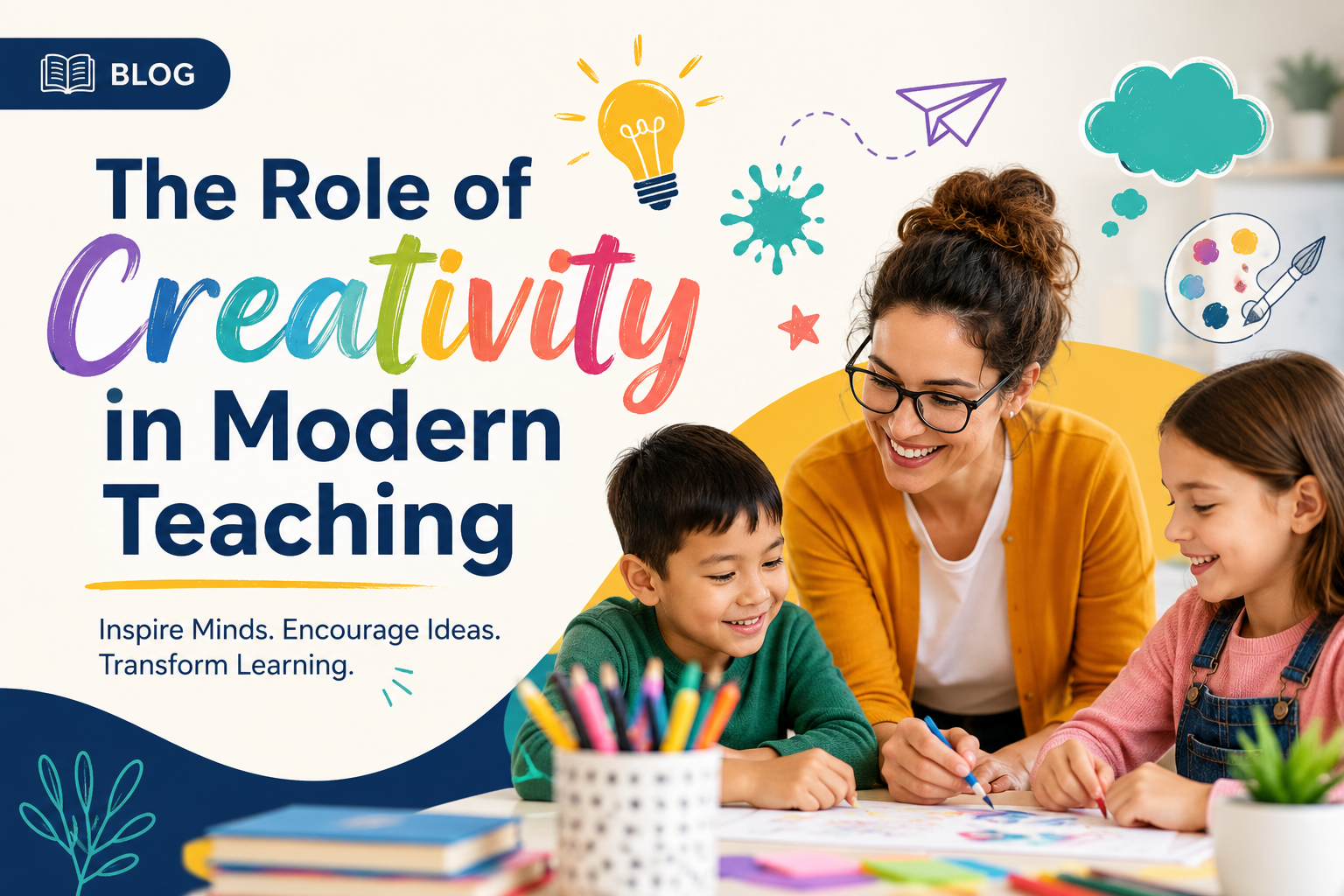
Creativity is transforming modern education by making learning more engaging, interactive, and meaningful. Discover how creative teaching strategies help educators inspire innovation, improve student engagement, and prepare learners for success in a rapidly changing world.
Education has undergone significant transformation over the past few decades. Traditional teaching methods that focused primarily on memorization and standardized instruction are gradually being replaced by more dynamic, student-centered approaches. In today's rapidly evolving world, students need more than academic knowledge—they need critical thinking, problem-solving, communication, and innovation skills to succeed.
Creativity has become a key element in modern teaching because it helps educators engage students, make learning meaningful, and prepare learners for future challenges. By incorporating creative strategies into the classroom, teachers can foster curiosity, encourage exploration, and create an environment where students actively participate in their own learning journey.
Creativity in teaching refers to the use of innovative methods, techniques, and approaches that make learning more engaging, interactive, and effective. Creative teachers move beyond traditional lectures and encourage students to think independently, ask questions, and explore new ideas.
Unlike traditional teaching, which often emphasizes passive learning and information delivery, creative teaching focuses on active participation and experiential learning. It encourages students to connect concepts with real-life situations and develop a deeper understanding of subjects.
A creative educator typically demonstrates flexibility, curiosity, adaptability, and a willingness to experiment with new instructional methods. They inspire students to think creatively while continuously seeking ways to improve their teaching practices.
Modern classrooms are more diverse than ever before. Students come from different backgrounds, possess unique learning styles, and have varying interests and abilities. Creative teaching helps educators address these diverse needs by providing multiple ways for students to learn and express their understanding.
Creativity also promotes innovation and critical thinking. Rather than simply memorizing facts, students learn how to analyze information, solve problems, and generate original ideas. These skills are highly valued in today's workforce and are essential for future success.
Additionally, creative teaching makes learning more meaningful and engaging. When lessons are interactive and relevant, students become more motivated and invested in their education, leading to improved academic performance and greater enthusiasm for learning.
One of the most significant benefits of creativity in teaching is increased student engagement. Interactive activities, discussions, projects, and hands-on experiences capture students' attention and encourage active participation.
When students are involved in the learning process, they are more likely to remain focused, retain information, and develop a positive attitude toward education.
Creative teaching encourages students to think independently and approach challenges from different perspectives. Through activities such as project-based learning and inquiry-based tasks, students learn how to analyze problems and develop effective solutions.
These experiences help students apply classroom knowledge to real-world situations, preparing them for future academic and professional challenges.
Every student learns differently. Some learn best through visual aids, while others prefer listening, hands-on activities, or collaborative discussions.
Creative teaching incorporates various instructional methods that accommodate visual, auditory, and kinesthetic learners. This inclusive approach ensures that more students can understand and engage with the material effectively.
Creative classrooms provide opportunities for students to share ideas, express opinions, and showcase their talents. Whether through presentations, group discussions, storytelling, or creative projects, students gain confidence in their abilities.
As students become more comfortable expressing themselves, they also develop stronger communication, leadership, and collaboration skills.
Project-Based Learning (PBL) allows students to explore real-world problems and create meaningful solutions. Instead of simply learning concepts from textbooks, students engage in research, collaboration, and practical application.
This approach promotes teamwork, critical thinking, and deeper understanding while making learning more relevant and enjoyable.
Storytelling and role-playing bring lessons to life by creating emotional connections with the content. Historical events, scientific concepts, and literary themes become more memorable when students actively participate in stories or simulations.
These methods also enhance imagination, communication skills, and empathy.
Gamification involves incorporating game elements such as points, rewards, challenges, and competitions into learning activities.
By transforming lessons into engaging experiences, gamification increases student motivation, participation, and enthusiasm while encouraging healthy competition and goal-setting.
Modern technology provides countless opportunities for creative teaching. Educational apps, virtual reality experiences, interactive presentations, and online collaboration tools can make lessons more engaging and accessible.
Technology enables teachers to personalize learning experiences and provide students with innovative ways to explore and understand concepts.
Inquiry-based learning encourages students to ask questions, investigate topics, and discover answers independently.
This student-centered approach promotes curiosity, critical thinking, and lifelong learning habits. Students become active participants in the learning process rather than passive recipients of information.
Technology has become an essential component of modern education. Digital classrooms provide opportunities for collaboration, innovation, and personalized learning experiences.
Artificial intelligence, educational software, interactive platforms, and multimedia resources help teachers design engaging lessons that stimulate creativity and critical thinking. Technology also allows students to create, communicate, and collaborate in ways that were previously impossible.
When used effectively, technology can transform classrooms into dynamic learning environments that support both academic achievement and creative development.
Despite its benefits, creative teaching can present challenges for educators. Many teachers face time constraints due to extensive curriculum requirements and standardized testing expectations.
Limited access to resources, technology, and professional training can also make it difficult to implement innovative teaching methods. Additionally, educators must balance creativity with academic standards to ensure that learning objectives are met.
Overcoming these challenges requires support from schools, administrators, and educational policymakers who recognize the value of creative instruction.
Teachers can strengthen their creative teaching abilities through continuous professional development. Attending workshops, training programs, and educational conferences can provide new ideas and practical strategies.
Experimenting with different teaching methods allows educators to discover what works best for their students. Collaboration with colleagues can also lead to the sharing of innovative practices and classroom experiences.
Staying informed about emerging educational trends, technologies, and research helps teachers adapt their approaches and remain effective in an ever-changing educational landscape.
Creative teaching can take many forms. A science teacher might organize hands-on experiments that encourage students to investigate scientific principles. A language teacher may use storytelling and drama activities to improve communication skills. Mathematics teachers can introduce real-world projects that demonstrate practical applications of mathematical concepts.
Many innovative educators have reported increased student engagement, improved academic performance, and stronger classroom participation after adopting creative teaching strategies. These success stories highlight the positive impact creativity can have on learning outcomes.
As education continues to evolve, creativity will play an increasingly important role in preparing students for the future. Emerging technologies, personalized learning models, and interdisciplinary approaches will create new opportunities for innovation in teaching and learning.
Schools are recognizing that creativity is not simply an additional skill but a fundamental component of student success. Future classrooms will likely place greater emphasis on collaboration, problem-solving, adaptability, and innovation.
By nurturing creativity, educators can help students develop the skills necessary to thrive in a rapidly changing world.
Creativity has become an essential element of modern teaching. It enhances student engagement, supports diverse learning styles, strengthens problem-solving abilities, and prepares learners for future success. Through innovative strategies such as project-based learning, storytelling, gamification, technology integration, and inquiry-based learning, teachers can create meaningful and impactful educational experiences.
As the demands of the modern world continue to evolve, educators who embrace creativity will be better equipped to inspire, motivate, and empower their students. By fostering creative thinking in the classroom, teachers can help shape confident, capable, and innovative learners ready to meet the challenges of tomorrow.
