

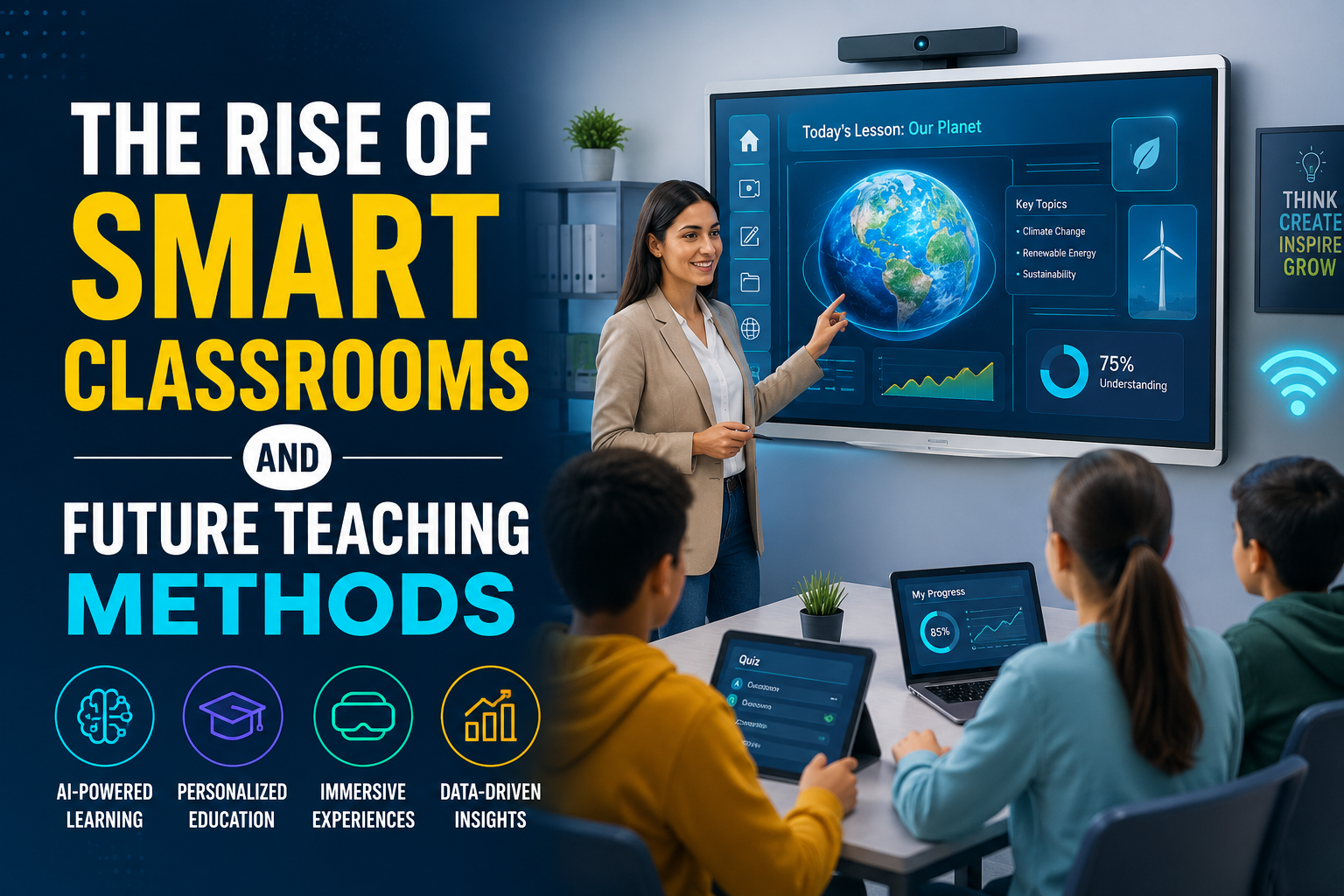
Smart classrooms are transforming modern education by integrating technology into everyday learning. From AI-powered tools to interactive digital boards, these classrooms make learning more engaging, personalized, and effective. As teaching methods evolve, the future of education is shifting toward a more interactive, skill-based, and technology-driven experience that prepares students for a rapidly changing world.
Education is changing faster than ever before. Traditional classrooms, once dominated by chalkboards and textbooks, are now evolving into dynamic, technology-driven learning environments. The introduction of digital tools, internet access, and smart devices has completely reshaped how students learn and how teachers teach.
In today’s world, smart classrooms are becoming essential because they make learning more interactive, accessible, and personalized. As education systems adapt to the needs of a digital generation, technology is no longer an option—it is a necessity.
A smart classroom is a modern learning environment that uses digital technology to enhance teaching and learning experiences. Unlike traditional classrooms, it integrates multimedia tools and internet-based resources to make lessons more engaging and effective.
Key components of smart classrooms include:
The main difference between traditional and smart classrooms is interaction. Traditional classrooms rely mainly on lectures, while smart classrooms encourage visual learning, collaboration, and real-time engagement.
Several advanced technologies are driving the transformation of education:
These technologies are making education more flexible, engaging, and student-centered.
Smart classrooms offer several advantages that improve the overall learning experience:
These benefits help create a more effective and enjoyable learning environment.
In smart classrooms, the role of teachers is evolving. Instead of being the sole source of knowledge, teachers now act as facilitators who guide students in their learning journey.
Teachers today:
This shift allows teachers to focus more on student understanding rather than just content delivery.
Despite their advantages, smart classrooms come with challenges:
Addressing these challenges is important for successful implementation.
The future of education is moving toward more flexible and technology-driven methods:
These methods aim to make education more accessible and career-oriented.
Smart classrooms significantly enhance how students learn:
Overall, education becomes more meaningful and practical.
The future of education promises even more advanced transformation:
Education is moving toward a borderless and highly personalized system.
Smart classrooms are reshaping the future of education by making learning more interactive, flexible, and technology-driven. However, the true success of education lies in balancing technology with human guidance.
While digital tools enhance learning, teachers remain at the heart of education. By combining innovation with traditional values, the future of teaching can become more effective, inclusive, and inspiring for all learners.
