

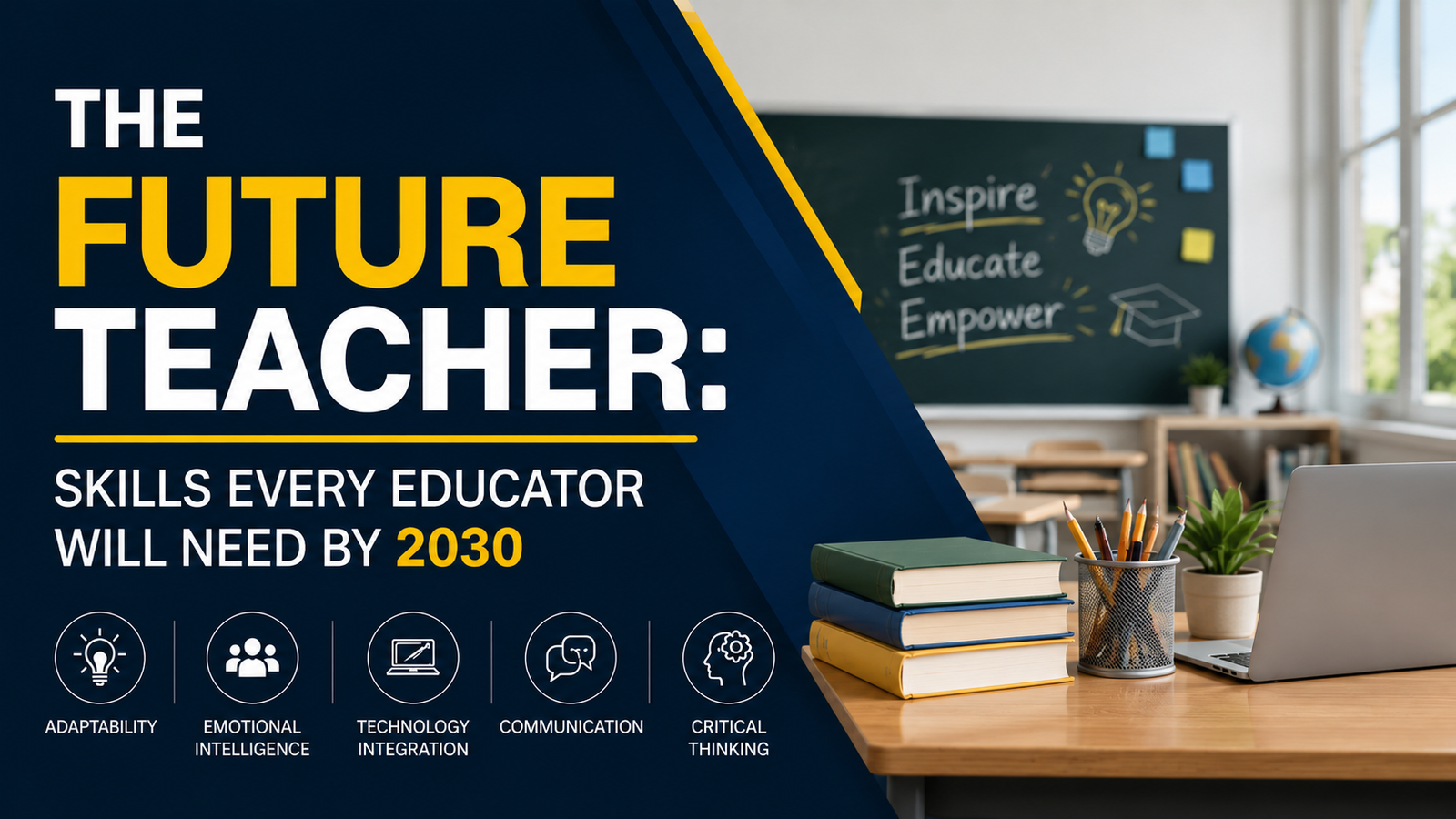
The teacher of 2030 will be more than a knowledge provider—they will be a mentor, innovator, and guide. As technology and AI transform education, future educators will need digital skills, emotional intelligence, creativity, and the ability to personalize learning. By combining technology with human connection, teachers will shape learners who are ready for the challenges of tomorrow.
Education has always evolved alongside society, but the pace of change today is unlike anything seen before. Classrooms are no longer limited to textbooks, blackboards, and traditional teaching methods. Digital platforms, artificial intelligence, virtual learning environments, and global connectivity are transforming how students learn and how teachers teach.
By 2030, the role of a teacher will extend far beyond delivering information. With instant access to knowledge through technology, students will need educators who can help them understand, analyze, and apply information effectively. Teachers will become learning designers, mentors, innovators, and guides who help students navigate an increasingly complex world.
Artificial intelligence and automation are reshaping industries, changing career expectations, and influencing education systems worldwide. However, technology will not replace teachers. Instead, successful educators will learn how to work alongside technology to create more meaningful, personalized, and engaging learning experiences.
The teacher of 2030 will not just deliver knowledge—they will design learning experiences, inspire creativity, and guide students through a rapidly changing world.
Technology will be at the center of education in the coming years, making digital literacy one of the most important skills for future teachers. Educators will need to understand how different technologies work and how they can be used to improve student learning.
Future teachers will use digital tools such as artificial intelligence platforms, online learning systems, virtual classrooms, interactive simulations, and educational applications to create engaging lessons. These technologies will allow students to learn at their own pace and explore concepts through different formats.
For example, teachers may use AI-assisted tools to plan lessons, generate learning activities, and provide personalized feedback. Digital assessment platforms can help educators quickly understand student progress and identify areas where additional support is needed.
However, being digitally skilled is not only about using technology. Teachers will also need to guide students toward responsible technology use. They will play an important role in teaching digital citizenship, online safety, and ethical use of digital resources.
The future classroom will require a balance between advanced technology and meaningful human interaction.
Artificial intelligence will become an important part of education by 2030. Rather than viewing AI as a replacement for teachers, educators will need to understand how it can support and enhance their work.
Teachers with AI literacy will know how to use artificial intelligence tools for tasks such as creating personalized learning materials, analyzing student performance, and providing timely feedback. AI can help identify learning gaps and suggest resources based on individual student needs.
For example, a teacher may use AI-powered platforms to create different versions of a lesson for students with different learning abilities. This approach can make education more inclusive and effective.
At the same time, teachers must understand the ethical challenges associated with AI. Issues such as student data privacy, algorithmic bias, and overdependence on technology will require careful consideration.
Future educators will also help students become critical thinkers when using AI. They will teach learners to question information, evaluate AI-generated content, and use technology responsibly.
The traditional “one-size-fits-all” approach to education is gradually changing. Every student has unique abilities, interests, learning styles, and challenges. Future teachers will need skills to create personalized learning experiences that support individual growth.
With the help of technology and data insights, educators will be able to understand student progress more accurately. They can identify learning difficulties, adjust teaching methods, and provide targeted support.
Personalized learning does not mean creating a separate lesson for every student. Instead, it means recognizing differences among learners and designing flexible approaches that allow every student to succeed.
Future teachers will focus on:
Inclusive classrooms will depend on teachers who can recognize and celebrate student diversity.
While technology will transform education, human connection will remain one of the most valuable qualities of teaching. Emotional intelligence will become a crucial skill for future educators.
Students need more than academic knowledge. They need teachers who understand their emotions, challenges, and personal experiences. Educators who demonstrate empathy can create safe environments where students feel supported and motivated.
Future teachers will need strong abilities in:
A teacher who understands students emotionally can identify when learners are struggling and provide appropriate guidance. This human connection is something technology cannot replace.
The teacher of the future will not simply transfer information but will create meaningful learning experiences. Creativity will become essential as educators design lessons that encourage curiosity, exploration, and innovation.
Future classrooms will focus less on memorization and more on applying knowledge to real-world situations. Teachers will use approaches such as:
Creative educators will inspire students to think differently and develop skills needed for future careers. They will encourage learners to become creators, innovators, and problem-solvers.
In a world where information is available instantly, students need guidance on how to evaluate and use knowledge effectively. Teachers of 2030 will play a major role in developing critical thinking skills.
Future educators will help students:
Education will move beyond memorizing facts toward developing deeper understanding. Students will need the ability to solve complex problems and adapt to situations that may not yet exist.
Teachers will prepare learners not just for exams but for real-life challenges.
Modern classrooms are becoming increasingly diverse and connected. Students today interact with people from different cultures, backgrounds, and perspectives. Future teachers will need strong global awareness to prepare learners for an interconnected world.
Educators will encourage students to understand different cultures, respect diverse viewpoints, and collaborate across communities.
Global awareness will also involve integrating worldwide issues into education, including:
Teachers will help students become responsible global citizens who can contribute positively to society.
The teacher of 2030 must be a lifelong learner. As technology, research, and educational practices continue to evolve, educators will need to constantly update their knowledge and skills.
Professional growth will become an ongoing process through:
Successful teachers will be those who remain curious and open to change. Learning will not end after teacher training—it will continue throughout their careers.
Future education will require greater collaboration among teachers, parents, technology specialists, communities, and other stakeholders.
Teachers will work as part of a larger learning ecosystem rather than working independently. Strong communication skills will help educators share ideas, solve challenges, and support student development.
Collaboration will include:
Effective communication will help create stronger educational experiences.
Data will play an increasingly important role in education. Future teachers will need the ability to understand and use student learning data effectively.
Data literacy will help educators:
However, data will not replace teacher judgment. The most effective educators will combine data insights with their understanding of student needs and experiences.
As technology becomes more involved in education, ethical awareness will become essential. Teachers will have the responsibility of ensuring that technology is used fairly, safely, and responsibly.
Future educators will focus on:
Teachers will help students become responsible digital citizens who understand both the benefits and challenges of technology.
The future teacher will move beyond the traditional role of knowledge provider and become a mentor who guides students toward personal and professional growth.
Students will need support in discovering their interests, developing confidence, and preparing for future careers. Teachers will help learners understand their strengths and encourage them to pursue their goals.
The teacher of 2030 will focus on:
Strong teacher-student relationships will remain at the heart of education.
The future of education depends on teachers who are adaptable, compassionate, innovative, and willing to embrace change. Technology will continue to transform classrooms, but the essential qualities of great teaching—empathy, creativity, and human connection—will remain more important than ever.
The teacher of 2030 will combine digital skills with emotional intelligence, technological knowledge with creativity, and data insights with human understanding. These educators will not only teach subjects but will inspire students to think, create, collaborate, and succeed in a changing world.
The classroom of 2030 will need teachers who are not only experts in what they teach but also experts in how students learn, grow, and succeed in a changing world.
