

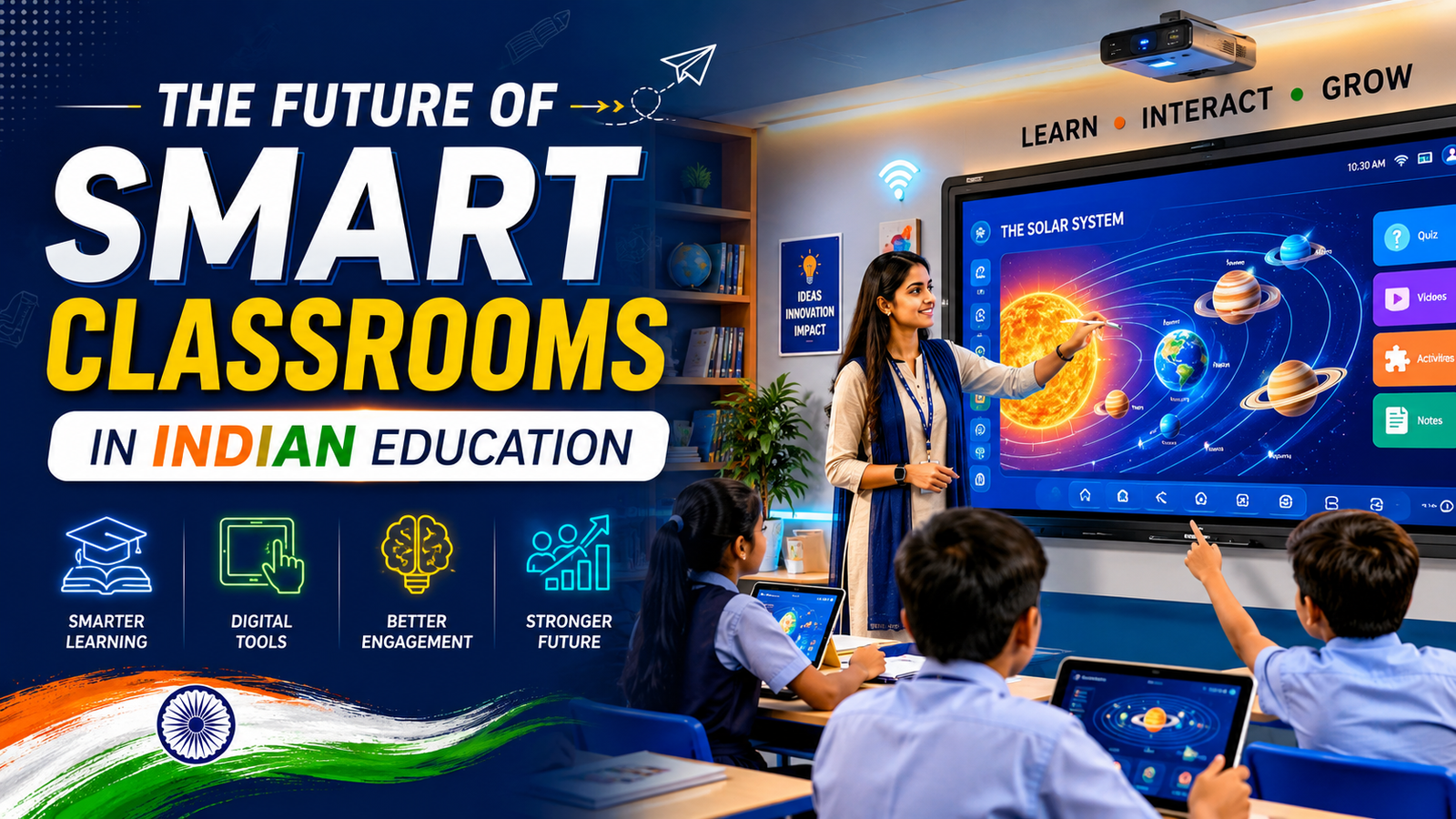
Education in India is entering a new era with the rise of smart classrooms that combine technology and innovative teaching methods. Digital boards, AI-powered tools, and interactive learning platforms are transforming traditional classrooms into engaging and personalized learning spaces. By improving accessibility, creativity, and digital skills, smart classrooms are shaping the future of education and preparing students for a technology-driven world.
Technology is transforming the education sector by changing how students access information, interact with teachers, and understand concepts. Traditional classrooms that once depended mainly on chalkboards, textbooks, and lectures are now evolving into digital learning environments powered by modern technologies.
Smart classrooms are becoming an important part of this transformation by making learning more interactive, engaging, and personalized. With digital tools, multimedia content, and advanced learning solutions, students can explore concepts beyond textbooks and develop skills needed for the future. As India moves toward a technology-driven education system, smart classrooms are becoming a key foundation for modern learning.
A smart classroom is a technology-enabled learning environment that uses digital tools to improve teaching and learning experiences. Unlike traditional classrooms, smart classrooms allow teachers to use interactive content, multimedia resources, and data-driven methods to make lessons more effective.
Key components of smart classrooms include:
Interactive boards replace traditional blackboards and allow teachers to display presentations, videos, diagrams, and interactive lessons. Students can actively participate by solving problems and exploring concepts digitally.
Projectors, videos, animations, and audio content help make lessons more engaging. Visual learning improves understanding, especially for complex subjects such as science, mathematics, and technology.
Online platforms provide access to digital resources, e-books, online courses, and educational materials from around the world, helping students learn beyond the classroom.
AI-powered tools analyze student performance and provide personalized learning recommendations. They help identify learning gaps and support individual student growth.
VR and AR technologies create immersive learning experiences by allowing students to explore virtual environments, conduct simulations, and understand concepts through 3D visualization.
Digital assessment tools help teachers evaluate student performance, track progress, and provide faster feedback for improvement.
The adoption of smart classrooms is increasing rapidly across schools, colleges, and coaching institutions in India. Educational institutions are recognizing the importance of technology in improving teaching quality and student engagement.
Government initiatives promoting digital education and technology-based learning have encouraged schools to adopt digital tools. Programs focused on online education, digital resources, and technology infrastructure are helping create better learning opportunities for students.
Private educational institutions are also investing in smart classroom solutions to provide advanced learning experiences. By integrating digital platforms, interactive content, and modern teaching methods, these institutions are preparing students for a competitive and technology-focused future.
Smart classrooms make learning more interesting through videos, animations, simulations, and interactive activities. Instead of only reading about concepts, students can visually understand and experience them.
For example, complex scientific processes can be explained through animations, while historical events can be explored through virtual experiences. This approach improves understanding and helps students retain information for longer periods.
Every student learns at a different pace. Smart classrooms use AI and data analytics to understand individual learning patterns, strengths, and areas that need improvement.
Personalized learning systems provide customized content and recommendations, allowing students to learn according to their abilities and needs.
Technology encourages teamwork and collaboration through digital projects, online discussions, and shared learning platforms. Students can connect with classmates, teachers, and experts beyond geographical boundaries.
This collaborative approach develops communication skills, creativity, and problem-solving abilities.
Smart classroom technology supports teachers by providing access to updated educational resources, digital lesson plans, and interactive teaching tools.
Teachers can create more engaging lessons, monitor student progress, and focus on improving learning outcomes rather than relying only on traditional teaching methods.
Artificial Intelligence will play a major role in shaping the future of smart classrooms. AI-powered systems can support both students and teachers in multiple ways.
Some important applications include:
With responsible implementation, AI can make education more efficient, accessible, and student-focused.
Virtual Reality and Augmented Reality are introducing new ways of experiencing education. These technologies allow students to learn through immersive environments rather than only through books and lectures.
Examples include:
By creating realistic learning experiences, VR and AR can improve curiosity, understanding, and engagement among students.
Smart classrooms provide several benefits that support better learning outcomes:
Although smart classrooms offer many advantages, their implementation also comes with challenges.
Many rural and remote schools still face limited access to technology and internet facilities, creating a gap between different regions.
Setting up smart classrooms requires reliable electricity, internet connectivity, and proper maintenance.
The investment required for hardware, software, and training can be challenging for some educational institutions.
Teachers need proper training to effectively use digital tools and integrate technology into their teaching methods.
Protecting student information and ensuring safe digital learning environments is essential as technology becomes more integrated into education.
Technology will not replace teachers; instead, it will support them in creating better learning experiences. Teachers will continue to play an important role as mentors, guides, and facilitators.
To succeed in smart classrooms, educators need to adapt to digital teaching methods and continuously develop their technology skills. Regular training programs can help teachers use modern tools effectively and improve classroom outcomes.
Smart classrooms support the vision of modern education by focusing on skill development, creativity, innovation, and critical thinking. Technology enables flexible learning models where students can learn anytime and anywhere.
By combining traditional teaching methods with digital solutions, smart classrooms help create a more inclusive and learner-centered education system.
The future of smart classrooms will be driven by advanced technologies and personalized learning approaches. Future classrooms may include:
These developments will create learning environments that are more flexible, interactive, and aligned with future career requirements.
Smart classrooms are reshaping Indian education by making learning more interactive, accessible, and technology-driven. They provide students with new opportunities to explore knowledge, develop digital skills, and prepare for the future.
However, successful adoption requires a balanced approach that combines technology with effective teaching practices. By improving infrastructure, training teachers, and ensuring equal access, India can build smarter, more inclusive, and future-ready education systems that empower the next generation of learners.
