

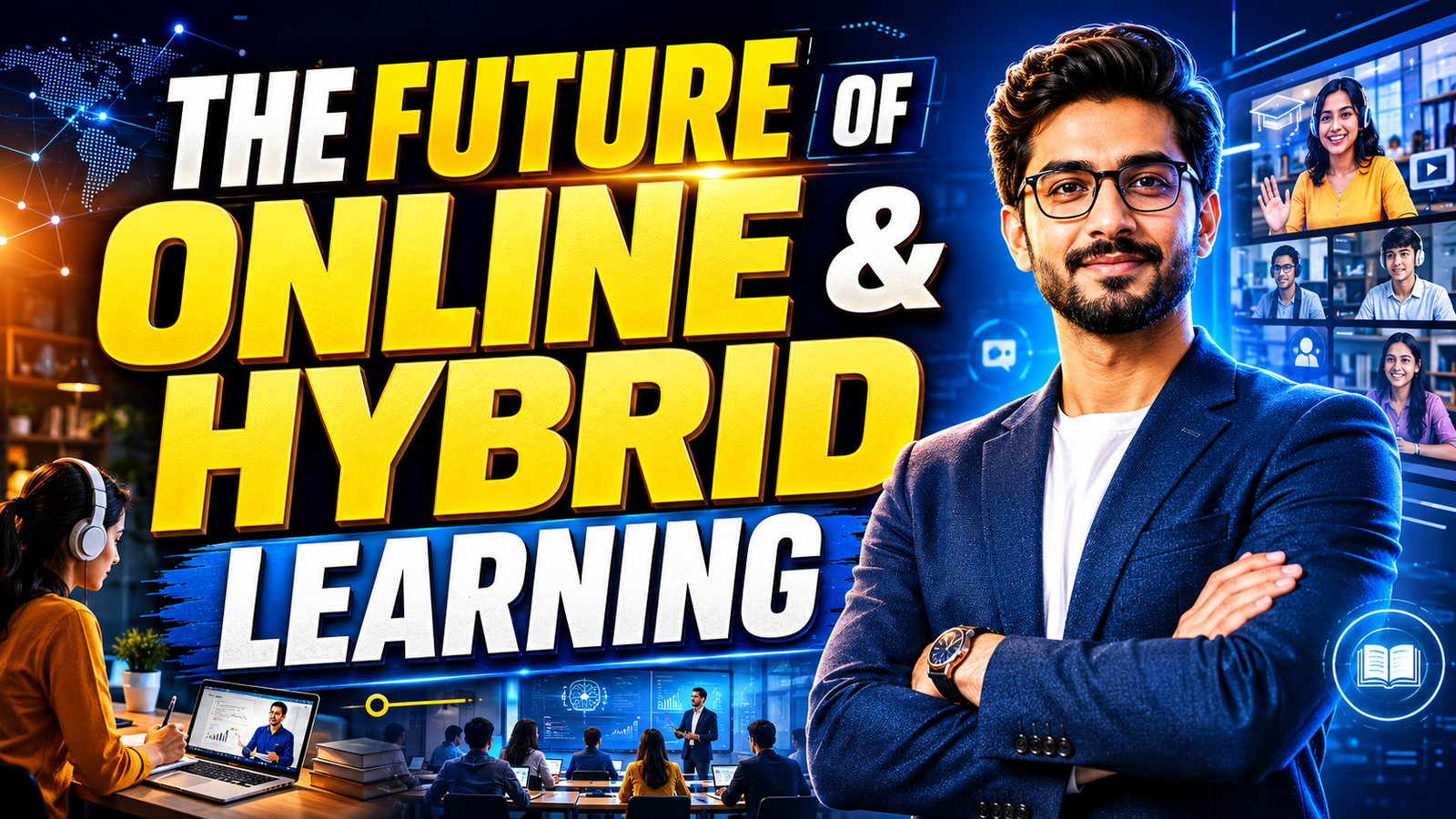
Online and hybrid learning have transformed education by making learning more flexible, accessible, and personalized than ever before. As technology continues to evolve, these learning models are becoming permanent features of modern education. Explore the benefits, challenges, emerging technologies, and future trends that are shaping the next generation of teaching and learning. The Future of Online and Hybrid Learning Introduction Education has undergone a remarkable transformation over the past decade, driven by rapid advancements in digital technology. The emergence of online learning platforms, virtual classrooms, and digital educational resources has reshaped how students access knowledge and how educators deliver instruction. The COVID-19 pandemic accelerated this shift significantly, forcing schools, colleges, and universities worldwide to adopt remote learning solutions almost overnight. What began as a temporary response to an unprecedented crisis has evolved into a long-term educational strategy. Today, online and hybrid learning models are no longer considered alternatives to traditional education; they are becoming essential components of the future learning landscape. As technology continues to advance and learner expectations change, online and hybrid learning are poised to play a central role in creating more flexible, inclusive, and effective educational experiences. Understanding Online and Hybrid Learning What is Online Learning? Online learning refers to educational experie
Education has experienced one of the most significant transformations in its history over the past decade. From traditional classrooms to virtual learning environments, technology has revolutionized the way students access knowledge and interact with educators. What was once considered an alternative method of learning has now become a central part of modern education.
Online and hybrid learning models are no longer temporary solutions—they are shaping the future of education. As schools, colleges, and universities continue to embrace digital innovation, learners are benefiting from greater flexibility, personalized learning experiences, and access to educational opportunities that were once out of reach.
Before exploring the future, it's important to understand what online and hybrid learning actually mean.
Online learning refers to education delivered entirely through digital platforms. Students attend virtual classes, access study materials online, submit assignments electronically, and communicate with instructors through various digital tools. Online learning can be conducted in real time through live classes (synchronous learning) or through pre-recorded lessons and self-paced modules (asynchronous learning).
Hybrid learning, often called blended learning, combines traditional classroom instruction with online educational activities. Students enjoy face-to-face interaction with teachers while also benefiting from the flexibility and convenience of digital resources. This balanced approach has become increasingly popular because it combines the strengths of both learning methods.
Several factors have contributed to the rapid growth of online and hybrid learning.
The expansion of internet access and the widespread use of smartphones and laptops have made digital education more accessible than ever before. Students can now learn from virtually anywhere, whether they live in a major city or a remote location.
The COVID-19 pandemic also played a major role in accelerating the adoption of online learning. Educational institutions worldwide were forced to shift to virtual classrooms, leading to increased investment in digital technologies and innovative teaching methods. Even after the return of traditional classrooms, many institutions continued using online and hybrid approaches because of their proven effectiveness.
Additionally, the growing demand for flexible education has encouraged institutions to offer learning options that accommodate different schedules, learning styles, and personal circumstances.
One of the biggest advantages of online learning is flexibility. Students can learn at their own pace, revisit lessons when needed, and balance their education with work, family responsibilities, or other commitments.
Online learning also provides access to a vast range of educational resources. Students are no longer limited to local institutions and can enroll in courses offered by leading universities and experts from around the world.
Another significant benefit is personalized learning. Many digital platforms use technology to adapt content to individual learning needs, helping students focus on areas where they need improvement.
From a financial perspective, online learning can be more affordable by reducing transportation, accommodation, and material costs. It also encourages lifelong learning by making professional development and skill enhancement more accessible to people at every stage of their careers.
While online learning offers many advantages, face-to-face interaction remains valuable. This is where hybrid learning excels.
Hybrid learning combines classroom engagement with digital flexibility. Students benefit from direct interaction with teachers and peers while still having access to online resources and learning tools.
This blended approach often leads to higher engagement levels because it incorporates various teaching methods, including discussions, videos, interactive activities, and collaborative projects. It also allows educators to customize instruction and provide more personalized support.
For many educational institutions, hybrid learning represents the best of both worlds, offering a balanced and effective learning experience.
The future of online and hybrid learning will be driven by emerging technologies that make education more engaging, personalized, and efficient.
Artificial Intelligence is already transforming education by providing personalized learning experiences. AI-powered systems can analyze student performance, identify learning gaps, and recommend customized learning paths.
Intelligent tutoring systems can offer immediate support and guidance, while automated assessment tools provide faster feedback, helping students improve their understanding more effectively.
VR and AR technologies are creating immersive educational experiences that go beyond traditional textbooks and videos.
Students can explore historical landmarks, conduct virtual science experiments, and practice real-world skills through simulations. These interactive experiences make learning more engaging and help students understand complex concepts more easily.
Data-driven education is becoming increasingly important. Learning analytics allows educators to track student progress, monitor engagement, and identify potential learning challenges before they become serious issues.
By using data effectively, institutions can improve teaching strategies and provide targeted support to students who need it most.
Despite the many advantages of online and hybrid learning, several challenges remain.
The digital divide continues to be a major concern. Not all students have access to reliable internet connections, modern devices, or suitable learning environments. Addressing these inequalities is essential to ensuring that all learners have equal opportunities.
Maintaining student motivation and engagement can also be difficult in online settings. Without proper support and interaction, some students may struggle to stay focused and committed.
Cybersecurity and data privacy are additional concerns as educational institutions increasingly rely on digital platforms. Protecting student information and maintaining secure learning environments must remain a priority.
Finally, teachers need ongoing training to effectively use educational technologies and adapt to changing instructional methods.
As technology becomes more integrated into education, the role of teachers is evolving.
Rather than serving solely as sources of information, teachers are becoming facilitators, mentors, and guides who help students navigate the learning process. They support critical thinking, encourage collaboration, and create meaningful learning experiences.
To succeed in this new environment, educators must continuously develop their digital skills and stay informed about emerging technologies and teaching practices.
The classroom of the future will likely be a dynamic and connected learning environment where technology and traditional instruction work together seamlessly.
Smart classrooms equipped with interactive technologies will enhance collaboration and engagement. Flexible learning spaces will support both in-person and remote participation. AI-powered tools will assist with personalized learning, while digital platforms will make educational resources accessible anytime and anywhere.
Education will become increasingly student-centered, focusing on skills, competencies, and real-world problem-solving rather than memorization alone.
To thrive in a rapidly changing world, students need more than academic knowledge. They must develop digital literacy, critical thinking, problem-solving abilities, and the capacity for lifelong learning.
Online and hybrid learning environments provide opportunities to build these essential skills. By encouraging self-directed learning and virtual collaboration, educational institutions can better prepare students for future careers and global challenges.
The future of education is undoubtedly connected to online and hybrid learning. Technological advancements, changing learner expectations, and the demand for greater flexibility are driving the transformation of educational systems worldwide.
Although challenges such as digital accessibility, cybersecurity, and teacher readiness must be addressed, the benefits of these learning models are too significant to ignore. They offer new possibilities for personalized education, global connectivity, and lifelong learning.
As institutions continue to innovate and adapt, online and hybrid learning will play a crucial role in creating more inclusive, flexible, and effective educational experiences. The future classroom is not just digital—it is a blended environment that empowers learners to succeed in an increasingly connected world.
