

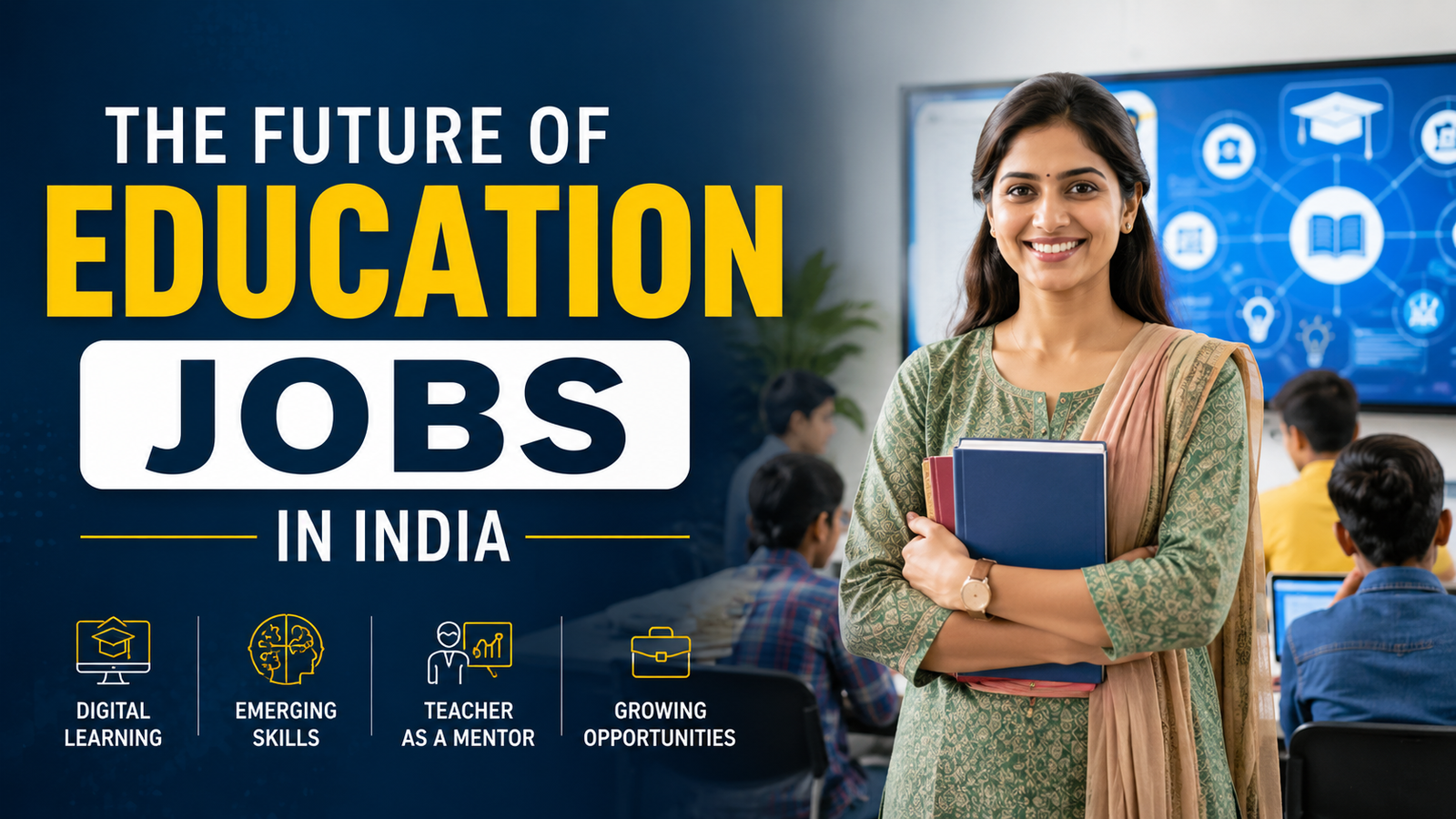
The education sector in India is experiencing a remarkable transformation, creating new career opportunities beyond traditional teaching roles. With the rise of technology, artificial intelligence, online learning platforms, and changing education policies, the future of education jobs is becoming more diverse and dynamic. From digital educators and instructional designers to AI education specialists, career counsellors, and learning analysts, new roles are emerging to meet the evolving needs of students. As India’s demand for quality education continues to grow, professionals with a combination of teaching expertise, digital skills, creativity, and adaptability will have significant opportunities. The future of education careers will focus on personalized learning, innovation, and the integration of technology while maintaining the essential human connection between educators and learners. This blog explores the changing landscape of education jobs in India, emerging career paths, required skills, and how aspiring professionals can prepare for the future.
The education sector in India is undergoing a major transformation. For decades, education jobs were primarily associated with traditional roles such as school teachers, college professors, and tutors. However, rapid advancements in technology, changing learning preferences, and new education policies are creating a much broader career landscape.
Today, education is no longer limited to physical classrooms. Digital platforms, artificial intelligence, online learning solutions, and innovative teaching methods are reshaping how students learn and how educators work. This transformation is creating demand for skilled educators, trainers, technology specialists, curriculum experts, and education professionals who can adapt to the evolving needs of learners.
The future of education jobs in India will focus not only on teaching knowledge but also on creating meaningful learning experiences. Professionals who combine subject expertise with technology skills, creativity, and problem-solving abilities will have exciting opportunities in the coming years.
India has one of the largest education systems in the world, with millions of students enrolled across schools, colleges, universities, coaching institutes, and online learning platforms. The growing demand for quality education has created significant employment opportunities across different segments.
The expansion of private schools, higher education institutions, skill-development centres, and EdTech companies has increased the need for qualified professionals. Urban areas are witnessing growth in premium educational services, while rural regions are experiencing increased demand for accessible and affordable learning solutions.
Online education has further expanded career opportunities by allowing educators to reach students beyond geographical boundaries. From online tutoring to digital course creation, professionals can now build careers in education without being restricted to traditional institutions.
With increasing awareness about the importance of quality education, India’s education sector is expected to continue growing, creating diverse career options for future professionals.
Teachers will always remain at the heart of education, but their roles are changing significantly. The future teacher will not simply deliver information but will act as a mentor, facilitator, and learning guide.
Modern classrooms require educators who can understand individual learning needs and provide personalized support. Instead of focusing only on textbook-based teaching, future educators will encourage critical thinking, creativity, collaboration, and practical application of knowledge.
Digital literacy has become an essential skill for teachers. Educators need to understand online teaching platforms, digital resources, interactive tools, and technology-based assessment methods.
Continuous professional development will also become increasingly important. Teachers who regularly upgrade their skills and adapt to new teaching approaches will be better prepared for future opportunities in the education sector.
The growth of educational technology (EdTech) has created many career opportunities beyond traditional classroom teaching. Technology has introduced new roles that combine education expertise with digital skills.
Some emerging careers in digital education include:
Online tutors provide personalized learning support to students through digital platforms. They can teach subjects, prepare students for competitive exams, or provide skill-based training.
Instructional designers create effective learning materials, online courses, and digital training programs. They combine educational principles with technology to improve learning outcomes.
These professionals focus on designing engaging and interactive learning journeys. They use research, creativity, and technology to improve student experiences.
Content creators develop videos, articles, animations, study materials, and digital resources that help students understand complex topics.
With the growth of online education, professionals are needed to manage virtual classrooms, coordinate online sessions, and support digital learning environments.
Artificial intelligence, learning management systems, and online platforms will continue to influence education careers. Professionals who understand these technologies will have a competitive advantage.
The future of education jobs will include several emerging roles that go beyond traditional teaching.
Artificial intelligence is becoming an important part of modern education. AI specialists in education help develop smart learning systems, automated assessments, and personalized learning solutions.
Curriculum developers design educational programs that match industry requirements and changing learning needs. They work with schools, universities, and training organizations to create effective learning frameworks.
As academic choices become more complex, students need guidance regarding careers, courses, and personal development. Counsellors play an important role in supporting students’ educational journeys.
Career advisors help students identify suitable career paths based on their interests, skills, and future opportunities.
Inclusive education is gaining importance, increasing demand for professionals trained to support students with different learning requirements.
Education consultants provide expertise to institutions, students, and organizations on academic planning, admissions, and education strategies.
These professionals analyze student learning data to improve teaching methods, identify learning gaps, and create better educational outcomes.
Artificial intelligence is one of the biggest factors shaping the future of education. While some fear that AI may replace educators, its primary role is expected to support teachers and improve learning experiences.
AI can help educators by:
Teachers who understand AI tools will be able to use technology effectively while maintaining the human connection that is essential in education.
The future will require educators to balance technology with empathy, creativity, and communication skills. AI may handle repetitive tasks, but teachers will continue to play a crucial role in motivation, mentoring, and emotional support.
Education careers of the future will require a combination of teaching expertise, technology knowledge, and interpersonal skills.
Important skills include:
Educators should understand online platforms, digital tools, and technology-based learning methods.
Strong communication skills help educators connect with students, parents, and colleagues effectively.
Understanding learning data can help professionals identify student needs and improve teaching strategies.
Future educators must create engaging learning experiences and adapt to new teaching methods.
Understanding student emotions and providing support will remain a key responsibility of education professionals.
The education sector will continue changing, making flexibility and willingness to learn essential qualities.
Government policies and education reforms are playing an important role in shaping the future of education jobs in India. Increased focus on skill development, vocational education, digital learning, and improving teaching quality is creating new opportunities.
Modern education reforms emphasize practical learning, technology integration, and career-oriented education. These changes are expected to increase demand for teachers, trainers, curriculum experts, and education specialists.
Skill-development initiatives are also encouraging professionals to enter fields such as vocational training, online education, and industry-focused learning programs.
As education continues to evolve, government and private sector initiatives will contribute to creating a stronger employment ecosystem in the education industry.
Education opportunities are expanding beyond major cities. Rural and semi-urban areas are experiencing growing demand for qualified teachers, trainers, and education professionals.
Technology has made it possible to provide quality education to students in remote locations through online classes and digital resources.
Future career opportunities in rural and inclusive education include:
Inclusive education will also become an important area of growth, creating opportunities for professionals who can support diverse learning needs.
Although education careers offer significant opportunities, professionals will also face several challenges.
Technology and teaching methods are constantly changing. Education professionals must continue learning to remain relevant.
Access to technology and internet connectivity remains a challenge in some regions. Ensuring equal learning opportunities will require continued efforts.
Future education jobs will require a combination of traditional teaching abilities and modern digital skills.
While technology improves learning, educators must continue building relationships, encouraging creativity, and supporting students emotionally.
Individuals interested in education careers can prepare themselves by developing relevant skills and gaining practical experience.
Some important steps include:
Continuous learning will be the key to success in future education careers.
The future of education jobs in India is filled with opportunities. The education sector is expanding beyond traditional teaching roles and creating careers in technology, content development, counselling, research, training, and educational innovation.
Teachers will continue to play a vital role, but future educators will need to become technology-enabled mentors and lifelong learners. Professionals who combine educational knowledge with digital skills, creativity, and adaptability will be well-positioned for success.
As India continues to invest in education and digital transformation, careers in the education sector will remain among the most meaningful and impactful career choices for future generations.
