

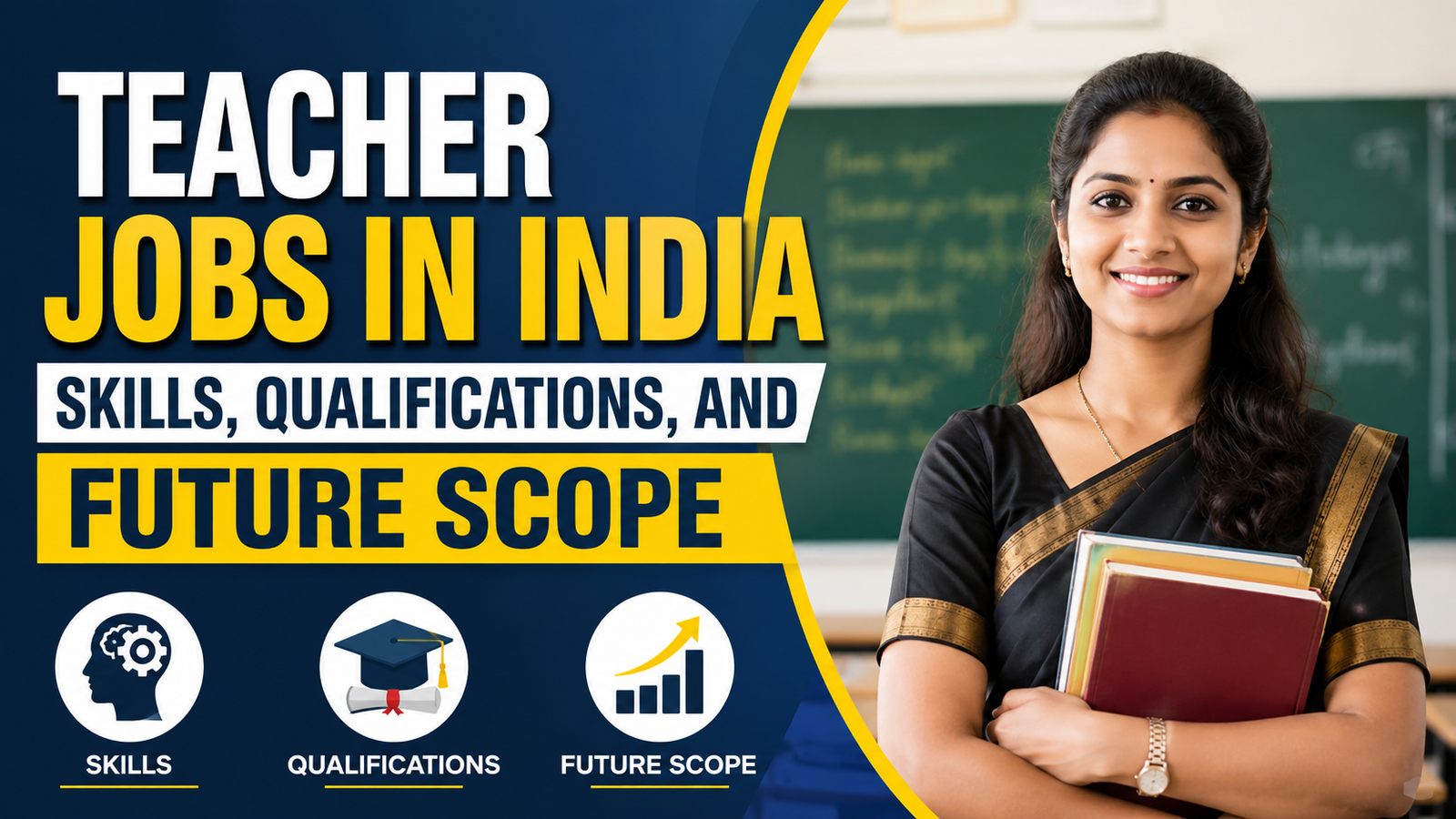
The teaching profession in India continues to evolve, offering rewarding career opportunities for individuals passionate about education and student development. With the expansion of schools, online learning platforms, and skill-based education, the demand for qualified teachers is growing rapidly. A successful teaching career requires the right qualifications, strong communication skills, subject expertise, classroom management abilities, and adaptability to modern teaching technologies. From primary school teachers and government educators to online instructors and university lecturers, teaching offers diverse career paths across various sectors. With emerging trends such as digital classrooms, AI-assisted learning, and personalized education, the future scope of teacher jobs in India is promising. This blog explores the skills, qualifications, career opportunities, salary prospects, and future trends that aspiring teachers need to know before building a career in education.
Teaching has always been considered one of the most respected and meaningful professions in India. Teachers play a crucial role in shaping young minds, building future generations, and contributing to the development of society. With the rapid growth of the education sector, the demand for skilled and qualified teachers continues to increase across schools, colleges, coaching institutes, and online learning platforms.
India’s education landscape has changed significantly in recent years. The expansion of private schools, government education initiatives, digital learning platforms, and skill-based education programs has created numerous opportunities for aspiring educators. The rise of online education and hybrid learning models has further opened new career paths for teachers beyond traditional classrooms.
A career in teaching offers stability, continuous learning opportunities, and the chance to make a positive impact on students’ lives. However, becoming a successful teacher requires the right qualifications, skills, dedication, and adaptability. This blog explores teacher jobs in India, the qualifications required, essential skills, career opportunities, salary prospects, and the future scope of the teaching profession.
Teaching is not just a profession; it is a responsibility that influences the intellectual and personal growth of students. Many individuals choose teaching careers because of the stability, respect, and personal satisfaction associated with the profession.
Teaching is considered a stable career option because education remains an essential sector. Schools, colleges, and educational institutions constantly require qualified teachers. With experience and additional qualifications, teachers can progress into senior roles such as academic coordinators, principals, education consultants, and curriculum designers.
Teachers have the unique opportunity to guide students, develop their confidence, and help them achieve their goals. A good teacher can inspire curiosity, creativity, and lifelong learning among students.
Teaching opportunities are available across multiple sectors, including:
This variety allows candidates to choose a career path based on their interests, qualifications, and expertise.
Teaching offers flexibility for individuals with different educational backgrounds. Professionals can choose full-time teaching roles, online tutoring, part-time teaching, research, or educational content development.
The teaching profession offers diverse career opportunities at different educational levels.
Primary teachers educate young learners and focus on developing basic skills such as reading, writing, mathematics, communication, and social understanding. They play an important role in building students’ foundational knowledge.
Secondary school teachers specialize in specific subjects such as Science, Mathematics, English, Social Science, or Commerce. They prepare students for board examinations and higher education.
Government teaching jobs are among the most preferred career options due to job security, attractive benefits, and career stability. Candidates usually need to clear eligibility exams such as CTET or state-level Teacher Eligibility Tests.
Private schools offer opportunities for teachers with different levels of experience. Many private institutions provide faster career growth, professional development programs, and exposure to modern teaching methods.
Higher education teaching requires advanced qualifications. College lecturers teach specialized subjects and may also participate in research activities.
The growth of online learning platforms has created demand for digital educators who can teach students through virtual classrooms, recorded courses, and online tutoring sessions.
Educational technology companies hire subject experts to create learning materials, develop courses, prepare questions, and support online education programs.
Special education teachers work with students who have different learning needs. They use specialized teaching methods to support inclusive education.
Coaching institutes hire experienced teachers to prepare students for competitive examinations, entrance tests, and academic improvement programs.
The qualifications required for teaching jobs depend on the education level and institution type.
To become a primary teacher, candidates generally require:
These courses help teachers understand child development, teaching methods, and classroom management.
For teaching in secondary and senior secondary schools, candidates usually need:
A B.Ed. program develops teaching skills, educational psychology knowledge, and classroom management abilities.
For teaching in colleges and universities, candidates generally require:
Higher education teaching often combines classroom instruction with research and academic development.
A successful teacher requires more than academic qualifications. Modern teaching demands a combination of communication, technology, creativity, and interpersonal skills.
Effective communication is one of the most important skills for teachers. Teachers must explain complex concepts clearly, encourage student participation, and create an environment where students feel comfortable asking questions.
Teachers must have a strong understanding of their subject area. Continuous learning helps educators stay updated with new concepts, teaching methods, and curriculum changes.
Managing a classroom requires patience, leadership, and organization. Teachers must maintain discipline while creating a positive and engaging learning environment.
Technology has become an important part of education. Teachers should be familiar with:
Creative teaching methods make lessons more interesting and effective. Teachers should design activities, examples, and learning experiences that support different learning styles.
Understanding students’ emotions and learning challenges helps teachers build trust and provide better guidance. Empathy and patience are essential qualities for effective teaching.
Aspiring teachers can follow these steps to build a successful teaching career:
Choose the appropriate degree based on the teaching level you want to pursue.
Complete courses such as:
depending on your career goals.
Candidates interested in government and many school teaching positions may need to qualify:
Teaching internships, assistant teacher roles, tutoring, and classroom experience help develop practical teaching skills.
Candidates can apply through:
Successful teachers regularly upgrade their knowledge through workshops, certifications, and advanced courses.
Both government and private teaching careers offer unique advantages.
Advantages include:
However, government teaching positions usually involve competitive exams and strict eligibility requirements.
Advantages include:
Private institutions often value skills, experience, and teaching performance.
Teacher salaries vary depending on several factors, including:
Experienced and highly qualified teachers generally have better earning opportunities.
Teachers can progress into roles such as:
The future of teaching in India looks promising due to changes in education technology and increasing demand for quality educators.
Online education has expanded access to learning and created opportunities for teachers to work with students from different locations.
Teachers who understand technology-based learning methods will have better career opportunities.
Artificial intelligence is transforming education through personalized learning tools, automated assessments, and digital teaching support. Teachers who learn to use these technologies can improve classroom experiences.
There is growing demand for teachers in areas such as:
Modern education focuses increasingly on practical skills, creativity, problem-solving, and career readiness.
Qualified Indian teachers can explore international teaching opportunities in schools, online education platforms, and academic institutions worldwide.
Technology is changing how teachers deliver education and interact with students.
Digital boards, interactive content, and multimedia resources make classroom learning more engaging.
LMS platforms help teachers manage lessons, assignments, assessments, and student progress.
AI tools can support teachers by providing learning insights, personalized resources, and automated administrative support.
Online classrooms allow teachers to reach students beyond geographical boundaries.
Technology enables customized learning experiences based on individual student needs and learning speed.
Although teaching is a rewarding profession, educators face several challenges.
Teachers need continuous training to effectively use modern educational tools.
Students have different learning abilities, backgrounds, and needs. Teachers must adopt inclusive teaching strategies.
Education constantly evolves, requiring teachers to update their knowledge and teaching methods.
Teachers often manage tasks beyond teaching, including assessments, documentation, and school activities.
Students and professionals planning a teaching career can follow these tips:
Teacher jobs in India offer excellent opportunities for individuals who are passionate about education and helping others learn. With the expansion of schools, digital education, and skill-based learning, the demand for qualified teachers is expected to continue growing.
A successful teaching career requires the right qualifications, strong communication skills, subject expertise, and the ability to adapt to changing educational trends. Teachers who combine traditional teaching values with modern technology skills can build rewarding and impactful careers.
For aspiring educators, teaching is not only a stable profession but also an opportunity to shape the future of students and contribute to society.
