

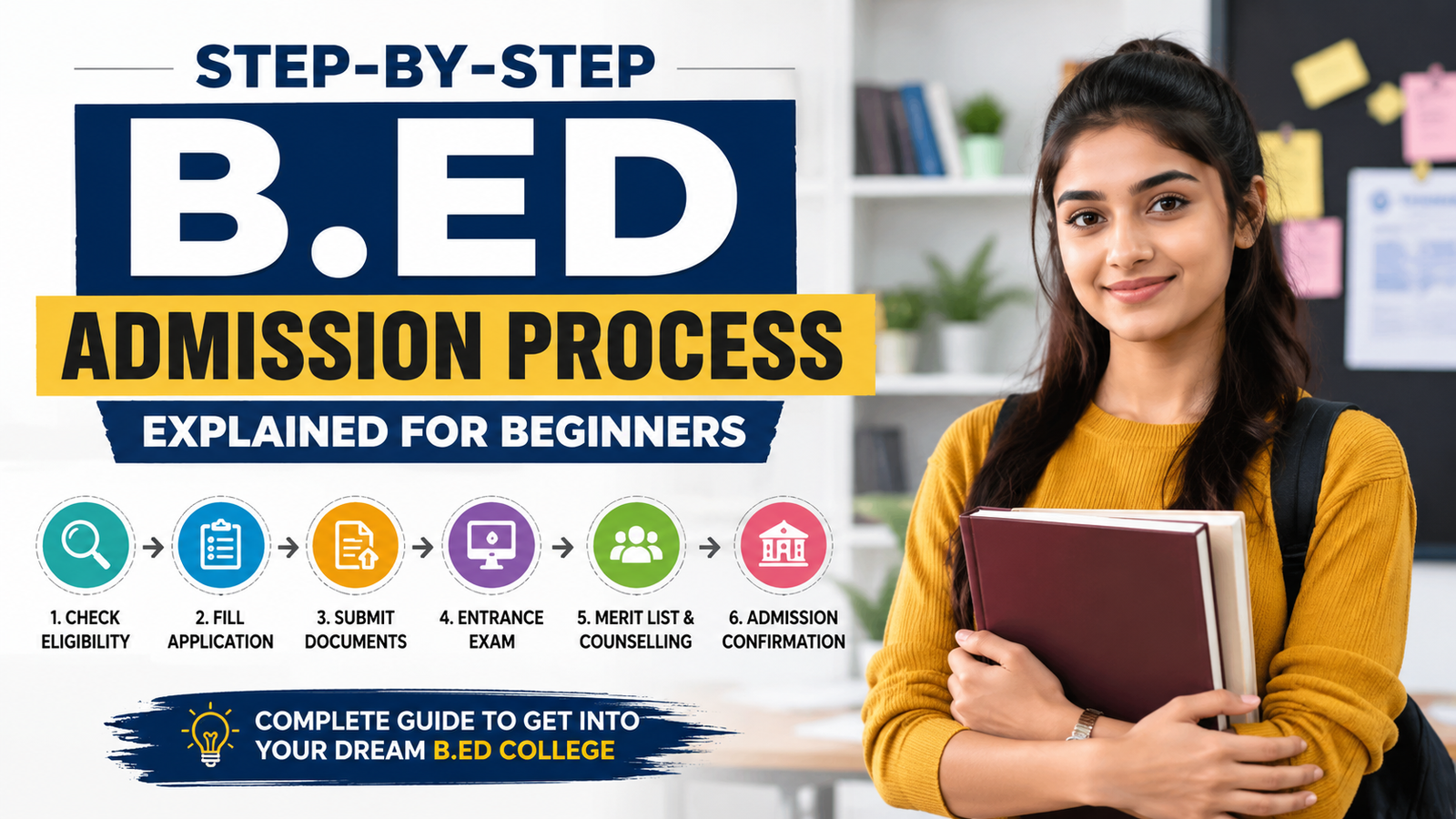
Learn the complete step-by-step B.Ed admission process for beginners, including eligibility criteria, entrance exams, required documents, counselling, fees, and top tips to secure admission in a good B.Ed college in India.
Teaching has always been one of the most respected and stable career options in India. With the growing demand for qualified teachers in schools, coaching institutes, and online education platforms, pursuing a B.Ed degree has become an important step for students who want to build a career in the education sector.
However, many students often feel confused about the B.Ed admission process. Questions like “How do I apply?”, “Which entrance exam should I prepare for?”, and “What documents are required?” are very common among beginners.
In this blog, we will explain the complete B.Ed admission process step by step in a simple and beginner-friendly way. Whether you are applying for the first time or just exploring your options, this guide will help you understand everything clearly.
B.Ed stands for Bachelor of Education. It is a professional degree program designed for students who want to become teachers in schools and educational institutions.
The course mainly focuses on:
The B.Ed course in India is generally of:
A B.Ed degree is ideal for:
After completing B.Ed, students can work as:
Before applying for B.Ed admission, students must check whether they meet the eligibility criteria.
Most colleges require:
Generally:
Students from:
all streams can apply for B.Ed courses.
Most universities do not have a strict age limit, but some state universities may have specific rules.
SC/ST/OBC and other reserved category candidates often receive:
There are mainly two ways to get admission into a B.Ed course.
Some colleges provide admission based on:
In this process, colleges prepare a merit list based on students’ scores.
Many universities conduct entrance exams for B.Ed admission.
These exams test:
Entrance exam scores play an important role in getting admission to top colleges.
Several universities and states conduct B.Ed entrance examinations every year.
Some popular examples include:
Most B.Ed entrance exams include:
Start by researching different colleges and universities offering B.Ed programs.
Check:
Always choose colleges approved by recognized education authorities.
Carefully verify:
Applying without meeting eligibility criteria may lead to rejection.
Most colleges now offer online application forms.
While filling the form:
Small mistakes can create problems later during verification.
Students are usually required to upload:
Ensure scanned documents are clear and properly formatted.
After completing the form, students must pay the application fee.
Common payment methods include:
The fee amount varies depending on the university.
If the university conducts an entrance exam:
Good preparation increases the chances of getting admission into top colleges.
After the entrance exam or application review:
Students who score above the cut-off become eligible for counselling and seat allotment.
The counselling process usually includes:
Students must attend counselling on the scheduled dates.
To confirm admission:
After this step, students officially become part of the B.Ed program.
Here are the commonly required documents:
Keep both original and photocopies ready.
Approximate fee range:
Approximate fee range:
Students may also spend on:
Students should regularly check:
Missing important dates can result in losing admission opportunities.
Many students make avoidable mistakes during the admission process.
Avoid:
Being careful during each step can save time and stress.
Here are some useful tips:
Smart planning improves your chances of getting admission into a top B.Ed college.
A B.Ed degree opens doors to many career opportunities.
Students can work as:
With experience and additional qualifications, teachers can also move into administrative and leadership roles.
Yes, B.Ed is generally required for teaching positions in schools across India.
Yes, students can pursue B.Ed after completing graduation from a recognized university.
Distance B.Ed is valid only if the institution is approved by the appropriate authorities.
The best entrance exam depends on the university or state where you want admission.
Starting salaries vary, but teachers can earn between ₹2.5 lakh to ₹6 lakh annually depending on experience and institution.
The B.Ed admission process may look complicated at first, but with proper guidance and preparation, it becomes much easier. From checking eligibility to attending counselling sessions, every step is important for securing admission into a good college.
Students should stay updated with admission dates, prepare documents in advance, and research colleges carefully before applying.
If you are passionate about teaching and shaping young minds, a B.Ed degree can be the perfect first step toward a rewarding and respected career in education.
