

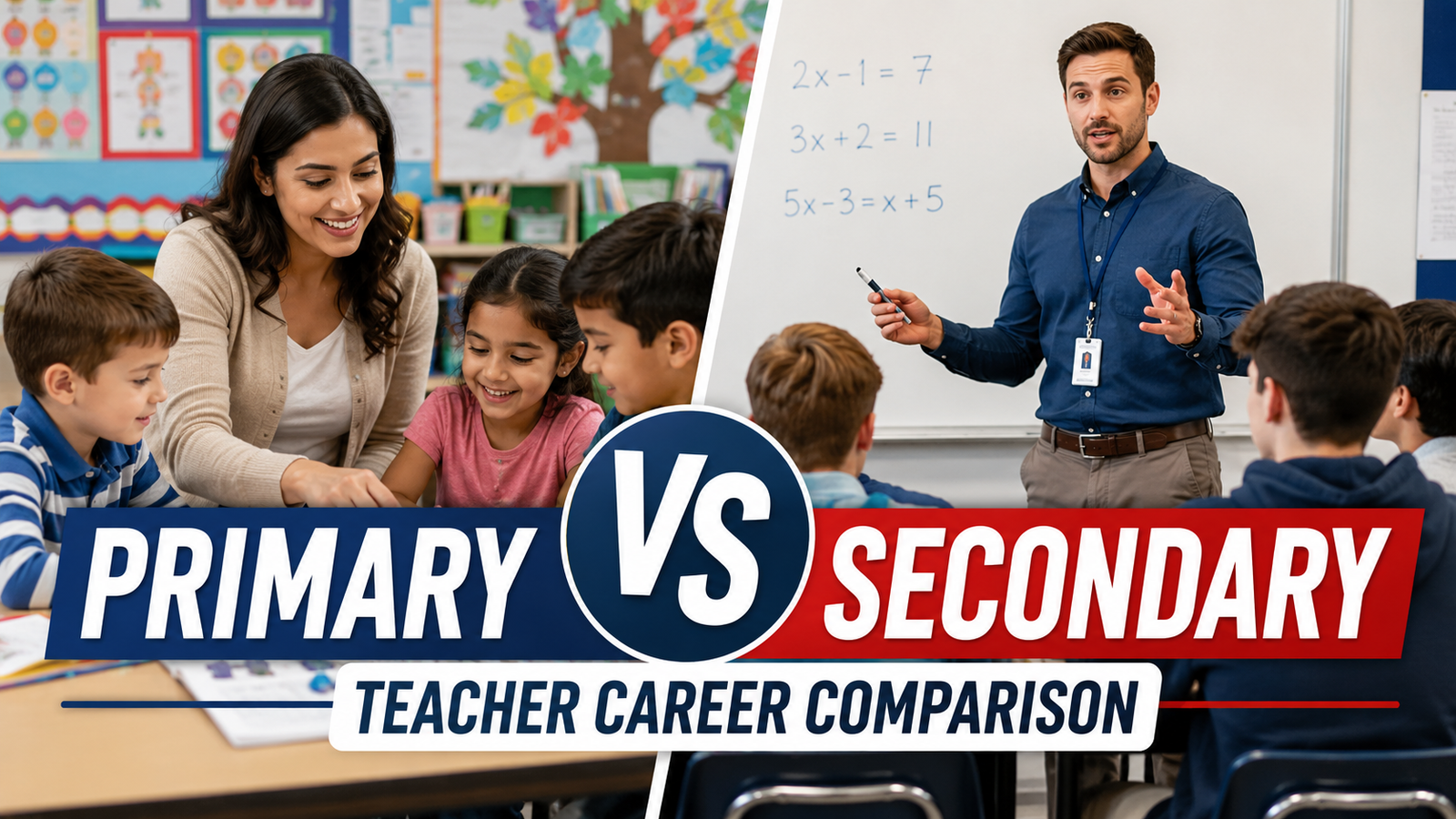
Choosing between a career as a Primary Teacher and a Secondary Teacher is an important decision for anyone entering the field of education. While both roles play a vital part in shaping students’ futures, they differ significantly in terms of responsibilities, teaching methods, required qualifications, and classroom environments. Primary teachers focus on building the foundational skills of young learners through interactive and creative learning approaches, whereas secondary teachers specialize in subject-specific knowledge and prepare students for higher academic challenges and examinations. This article provides a detailed comparison of both career paths, helping aspiring educators understand which role best aligns with their skills, interests, and long-term career goals.
Teaching is one of the most respected and meaningful professions, shaping the future of individuals and society. Within this profession, teachers are categorized into different levels such as primary and secondary education.
For aspiring educators, understanding the difference between a Primary Teacher and a Secondary Teacher is essential. Both roles are important, but they differ in teaching style, responsibilities, qualifications, and career growth opportunities. This article provides a clear comparison to help you choose the right teaching career path.
A Primary Teacher is responsible for teaching young children in the early stages of schooling, usually from Class 1 to Class 5.
The main role of a primary teacher is to build the foundation of a child’s education. This includes teaching basic literacy, numeracy, communication skills, and social behavior.
Primary teachers also focus on overall child development, helping students learn discipline, confidence, and classroom habits. Their teaching methods are interactive and creative, often including games, storytelling, activities, and visual learning techniques.
A Secondary Teacher teaches students from Class 6 to Class 12, depending on the school system.
Unlike primary teachers, secondary teachers specialize in specific subjects such as Mathematics, Science, English, History, or Commerce. Their focus is on providing deeper subject knowledge and preparing students for board examinations and future academic goals.
Secondary teaching is more structured and concept-based, requiring strong subject expertise and analytical teaching methods.
Secondary teachers generally require higher academic specialization compared to primary teachers.
Primary teachers use activity-based learning methods such as storytelling, rhymes, drawings, and games to make learning enjoyable for children.
Secondary teachers use lecture-based and discussion-based methods, focusing on concepts, problem-solving, and exam preparation.
Technology is increasingly used in both levels through smart classes, presentations, and digital learning tools.
Both roles offer strong career growth opportunities in the education sector.
Salaries vary depending on experience, school type, and location.
Government schools follow structured pay scales, while private schools offer varying salary packages.
Primary teachers handle multiple subjects and focus on the overall development of children, including behavior and basic learning skills.
Secondary teachers focus on subject-specific teaching, exam preparation, assignments, and performance evaluation.
Both roles also include administrative duties, parent interaction, and school activities.
Choosing between primary and secondary teaching depends on your interests and personality.
If you enjoy working with young children and love creative, playful teaching, primary teaching is a good fit.
If you prefer subject specialization and enjoy deeper academic concepts, secondary teaching may suit you better.
Both careers are equally rewarding and play a vital role in shaping students’ futures.
Primary and secondary teachers both play a crucial role in the education system. While primary teachers build the foundation of learning, secondary teachers strengthen knowledge and prepare students for future academic success.
Understanding the differences between these roles can help you make a confident and informed career decision in the teaching profession.
