

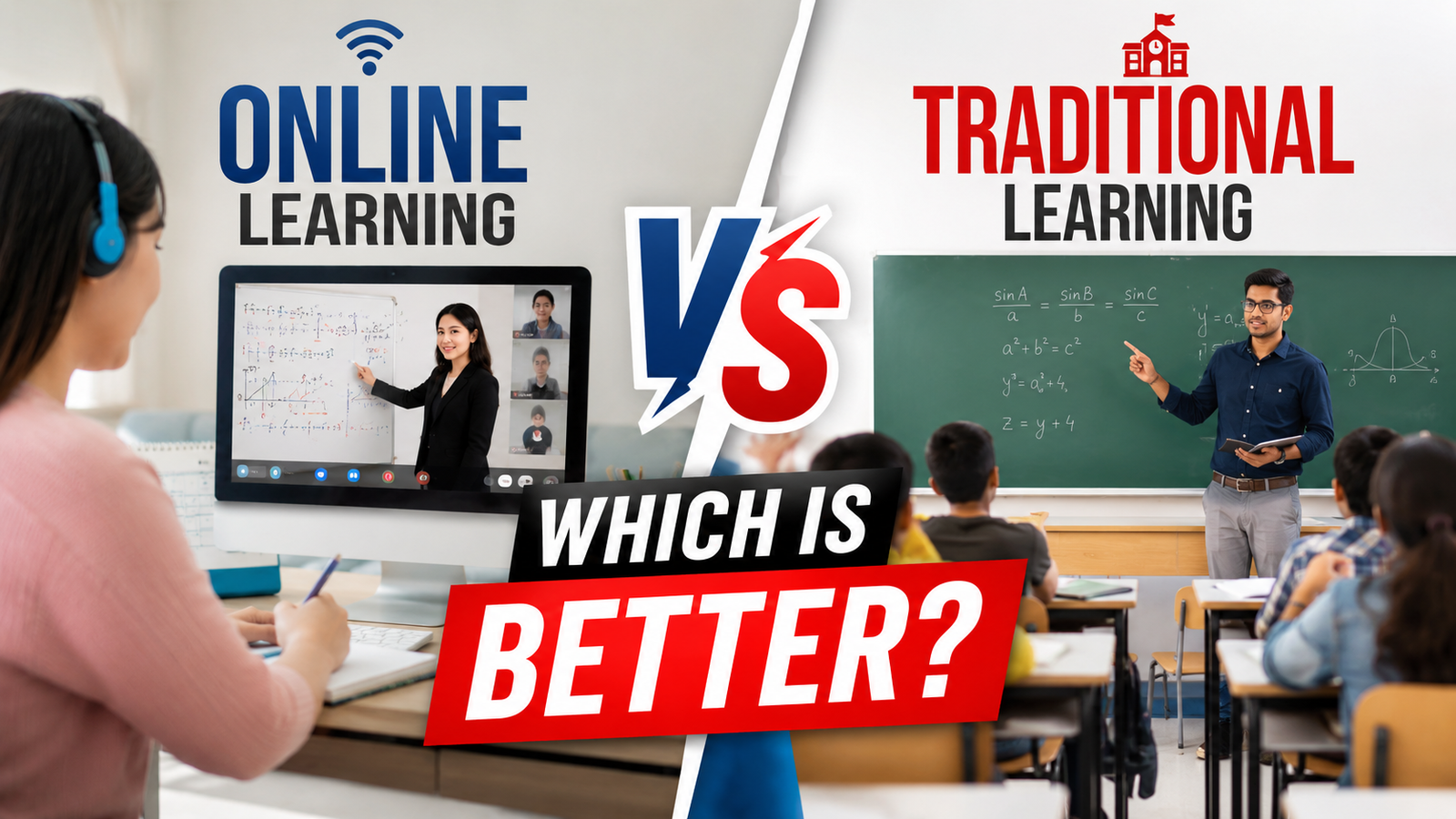
The way we learn has changed dramatically with the advancement of technology. Today, students have more choices than ever before, from traditional classroom education to flexible online learning platforms. While traditional learning offers face-to-face interaction, structured schedules, and direct teacher guidance, online learning provides flexibility, accessibility, and the ability to learn anytime and anywhere. In this blog, we explore online learning vs traditional learning by comparing their benefits, challenges, learning environments, costs, and effectiveness. Understanding the differences between these two approaches can help students, parents, and educators choose the right learning method based on individual needs, goals, and preferences. Discover why the future of education may not be about choosing one over the other, but combining both through innovative hybrid learning models.
Education has always evolved with time, adapting to changes in society, technology, and the needs of learners. In the past, classrooms, textbooks, and face-to-face teaching were the primary ways students gained knowledge. However, with the rapid growth of technology, the education system has entered a new era where learning is no longer limited to physical classrooms.
The rise of the internet, digital platforms, and advanced learning tools has made online learning a popular alternative to traditional classroom education. Students can now attend lectures, access study materials, complete assignments, and interact with teachers from almost anywhere in the world.
This development has created an important discussion: Online learning vs traditional learning — which method is better?
The answer is not as simple as choosing one over the other. Both learning methods have unique benefits and challenges. The right choice depends on factors such as a student’s learning style, educational goals, available resources, and personal circumstances.
Is the classroom still the best place to learn, or can a laptop replace the traditional school environment? Let’s explore the differences between online learning and traditional learning to understand which approach works best.
Online learning is an educational approach where students gain knowledge through digital platforms using the internet. Instead of attending a physical classroom, learners participate in virtual classes, watch recorded lectures, access online resources, and communicate with instructors through digital tools.
Online education has grown significantly due to advancements in technology and increased internet accessibility. It allows students from different locations to access quality education without geographical limitations.
Online learning works through various digital methods, including:
Students attend real-time virtual classes where they can interact with teachers, ask questions, and participate in discussions.
These courses allow learners to study according to their own schedule. Students can complete lessons, videos, and assignments at a comfortable pace.
Hybrid learning combines online education with traditional classroom teaching. Students benefit from both digital resources and face-to-face interaction.
Online learning has become especially valuable for students, professionals, and lifelong learners who need flexibility in their education journey.
Traditional learning refers to the conventional education system where students attend physical classrooms and learn directly from teachers. It is the most common form of education followed in schools, colleges, and universities.
In traditional learning, teachers and students interact face-to-face in a structured classroom environment. Teachers provide explanations, conduct activities, evaluate performance, and guide students throughout the learning process.
Some common features of traditional learning include:
Students follow a specific timetable for classes, exams, and assignments.
Learning takes place in schools, colleges, or educational institutions where students have access to classrooms, libraries, and other facilities.
Students can immediately ask questions and receive feedback from teachers.
Traditional classrooms encourage teamwork, discussions, friendships, and social development among students.
One of the biggest advantages of online learning is flexibility. Students can access lessons anytime and from anywhere, making it suitable for people with busy schedules.
It is especially helpful for:
Online education also allows students to learn at their own pace. They can replay recorded lectures, review materials, and spend more time on difficult topics.
Traditional education requires students to attend classes physically according to a fixed schedule. While this may reduce flexibility, it provides a structured routine that helps many students stay focused.
Students who prefer regular classroom timings and direct supervision often find traditional learning more effective.
Online learning takes place through digital platforms, creating a virtual learning environment. Students need self-discipline, motivation, and good time-management skills to stay consistent.
However, online learning depends on technology. A stable internet connection and suitable devices are necessary for a smooth learning experience.
Traditional classrooms provide a dedicated environment designed specifically for learning. Students follow regular schedules and receive guidance from teachers.
The physical classroom setting can help students maintain concentration and develop consistent study habits.
Online education provides different ways to communicate, including:
Although technology allows communication, some students may miss the personal connection of face-to-face interaction.
Traditional classrooms allow direct communication between teachers and students. Students can immediately ask questions, participate in discussions, and collaborate with classmates.
This interaction also helps develop teamwork, communication skills, and social confidence.
Online courses are often more affordable compared to traditional education. Students can save money on:
Online platforms also provide access to courses from institutions and educators around the world, making education more accessible.
Traditional education may involve additional costs such as:
Accessibility may also depend on the availability of educational institutions in a particular location.
The quality of online education depends on factors such as course design, teaching methods, technology, and student engagement.
A major benefit is that students can learn from experienced educators and experts from different parts of the world.
Traditional education provides direct teacher support and immediate feedback. Classroom activities, practical sessions, and discussions can improve understanding and make learning more interactive.
Online education requires students to manage their own schedules and remain motivated without constant supervision.
Successful online learners often need:
Traditional education provides a structured environment where teachers can monitor student progress and encourage participation.
Fixed schedules help students maintain regular study habits.
Online education requires:
Technology plays a major role in delivering lessons and accessing educational resources.
Traditional education depends less on technology. Students mainly use:
Online learning offers several benefits that make it an attractive choice for modern learners.
Students can learn according to their availability and personal pace.
Learners can attend courses from teachers and institutions worldwide.
Online platforms offer programs in various fields, allowing students to explore more learning opportunities.
Students can focus on topics they need to improve and revisit lessons whenever required.
Online learning can reduce costs related to travel, accommodation, and physical resources.
Students in areas without access to quality institutions can continue their education online.
Traditional education continues to remain valuable because of its strong emphasis on interaction and personal development.
Face-to-face interaction helps students build stronger relationships with teachers.
Classroom discussions, activities, and group projects encourage active participation.
Students develop communication skills, teamwork abilities, and friendships through regular interaction.
Many subjects require hands-on learning, laboratory work, or practical training that traditional classrooms can provide.
Students can quickly ask questions and receive explanations from teachers.
Although online education provides many benefits, it also has some limitations.
Some students may feel disconnected without physical interaction with teachers and classmates.
Poor internet connections or technical problems can interrupt learning.
Studying from home may create distractions that affect concentration.
Students must manage their schedules and remain motivated independently.
Traditional education also comes with certain challenges.
Students must follow fixed schedules and attend classes at specific times.
Physical education often requires additional expenses for travel, accommodation, and resources.
Students may spend significant time traveling to and from educational institutions.
Students may not have access to specific courses or expert teachers in their area.
The debate between online learning and traditional learning does not have one universal answer. Both methods can provide effective education when designed and used properly.
Online learning may be better for students who need flexibility, prefer self-paced study, or want access to global educational resources.
Traditional learning may be better for students who benefit from classroom interaction, structured schedules, and direct teacher support.
The best learning method depends on:
The future of education may not be about choosing between online and traditional learning. Instead, it may focus on combining the strengths of both approaches through blended learning.
The future of education is moving toward a combination of digital and traditional learning methods. Hybrid learning allows students to experience the advantages of both online education and classroom teaching.
With hybrid learning, students can:
Technologies such as artificial intelligence, virtual classrooms, and smart learning platforms are expected to make education more personalized and accessible.
Rather than replacing traditional classrooms, technology is helping create a more flexible and effective education system.
Online learning and traditional learning both have their own strengths and limitations. Online education offers flexibility, accessibility, and convenience, while traditional learning provides personal interaction, structure, and social development.
The best choice depends on what works for each learner. As education continues to evolve, combining online tools with classroom experiences may provide the most effective approach.
The future of learning is not about choosing between a classroom and a computer — it is about creating better opportunities for students to learn, grow, and succeed.
