

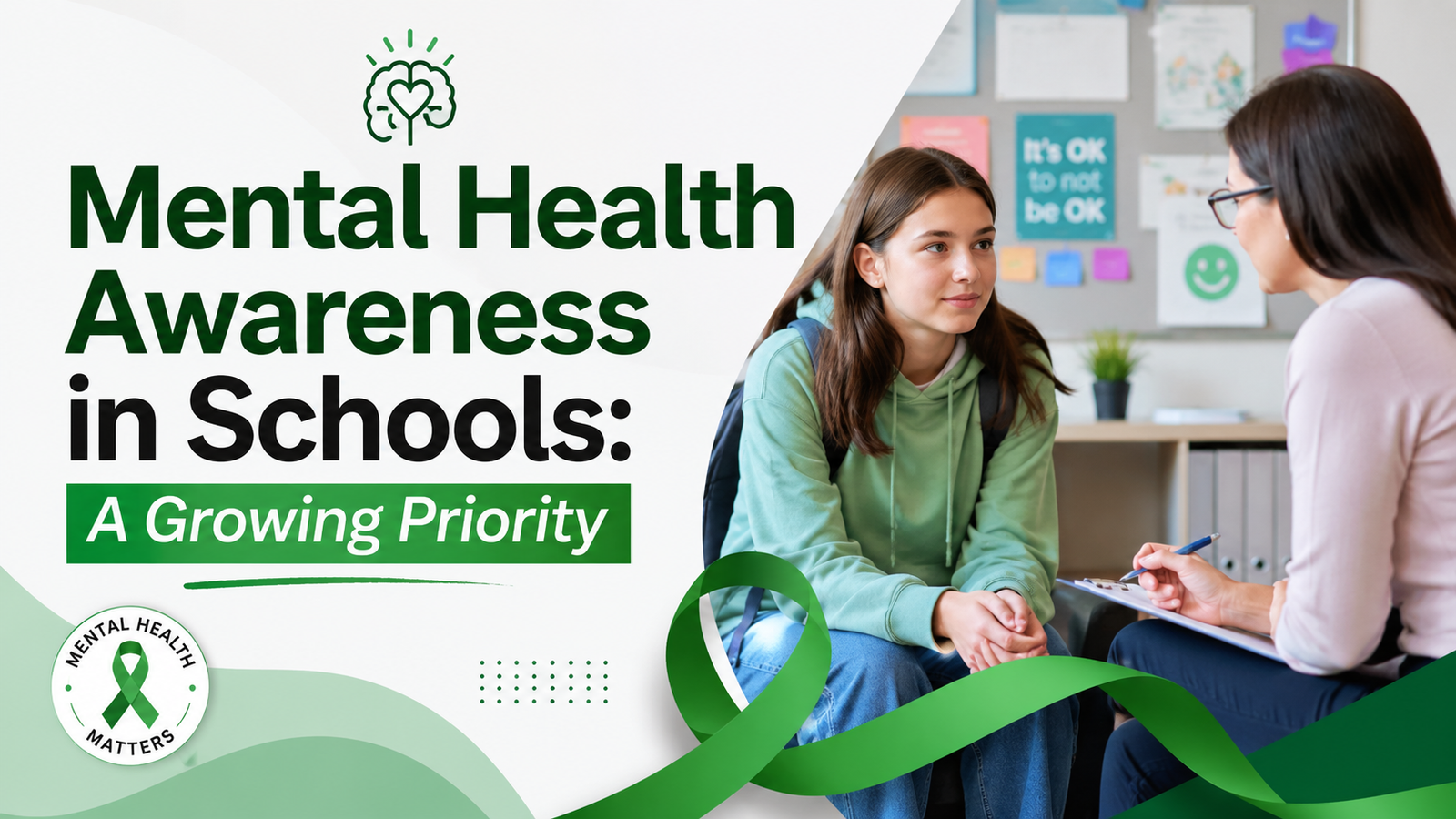
Mental health awareness in schools is becoming increasingly important as students face growing academic, social, and emotional pressures. Schools today are evolving beyond academics to focus on the overall well-being of students. By promoting mental health education, providing support systems, and encouraging open conversations, schools can create safe and inclusive environments where students feel understood, valued, and empowered to learn effectively.
Education has always been about helping students gain knowledge, develop skills, and prepare for the future. However, modern schools are increasingly recognizing that education is not only about academic achievement—it is also about supporting the emotional and social well-being of students.
A student’s ability to learn is deeply connected to their emotional well-being. When students feel safe, supported, and understood, they are more likely to participate actively in the classroom, build positive relationships, and reach their full potential.
Today’s students face a wide range of challenges, including academic competition, examination pressure, social expectations, family concerns, and the influence of digital platforms. These pressures can affect their confidence, motivation, and overall happiness. As a result, mental health awareness in schools has become an essential part of creating a supportive and inclusive learning environment.
Schools are no longer viewed only as places where students study subjects and prepare for careers. They are communities where young people learn how to manage emotions, handle challenges, develop resilience, and build healthy relationships.
Mental health refers to a person’s emotional, psychological, and social well-being. For children and teenagers, good mental health helps them understand and manage emotions, cope with daily challenges, make healthy decisions, and interact positively with others.
Just like physical health, mental health requires attention and care. Students may experience different emotional challenges during their school years, and recognizing these struggles early can make a significant difference.
Some common mental health challenges faced by students include:
Academic expectations, competition, and the fear of failure can create significant stress among students. While a certain amount of pressure can encourage growth, excessive stress may affect sleep, concentration, and confidence.
Students may experience anxiety related to exams, friendships, future goals, or personal challenges. Persistent feelings of worry or fear can interfere with their daily activities and learning experience.
Building friendships and feeling accepted are important parts of school life. Students who feel isolated or disconnected may struggle with confidence and emotional well-being.
Comparisons with peers, academic struggles, or negative experiences can impact how students view themselves. Low self-esteem may prevent students from participating, expressing ideas, or trying new things.
Bullying can have long-lasting effects on a student’s mental health. It may lead to fear, sadness, reduced confidence, and difficulty feeling safe at school.
Recognizing these concerns helps schools provide timely support and reminds students that seeking help is a sign of strength.
The growing focus on mental health in education is the result of several important changes in society and the learning environment.
Teachers and parents are becoming more aware that emotional well-being plays an important role in a child’s development. Instead of focusing only on grades, many educational communities now recognize the importance of supporting the whole child.
Students today often experience pressure to perform well academically while also managing friendships, extracurricular activities, and expectations about their future. Schools are working to provide resources that help students manage these demands.
Technology has created new opportunities for learning and communication, but excessive screen time, online comparison, cyberbullying, and social media pressure can also affect students’ mental health.
Early recognition of emotional difficulties allows schools and families to provide appropriate support before challenges become more serious. Teachers who understand warning signs can guide students toward helpful resources.
A mentally healthy student is more likely to stay focused, participate in activities, build relationships, and approach challenges with confidence. Supporting mental health contributes to better educational experiences.
Mental health and academic success are closely connected. A student’s emotional state can influence how they learn, communicate, and perform in school.
Positive mental well-being can improve:
Students who feel emotionally balanced often find it easier to focus during lessons, understand concepts, and remember information.
When students feel confident and supported, they are more willing to ask questions, share ideas, and participate in discussions.
A positive learning environment encourages curiosity, problem-solving, and creativity. Students are more likely to explore new ideas when they feel comfortable making mistakes and learning from them.
Mental health struggles can sometimes lead to reduced attendance and lower engagement. Providing support can help students remain connected to their education.
Healthy emotional development helps students communicate effectively, resolve conflicts, and build positive relationships with classmates and educators.
Schools play a major role in creating environments where students feel valued and supported. A strong mental health framework can include:
Professional guidance allows students to discuss concerns in a safe and confidential environment. Counsellors can provide emotional support, coping strategies, and guidance when students face difficulties.
Schools can introduce programs focused on emotional learning, stress management, confidence building, and personal development.
Students should have opportunities to express their feelings without fear of judgment. Open communication helps create trust between students and educators.
Teachers spend significant time with students and are often among the first people to notice changes in behavior. Training educators to recognize signs of emotional distress can improve early support.
Encouraging students to support one another can create a stronger sense of belonging and community within schools.
One of the biggest challenges in mental health awareness is reducing stigma. Many students hesitate to talk about their feelings because they fear being misunderstood or judged.
Schools can promote openness by:
When students learn that emotions are a natural part of life, they become better equipped to manage challenges and support others.
Schools can take several practical steps to promote student mental health:
Simple activities such as breathing exercises, mindfulness sessions, and relaxation techniques can help students manage stress and improve focus.
Teaching skills such as communication, decision-making, problem-solving, and emotional regulation prepares students to handle real-life situations.
Workshops can help students understand stress, identify triggers, and learn healthy coping methods.
Regular communication between parents and teachers ensures that students receive consistent support both at school and at home.
Giving students opportunities to share their experiences helps schools understand their needs and improve support systems.
Clubs focused on creativity, sports, arts, and social connection can improve confidence and encourage positive interactions.
Teachers and parents are key partners in supporting student mental health. Their approach can influence how comfortable students feel when seeking help.
Adults can support students by:
A supportive relationship with adults helps students feel understood and valued.
Although mental health awareness is gaining importance, schools may face challenges while developing effective programs.
Some schools may have limited access to qualified counsellors or mental health experts.
Budget limitations, lack of training opportunities, and competing priorities can make implementation difficult.
Some communities may still hesitate to discuss mental health openly, making awareness efforts more challenging.
Not every student expresses emotional difficulties openly. Some may appear fine while quietly experiencing stress or anxiety.
Mental health support requires continuous effort, training, and collaboration among schools, families, and communities.
The future of education is moving toward a more holistic approach where academic learning and emotional development go hand in hand.
Future trends may include:
As awareness grows, schools will continue to play an important role in helping students develop confidence, resilience, and emotional strength.
Schools are not only places where students gain knowledge; they are environments where young people develop confidence, resilience, values, and emotional strength. Academic success is important, but true education also involves helping students become healthy and balanced individuals.
Mental health awareness in schools is no longer an optional initiative—it is a growing priority that supports students’ overall development. By creating safe spaces, encouraging open conversations, and providing the right resources, schools can help every student feel supported and capable.
Investing in mental health awareness means investing in students’ futures. When schools care for the minds and emotions of students, they create a foundation for lifelong learning, growth, and success.
