
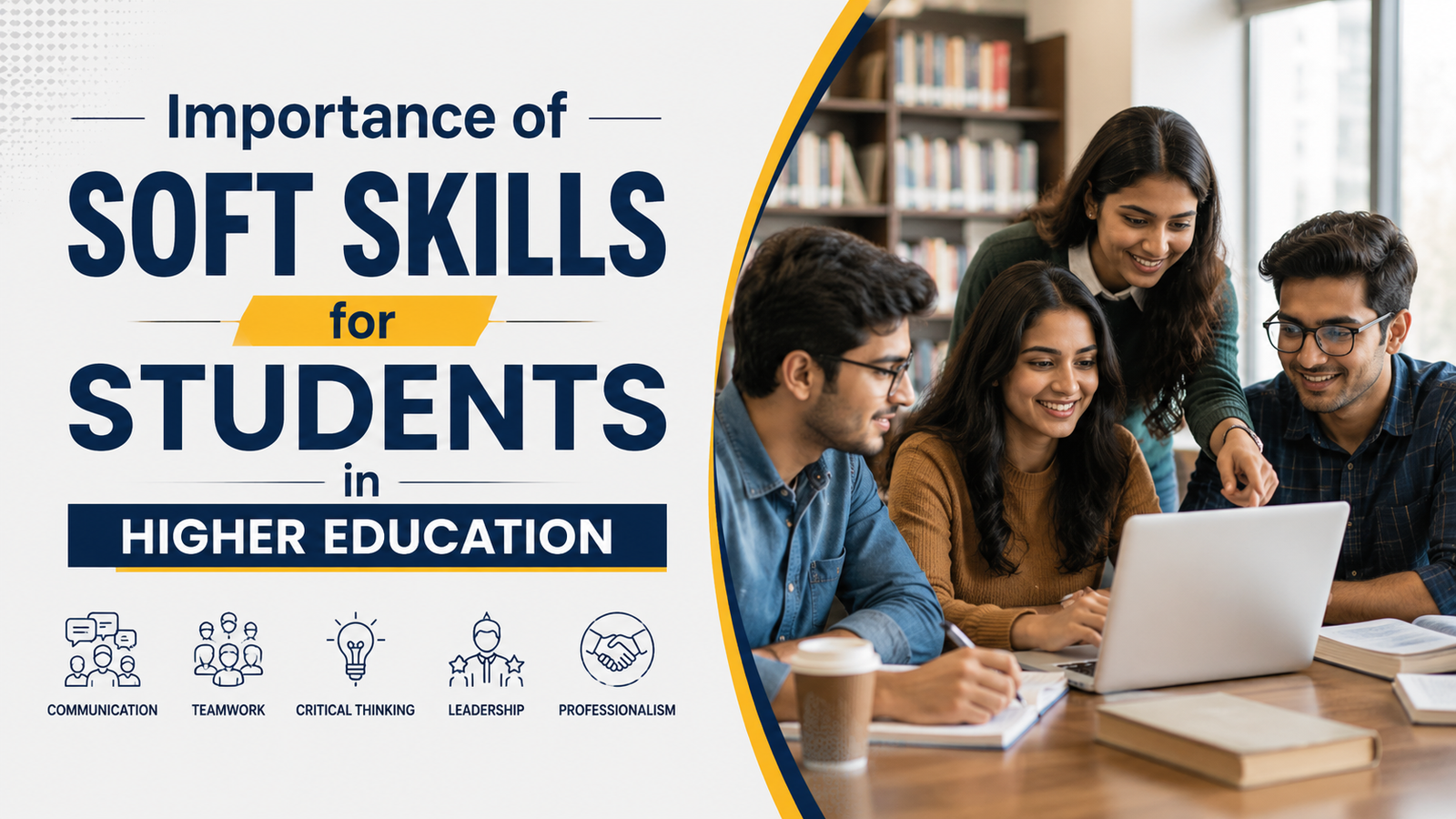
In today’s rapidly changing world, academic knowledge alone is not enough to ensure student success. Higher education prepares students with technical expertise and subject knowledge, but soft skills play an equally important role in shaping confident, adaptable, and career-ready professionals. Skills such as communication, teamwork, leadership, problem-solving, emotional intelligence, and adaptability help students perform better academically, build strong relationships, and meet workplace expectations. As employers increasingly seek graduates who can collaborate effectively, think critically, and respond to challenges, developing soft skills has become an essential part of higher education. These abilities bridge the gap between classroom learning and professional success, enabling students to transform their knowledge into meaningful contributions. By focusing on soft skills development alongside academic learning, colleges and universities can empower students to become well-rounded individuals ready to succeed in an evolving global environment.
In today’s competitive world, academic knowledge alone is no longer enough to guarantee success. Higher education provides students with subject knowledge, technical expertise, and professional qualifications, but employers and society increasingly expect graduates to possess additional abilities that help them communicate effectively, work with others, solve problems, and adapt to changing environments.
Soft skills have become a crucial part of a student’s overall development. These skills influence how students interact with classmates, faculty members, employers, and the wider community. Whether it is delivering a presentation, participating in a group project, attending a job interview, or leading a team, soft skills play an important role in achieving success.
For students in higher education, developing soft skills is essential for academic achievement, personal growth, and career readiness. These abilities help students become confident individuals who can face challenges, make informed decisions, and contribute effectively in professional environments.
Soft skills are personal attributes and interpersonal abilities that help individuals communicate, collaborate, and manage situations effectively. Unlike hard skills, which are technical abilities gained through education and training, soft skills focus on how individuals interact with others and approach challenges.
For example, a student may have excellent technical knowledge in engineering, business, medicine, or another field, but without communication skills and teamwork abilities, applying that knowledge effectively can become challenging.
Some important soft skills that students should develop include:
Communication is one of the most important soft skills. It enables students to express their ideas clearly, listen actively, and interact confidently with others. Strong communication skills help students perform better in presentations, discussions, interviews, and professional conversations.
Leadership skills help students take initiative, manage responsibilities, motivate others, and make effective decisions. Developing leadership qualities prepares students to handle future professional roles and responsibilities.
Modern workplaces require individuals to work with diverse teams. Collaboration skills help students respect different opinions, share responsibilities, and achieve common goals through cooperation.
Problem-solving skills allow students to analyze situations, identify challenges, and develop practical solutions. These skills are valuable in both academic projects and professional environments.
Managing time effectively helps students balance academic responsibilities, extracurricular activities, personal commitments, and career preparation. Good time management improves productivity and reduces stress.
Emotional intelligence refers to the ability to understand and manage one’s emotions while recognizing the feelings of others. It helps students build positive relationships and handle conflicts effectively.
The ability to adapt to change and think critically is essential in a rapidly evolving world. Students who develop these skills can respond better to new technologies, ideas, and challenges.
Soft skills contribute significantly to students’ academic performance and learning experiences. Higher education involves more than attending lectures and completing assignments; students must participate actively, collaborate with peers, and communicate their thoughts effectively.
Students with strong communication skills can participate confidently in classroom discussions, ask meaningful questions, and present their ideas effectively. These abilities improve engagement with faculty members and create better learning opportunities.
Group assignments, research activities, and academic collaborations require students to work together. Teamwork skills help students divide responsibilities, respect different perspectives, and achieve better outcomes.
Higher education often involves multiple deadlines, examinations, projects, and career preparation activities. Students who manage their time effectively can prioritize tasks and maintain a balanced academic routine.
Soft skills such as confidence, self-awareness, and self-discipline encourage students to take responsibility for their learning. Confident students are more likely to participate in activities, explore opportunities, and overcome academic challenges.
The transition from education to employment requires more than academic qualifications. Employers today look for graduates who can combine technical expertise with interpersonal skills. A candidate who can communicate ideas, work in teams, adapt to change, and solve problems is more likely to succeed in the workplace.
Soft skills help students perform better during:
These skills act as a bridge between classroom learning and industry expectations. While technical knowledge helps students perform specific tasks, soft skills help them work effectively with people and organizations.
For example, a software professional needs coding expertise, but also requires communication skills to explain ideas, teamwork abilities to collaborate with developers, and problem-solving skills to handle challenges.
Effective communication allows students to share ideas confidently and professionally. It includes verbal communication, written communication, active listening, and presentation skills.
Students can improve communication skills by:
Strong communication skills increase confidence and help students build better academic and professional relationships.
Critical thinking enables students to analyze information, evaluate different perspectives, and make logical decisions. Problem-solving skills help them approach challenges creatively and effectively.
These skills are valuable for:
Students who develop critical thinking become independent learners capable of handling complex situations.
Collaboration is an essential skill in both education and employment. Students often work in teams for assignments, projects, internships, and research activities.
Effective teamwork involves:
Learning to collaborate prepares students for diverse workplace environments.
Leadership is not limited to holding official positions. Every student can develop leadership qualities by taking initiative and accepting responsibility.
Leadership skills include:
Students with leadership abilities can inspire others and contribute positively to their organizations.
Emotional intelligence helps students understand their emotions and respond appropriately to different situations. It improves relationships with classmates, teachers, and future colleagues.
Students with strong emotional intelligence can:
The world is constantly changing due to technological advancements and evolving industries. Adaptability helps students remain flexible and open to new opportunities.
Adaptable students can:
Educational institutions play a major role in helping students develop soft skills. Along with academic programs, colleges and universities can introduce activities that encourage personal and professional growth.
Some effective approaches include:
Institutions can integrate communication, leadership, teamwork, and problem-solving modules into academic programs.
Regular workshops on personality development, communication, interview preparation, and leadership can help students strengthen their abilities.
Internships, student clubs, competitions, and volunteering opportunities provide practical experiences where students can apply soft skills.
Faculty mentors and career counselors can guide students in identifying areas for improvement and preparing for professional challenges.
Developing soft skills provides numerous benefits for students, including:
Students become more comfortable expressing themselves and understanding their strengths and weaknesses.
Soft skills encourage active participation in learning activities and improve collaboration with peers.
Graduates with strong soft skills have better opportunities to succeed in interviews and professional environments.
Students learn to take responsibility, make decisions, and influence others positively.
Soft skills help students manage pressure, adapt to change, and overcome obstacles effectively.
Soft skills are not only valuable for securing the first job; they continue to support career growth throughout professional life. Employees who communicate well, collaborate effectively, and demonstrate leadership potential often have greater opportunities for advancement.
As careers progress, professionals need to manage teams, build relationships, negotiate solutions, and adapt to industry changes. Soft skills provide the foundation for continuous growth and long-term success.
Investing in soft skills during higher education helps students build a strong professional identity and remain competitive in the evolving job market.
Higher education is not only about gaining knowledge; it is about preparing students to succeed in real-world situations. While academic qualifications provide the foundation for a career, soft skills help students apply their knowledge effectively and build meaningful professional relationships.
Communication, teamwork, leadership, adaptability, and problem-solving abilities enable students to become confident and capable individuals. Educational institutions that focus on developing both technical expertise and soft skills can create graduates who are prepared to face future challenges.
By combining academic learning with strong interpersonal abilities, students can become future-ready professionals who contribute positively to their workplaces and society.
