

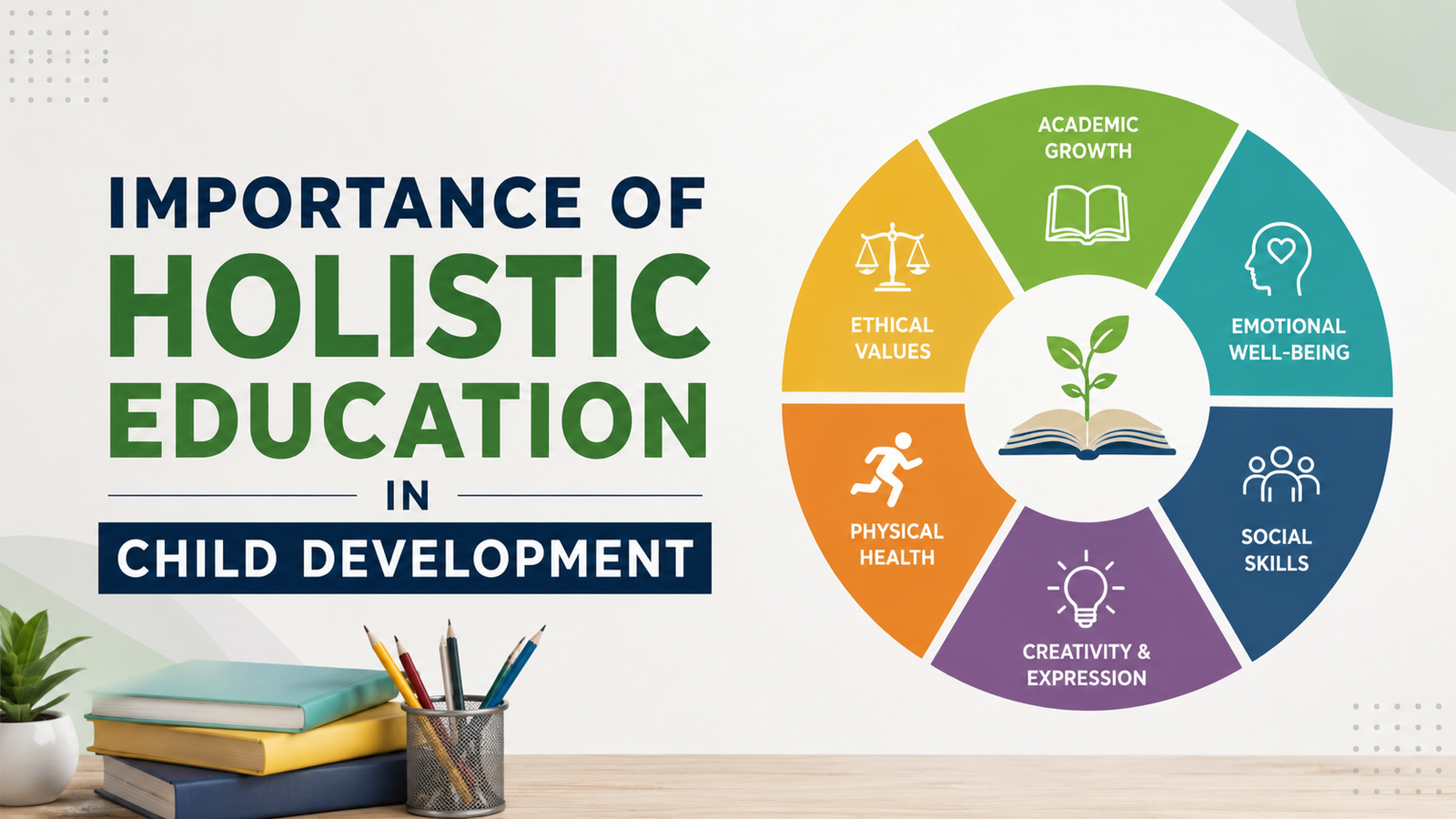
Holistic education goes beyond textbooks and exam scores to nurture every aspect of a child's growth—intellectual, emotional, social, physical, creative, and moral. By focusing on the overall development of the "whole child," this approach equips students with essential life skills, emotional resilience, critical thinking, and confidence to thrive in an ever-changing world. In this blog, discover the importance of holistic education, its key pillars, benefits, and how schools and parents can work together to raise well-rounded, future-ready individuals.
Education has evolved significantly over the years. While academic excellence remains important, today's rapidly changing world demands much more than high grades. Children need critical thinking, emotional resilience, creativity, communication skills, and ethical values to thrive in both their personal and professional lives. This shift has brought holistic education into the spotlight as a comprehensive approach to learning.
Holistic education focuses on nurturing every aspect of a child's development—intellectual, emotional, social, physical, creative, and moral. Instead of emphasizing only classroom performance, it aims to prepare children for lifelong success by helping them become confident, compassionate, and capable individuals.
In this blog, we'll explore what holistic education means, why it matters, its key pillars, benefits, and how schools and parents can work together to support the overall development of every child.
Holistic education is a learner-centered approach that focuses on the complete development of a child rather than academic achievement alone. It recognizes that every child has unique talents, interests, learning styles, and emotional needs.
Unlike traditional education models that primarily measure success through examinations and grades, holistic education emphasizes developing life skills, emotional intelligence, creativity, physical health, and social responsibility alongside academic learning.
The philosophy behind holistic education is to educate the "whole child." This means helping children discover their strengths, build meaningful relationships, develop empathy, think independently, and become responsible members of society.
Children today face a world filled with constant change, technological advancements, and increasing social challenges. Academic knowledge alone is no longer enough to navigate these complexities successfully.
Holistic development equips children with the confidence to solve real-life problems, adapt to changing environments, collaborate with others, and make informed decisions. It encourages independent thinking while nurturing compassion and resilience.
When children receive balanced education, they become lifelong learners who are curious, self-motivated, and prepared to embrace future opportunities with confidence.
Academic growth remains an essential part of holistic education, but the focus extends beyond memorization.
Students are encouraged to:
This approach creates learners who understand concepts deeply instead of simply preparing for examinations.
Emotional well-being plays a vital role in a child's overall growth.
Holistic education helps children:
Emotionally strong children often demonstrate better academic performance, healthier relationships, and improved decision-making abilities.
Strong interpersonal skills are essential for success in school, work, and everyday life.
Through collaborative learning and group activities, children develop:
These experiences prepare children to work effectively in diverse environments.
A healthy body supports a healthy mind.
Holistic education encourages:
Physical activity also improves concentration, memory, confidence, and overall mental health.
Education should help children become responsible citizens with strong character.
Holistic learning emphasizes:
Developing these values helps children contribute positively to their communities.
Creativity encourages innovation and problem-solving.
Children are provided opportunities to explore:
Creative expression builds confidence, imagination, and emotional well-being while encouraging original thinking.
Holistic education offers numerous long-term benefits that extend far beyond academic achievement.
Students who are emotionally balanced and actively engaged often perform better academically because they understand concepts rather than memorizing information.
Children learn how to manage setbacks, cope with stress, and maintain a positive outlook during difficult situations.
Interactive learning environments help students become confident speakers, active listeners, and effective collaborators.
Holistic education encourages initiative, responsibility, and teamwork, helping children develop leadership skills from an early age.
Recognizing individual strengths helps children build self-confidence and believe in their abilities.
Children develop critical thinking and analytical abilities that enable them to make informed and responsible choices.
Exposure to diverse experiences prepares students to embrace change, overcome challenges, and succeed in dynamic environments.
Schools play a crucial role in creating environments that support comprehensive child development.
Successful schools promote holistic education by:
Teachers become facilitators who inspire curiosity, creativity, and lifelong learning.
Parents are equally important partners in holistic child development.
They can support their children's growth by:
When schools and families work together, children receive consistent guidance that strengthens their overall development.
Practical experiences are essential for well-rounded growth.
Some effective activities include:
These activities help children develop confidence, creativity, teamwork, leadership, and emotional balance.
Despite its numerous benefits, implementing holistic education can present several challenges.
Many education systems continue to prioritize grades over overall development, limiting opportunities for holistic learning.
Some schools lack trained teachers, infrastructure, or funding to provide diverse learning experiences.
Balancing academic requirements with extracurricular activities can be difficult within limited school hours.
Educators require continuous professional development to effectively implement holistic teaching methods.
Finding the right balance ensures students develop comprehensively without experiencing unnecessary pressure.
Addressing these challenges requires collaboration among educators, policymakers, parents, and communities.
Schools can strengthen holistic education by adopting practical strategies such as:
These initiatives create learning environments where every child has the opportunity to thrive.
The future of education is increasingly centered on developing adaptable, innovative, and socially responsible individuals.
Emerging trends include:
As education continues to evolve, holistic learning will become even more essential in preparing students for future careers and societal challenges.
Holistic education recognizes that every child is much more than their academic achievements. It nurtures intellectual curiosity, emotional well-being, physical health, creativity, ethical values, and social responsibility, enabling children to grow into confident, compassionate, and capable individuals.
When schools and parents work together to provide balanced learning experiences, children gain the skills needed not only to succeed academically but also to navigate life's challenges with resilience and purpose.
Ultimately, the true measure of educational success is not just excellent grades—it is the development of well-rounded individuals who are prepared to contribute meaningfully to their communities and the world. By embracing holistic education, we invest in a brighter future where every child has the opportunity to reach their full potential.
