

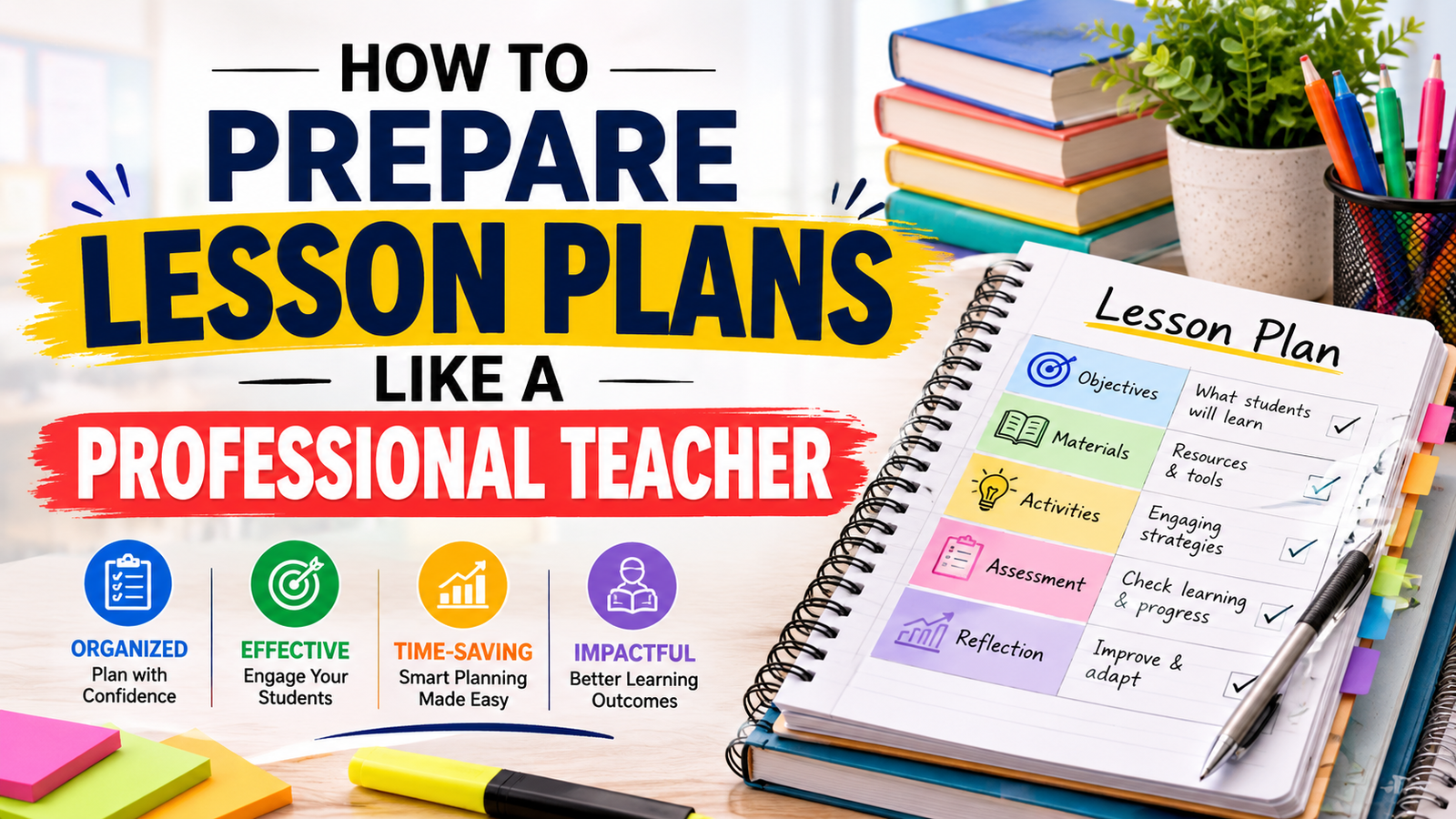
Creating effective lesson plans is the foundation of successful teaching. A well-structured lesson plan helps teachers stay organized, manage classroom time efficiently, engage students through meaningful activities, and achieve clear learning objectives. In this comprehensive guide, you'll learn how to prepare lesson plans like a professional teacher, explore the essential components of an effective lesson plan, avoid common planning mistakes, and discover practical strategies and digital tools that can enhance teaching and improve student learning outcomes.
A great lesson rarely happens by chance. Behind every engaging classroom discussion, successful activity, and meaningful learning experience is a carefully designed lesson plan. Whether you're a new teacher stepping into the classroom for the first time or an experienced educator looking to refine your teaching strategies, lesson planning is one of the most important skills you can develop.
A lesson plan acts as a roadmap that guides teachers through each stage of instruction. It outlines what students need to learn, how the content will be taught, what resources are required, and how learning will be assessed. Professional teachers understand that effective planning not only improves classroom organization but also creates a more engaging and productive learning environment.
In today's rapidly evolving educational landscape, lesson planning has become even more essential. Teachers are expected to address different learning styles, integrate technology, promote critical thinking, and meet curriculum standards—all within limited classroom time. A well-structured lesson plan helps accomplish these goals while ensuring every student has the opportunity to succeed.
In this guide, you'll learn what a lesson plan is, why it matters, the essential components of a professional lesson plan, and practical steps to create effective lessons that inspire learning.
A lesson plan is a detailed guide that outlines what a teacher intends to teach during a specific class period. It includes learning objectives, instructional methods, classroom activities, teaching materials, assessments, and follow-up tasks.
Rather than teaching spontaneously, professional educators prepare lessons in advance to ensure learning goals are met effectively.
The primary purpose of lesson planning is to organize teaching in a way that maximizes student learning. It helps teachers:
| Without a Lesson Plan | With a Lesson Plan |
|---|---|
| Unorganized lessons | Well-structured instruction |
| Poor time management | Balanced use of classroom time |
| Confusing objectives | Clear learning outcomes |
| Limited engagement | Interactive learning activities |
| Difficult assessment | Planned evaluation methods |
Professional teachers rarely enter a classroom without a structured plan because preparation leads to confidence and better learning experiences.
Lesson planning benefits both teachers and students in numerous ways.
A structured lesson minimizes confusion and keeps students engaged throughout the class. When activities are planned in advance, transitions become smoother and classroom discipline improves naturally.
Interactive activities, discussions, demonstrations, and collaborative learning can all be incorporated into lesson plans to maintain student interest.
Every lesson should answer one important question:
"What should students know or be able to do by the end of this lesson?"
Clearly defined objectives help both teachers and learners stay focused.
Professional lesson plans allocate specific time for:
This prevents rushing important topics or running out of time.
Planning assessments beforehand allows teachers to monitor student understanding continuously instead of waiting until the end of a unit.
Preparation reduces stress. Teachers who know exactly what they are going to teach feel more confident and adaptable when unexpected classroom situations arise.
An effective lesson plan includes several key components.
Learning objectives describe what students should achieve by the end of the lesson.
Professional teachers often use SMART objectives:
Example:
By the end of the lesson, students will be able to identify and explain the three states of matter with 90% accuracy.
Include:
Example:
Prepare everything before class begins.
Examples include:
Being prepared avoids unnecessary interruptions during teaching.
Professional teachers combine multiple instructional strategies rather than relying solely on lectures.
Common methods include:
Different methods cater to different learning styles.
An engaging lesson usually follows this sequence:
A short activity that activates prior knowledge.
Examples:
Introduce new concepts using explanations, demonstrations, or multimedia.
Students work together while receiving teacher support.
Students apply their learning individually.
Include:
Assessment measures whether learning objectives have been achieved.
Types include:
Conducted during learning.
Examples:
Conducted after instruction.
Examples:
Homework reinforces classroom learning.
Examples include:
Extension activities challenge advanced learners while reinforcing concepts for everyone.
Begin by defining exactly what students should learn. Align your objectives with curriculum standards and make them measurable.
Consider:
Understanding your students allows you to tailor instruction effectively.
Select methods that best suit the topic and your learners. For example, science lessons may benefit from experiments, while literature classes might focus on discussions and group analysis.
Gather all required resources before class starts. Test technology, print worksheets, and organize teaching aids to ensure a smooth lesson.
Create a balanced sequence that includes an engaging introduction, concept explanation, guided practice, independent work, and a closing activity.
Decide how you will check student understanding during and after the lesson. Incorporate quick formative assessments as well as more comprehensive evaluations when appropriate.
Divide the lesson into manageable segments. For example:
This helps maintain a steady pace and ensures all objectives are addressed.
Read through your lesson plan to check for clarity, timing, and alignment with objectives. Be prepared to make adjustments based on student needs or classroom circumstances.
A professional lesson plan may include the following sections:
Keeping a consistent format makes lesson planning more efficient over time.
Even experienced educators can make planning mistakes. Watch out for these common issues:
Avoiding these pitfalls leads to more effective and engaging instruction.
Experienced educators continually refine their lesson planning practices. Here are some proven tips:
Technology has made lesson planning faster and more collaborative. Useful tools include:
Choose tools that fit your teaching style and school environment.
Teaching environments vary, so lesson plans should be adapted accordingly.
Focus on face-to-face instruction, group work, discussions, and hands-on activities.
Plan for virtual engagement with interactive presentations, polls, breakout rooms, and digital assessments.
Balance in-person and online activities to ensure all students receive a consistent learning experience.
Create flexible lesson plans tailored to the learner's pace, interests, and individual goals.
Students gain significant advantages from organized and purposeful lessons.
Ultimately, thoughtful lesson planning creates an environment where students can thrive academically and personally.
Lesson planning is much more than completing paperwork—it is the foundation of effective teaching. A professional lesson plan provides direction, keeps instruction organized, and ensures that every classroom activity contributes to meaningful learning outcomes. By setting clear objectives, choosing appropriate teaching strategies, preparing engaging activities, and assessing student understanding, teachers can create lessons that are both impactful and enjoyable.
Whether you teach in a traditional classroom, an online environment, or a hybrid setting, investing time in thoughtful lesson planning will improve classroom management, boost student engagement, and enhance academic achievement. Remember that no lesson plan is perfect the first time. Reflect on each lesson, gather feedback, and continuously refine your approach. With consistent practice and a commitment to improvement, you can prepare lesson plans like a professional teacher and create a learning experience that helps every student succeed.
