

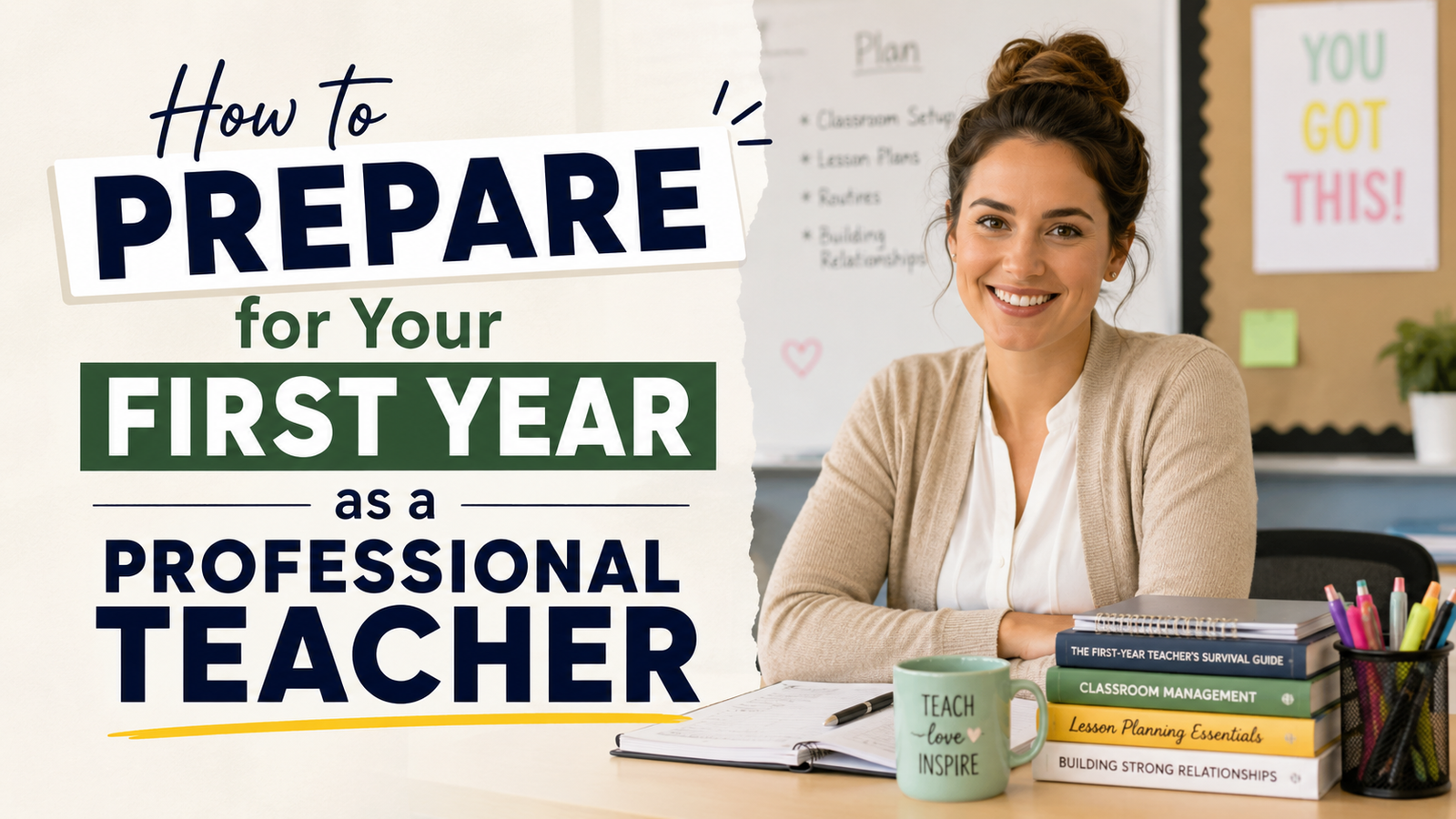
Starting your first year as a professional teacher is an exciting milestone, but it also comes with new responsibilities and challenges. Success in the classroom begins with proper preparation—from understanding your school's culture and curriculum to developing effective lesson planning and classroom management skills. Building positive relationships with students, parents, and colleagues can create a supportive learning environment and help you grow as an educator. As a first-year teacher, embracing technology, managing your time wisely, and committing to continuous professional development are essential for long-term success. While the journey may have its ups and downs, staying organized, adaptable, and focused on student growth will help you build confidence and make a meaningful impact. With the right preparation and mindset, your first year can lay the foundation for a rewarding and successful teaching career.
Starting your first year as a professional teacher is both exciting and challenging. After years of studying educational theories and completing teacher training, stepping into your own classroom can feel like a dream come true. However, the transition from student teacher to full-time educator often comes with new responsibilities, expectations, and learning experiences.
Preparation plays a crucial role in determining how smoothly your first year unfolds. While no amount of planning can eliminate every challenge, being proactive can help you build confidence, establish strong classroom practices, and create a positive learning environment for your students. Understanding what to expect and how to prepare can make your first year more rewarding and less overwhelming.
Before the academic year begins, take time to learn about your school's culture, mission, and values. Every school has its own expectations regarding teaching practices, student behavior, communication, and professional conduct.
Review the school's policies and procedures carefully. Familiarize yourself with attendance policies, grading systems, discipline protocols, emergency procedures, and reporting requirements. Knowing these details early can help you avoid confusion later.
It is equally important to understand the curriculum and academic standards you will be teaching. Study the syllabus, learning objectives, assessment methods, and available teaching resources. The more familiar you are with the curriculum, the more confident you will feel when planning lessons and guiding students.
Your classroom environment significantly impacts student learning and engagement. Whether you're teaching in a traditional classroom or a modern learning space, organization is key.
Arrange desks and furniture to promote interaction, collaboration, and effective classroom management. Create designated spaces for learning materials, student work, and classroom supplies.
A welcoming classroom helps students feel comfortable and motivated. Display educational posters, inspirational messages, and student-friendly visuals that support learning objectives.
Prepare essential teaching materials before the school year starts. Organize lesson resources, worksheets, presentations, and classroom management tools to ensure you're ready from day one.
Effective lesson planning is one of the most important skills for first-year teachers. Well-structured lessons help maintain student engagement and ensure learning goals are achieved.
Start by setting clear learning objectives for each lesson. Students should understand what they are expected to learn and how their progress will be measured.
Plan lessons that include a variety of teaching methods, such as discussions, group activities, hands-on exercises, and multimedia resources. This helps accommodate different learning styles and keeps students engaged.
While preparation is essential, flexibility is equally important. Unexpected situations may require adjustments to your plans. Being adaptable allows you to respond effectively to student needs and classroom dynamics.
Classroom management is often one of the biggest concerns for new teachers. Establishing clear expectations from the beginning helps create a positive and productive learning environment.
Develop classroom rules that are simple, fair, and easy to understand. Communicate these expectations clearly and consistently enforce them.
Building positive relationships with students is an effective way to prevent behavior issues. When students feel respected and valued, they are more likely to follow classroom expectations.
Address behavioral concerns calmly and professionally. Focus on consistency rather than strictness, and aim to guide students toward positive choices rather than simply punishing mistakes.
Strong teacher-student relationships contribute significantly to academic success and classroom harmony. Take time to get to know your students as individuals.
Learn about their interests, strengths, challenges, and learning preferences. Showing genuine interest in their growth helps build trust and encourages participation.
Encourage student engagement by creating opportunities for discussion, collaboration, and active learning. Students who feel involved in the learning process are often more motivated and confident.
Promote inclusivity by ensuring every student feels welcome and respected. Celebrate diversity and create an environment where all learners can succeed.
Parents play an important role in supporting student success. Establishing positive communication early can help build strong partnerships throughout the school year.
Introduce yourself to parents and provide information about your teaching approach, classroom expectations, and communication methods.
Keep parents informed through regular updates, newsletters, emails, or parent-teacher meetings. Sharing both achievements and concerns helps maintain transparency and trust.
When addressing challenges or concerns, remain professional, respectful, and solution-focused. Collaborative communication often leads to better outcomes for students.
One of the biggest challenges for new teachers is balancing multiple responsibilities. Teaching, lesson planning, grading, meetings, and professional development can quickly become overwhelming without effective time management.
Create daily and weekly schedules to organize your workload. Prioritize essential tasks and set realistic goals for each day.
Avoid spending excessive time perfecting every lesson or assignment. Focus on delivering quality instruction while maintaining a sustainable workload.
Remember to schedule breaks and personal time. Preventing burnout is essential for maintaining long-term effectiveness and enthusiasm as a teacher.
Technology has become an integral part of modern education. Familiarity with digital tools can enhance both teaching and learning experiences.
Explore educational platforms, interactive presentation tools, learning management systems, and online assessment tools. These resources can help streamline classroom activities and improve student engagement.
If your school uses hybrid or online learning models, ensure you understand the required technology and best practices for virtual instruction.
Integrating technology thoughtfully can make lessons more interactive, personalized, and accessible for students.
No teacher succeeds alone. Experienced colleagues can provide valuable advice, support, and encouragement during your first year.
Look for mentors within your school who can offer guidance on classroom management, lesson planning, and professional growth. Observing experienced teachers can provide practical insights that textbooks often cannot.
Participate in collaborative discussions, staff meetings, and professional learning communities. Sharing experiences with fellow educators helps build confidence and expands your teaching knowledge.
Teacher training programs, workshops, and mentorship opportunities can further support your development as a professional educator.
Teaching is a profession that requires lifelong learning. Educational practices, technologies, and student needs continue to evolve, making professional development essential.
Attend workshops, seminars, conferences, and training sessions whenever possible. These opportunities help you stay informed about current educational trends and best practices.
Read educational articles, research studies, and teaching resources to expand your knowledge and refine your instructional strategies.
Investing in professional development not only improves your teaching effectiveness but also supports long-term career growth.
Teaching can be incredibly rewarding, but it can also be demanding. Prioritizing your well-being is essential for maintaining both personal and professional success.
Practice stress-management techniques such as exercise, mindfulness, hobbies, or spending time with family and friends. Maintaining a healthy work-life balance helps prevent exhaustion and improves overall job satisfaction.
Recognize that mistakes and challenges are part of the learning process. Developing resilience allows you to grow from experiences and continue improving as an educator.
Remember that taking care of yourself enables you to better support your students.
Many new teachers face similar challenges during their first year. Being aware of common mistakes can help you avoid unnecessary stress.
One common mistake is striving for perfection. No teacher delivers perfect lessons every day, and expecting perfection can lead to frustration.
Another mistake is overloading lesson plans with too much content. Focus on meaningful learning experiences rather than trying to cover everything at once.
Neglecting self-care and support networks can also negatively impact performance. Seek help when needed and remember that professional growth takes time.
Your first year as a professional teacher is a journey filled with opportunities for learning, growth, and personal development. While challenges are inevitable, proper preparation can help you navigate them with confidence.
By understanding your school environment, developing strong classroom practices, building meaningful relationships, embracing technology, and prioritizing your well-being, you can create a successful and rewarding first-year teaching experience.
Remember that every experienced educator was once a first-year teacher. Stay open to learning, reflect on your experiences, and celebrate your progress along the way. With dedication and a positive mindset, you can build a strong foundation for a fulfilling and impactful teaching career.
