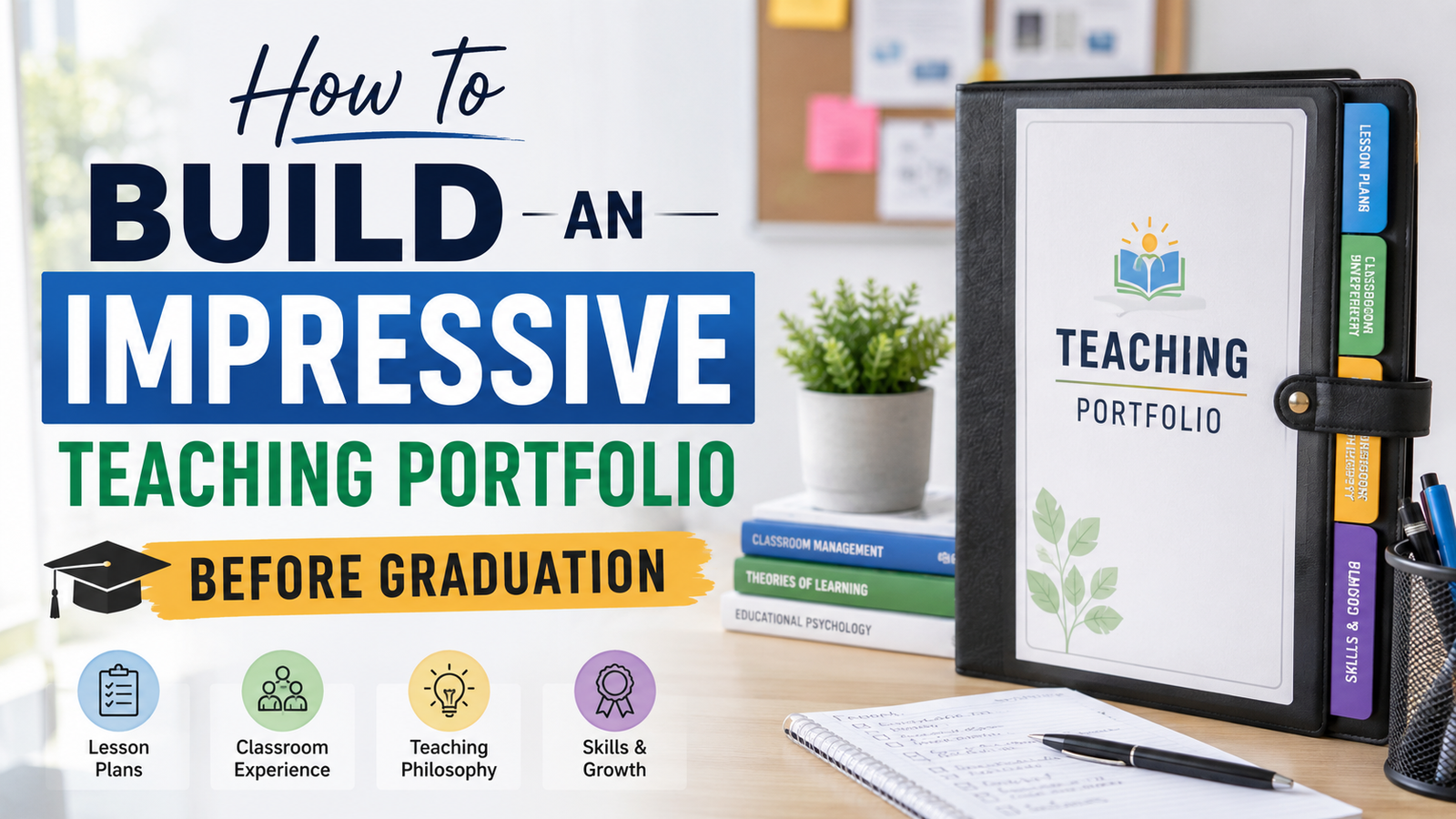
A teaching degree equips you with the knowledge and skills needed to educate future generations. However, in today's competitive education job market, qualifications alone may not be enough to secure your dream teaching position. Schools increasingly look for candidates who can demonstrate practical teaching abilities, creativity, professionalism, and a passion for lifelong learning.
This is where a teaching portfolio becomes invaluable.
Unlike a traditional resume that summarizes your qualifications in one or two pages, a teaching portfolio provides concrete evidence of your teaching skills, classroom experience, lesson planning abilities, and professional growth. Whether you're pursuing a B.Ed., M.Ed., D.El.Ed., or Early Childhood Education program, building your portfolio before graduation can give you a significant advantage during campus placements, interviews, and job applications.
In this comprehensive guide, you'll learn what a teaching portfolio is, why you should start building one before graduation, what to include, and how to make it stand out to potential employers.
What Is a Teaching Portfolio?
A teaching portfolio is a carefully organized collection of documents, teaching materials, achievements, and reflections that showcase your abilities as an educator. It presents evidence of your teaching practices, classroom management skills, instructional strategies, and professional development.
Think of it as your professional story—a document that demonstrates not only what you know but also how you apply that knowledge in real classroom settings.
A teaching portfolio is useful for:
- B.Ed. students
- M.Ed. students
- D.El.Ed. students
- Early Childhood Education students
- Special Education trainees
- Pre-service teachers
- Fresh graduates applying for teaching positions
Many schools, colleges, and educational institutions now request teaching portfolios during recruitment because they offer deeper insights into a candidate's teaching approach than a resume alone.
Why You Should Start Building It Before Graduation
1. Gain a Competitive Advantage
Fresh graduates often have similar academic qualifications. A well-prepared teaching portfolio helps you stand out by showcasing your practical experiences and professional readiness.
Recruiters appreciate candidates who have documented their teaching journey and can provide real examples of classroom work.
2. Record Your Learning Journey
Your internships, teaching practice sessions, workshops, and classroom observations are valuable learning experiences. Building your portfolio while studying ensures these experiences are documented accurately rather than relying on memory later.
3. Showcase Practical Teaching Experience
Even if you have limited professional experience, your internship, demonstration lessons, volunteer teaching, and peer teaching activities can effectively demonstrate your teaching capabilities.
4. Prepare for Campus Placements
Many educational institutions conduct campus recruitment drives where candidates are expected to discuss lesson planning, classroom management, and teaching strategies.
A teaching portfolio provides ready examples that strengthen your interview responses.
Essential Components of a Strong Teaching Portfolio
1. Professional Profile
Start with a professional introduction that reflects your personality and career aspirations.
Include:
- Full name
- Professional photograph
- Contact information
- Career objective
- Professional summary
Example Career Objective
Passionate and dedicated aspiring teacher committed to creating engaging, inclusive, and student-centered learning environments while supporting holistic student development through innovative teaching practices.
2. Teaching Philosophy
A teaching philosophy explains your beliefs about education and your approach to teaching.
Discuss topics such as:
- Student-centered learning
- Inclusive education
- Active participation
- Critical thinking
- Lifelong learning
- Continuous assessment
Keep it concise, authentic, and reflective.
3. Academic Credentials
Present your educational background clearly.
Include:
- Degree certificates
- Academic transcripts
- CGPA or percentage
- Awards
- Scholarships
- Relevant coursework
- Subject specializations
Arrange documents in reverse chronological order.
4. Teaching Experience
This section is one of the most important.
Include:
Internship Details
Mention:
- School name
- Duration
- Grade levels taught
- Subjects handled
Student Teaching Practice
Describe:
- Number of lessons delivered
- Classroom size
- Teaching methods used
- Learning outcomes
Classroom Observation Reports
Summarize what you learned while observing experienced teachers.
Volunteer Teaching
Include experiences such as:
- NGO teaching
- Community education
- Literacy campaigns
- Tutoring
5. Sample Lesson Plans
Lesson plans demonstrate your instructional planning skills.
Include multiple examples covering different topics and grade levels.
Each lesson plan should contain:
- Learning objectives
- Teaching materials
- Introduction
- Activities
- Classroom engagement methods
- Assessment strategy
- Reflection
Well-designed lesson plans show recruiters your preparedness and organizational skills.
6. Classroom Management Strategies
Schools value teachers who can effectively manage classrooms.
Discuss strategies such as:
- Establishing classroom rules
- Positive reinforcement
- Encouraging participation
- Conflict resolution
- Time management
- Building respectful classroom culture
Also include examples of inclusive teaching strategies that accommodate students with different learning needs.
7. Teaching Resources
Showcase teaching materials you've created.
Examples include:
- Worksheets
- PowerPoint presentations
- Flashcards
- Posters
- Educational games
- Storytelling materials
- Activity sheets
- Graphic organizers
These resources highlight your creativity and ability to design engaging learning experiences.
8. Student Assessment Samples
Assessment demonstrates how you evaluate learning.
Include examples of:
- Quizzes
- Rubrics
- Observation checklists
- Feedback sheets
- Student progress tracking
- Project evaluation forms
Ensure student identities remain confidential by removing names and personal information.
9. Technology Skills
Modern classrooms increasingly rely on digital tools.
Show your proficiency with:
Learning Management Systems (LMS)
Digital Classroom Platforms
- Google Classroom
- Microsoft Teams
- Zoom
- Google Meet
Educational Apps
Examples include:
- Kahoot!
- Quizizz
- Nearpod
- Padlet
AI Tools in Education
Highlight your ability to use AI responsibly for:
- Lesson planning
- Quiz generation
- Worksheet creation
- Differentiated instruction
- Content summarization
- Classroom activity ideas
Demonstrating digital literacy makes you a stronger candidate for modern teaching roles.
Showcase Your Skills Beyond Academics
Schools seek well-rounded educators.
Include evidence of transferable skills such as:
Communication Skills
Examples:
- Conducting classroom presentations
- Parent communication
- Group discussions
Leadership Roles
Mention positions like:
- Class representative
- Student council member
- Club coordinator
Event Coordination
Highlight your involvement in organizing:
- Annual functions
- Educational fairs
- Cultural events
- Sports day
- School exhibitions
Workshop Participation
Include workshops on:
- Inclusive education
- Digital learning
- Child psychology
- STEM education
Public Speaking
Participation in seminars, debates, or conferences demonstrates confidence and communication abilities.
Team Collaboration
Teaching is collaborative. Include experiences working with peers on projects, lesson planning, or educational events.
Include Certifications and Professional Development
Professional development shows your commitment to continuous learning.
Relevant certifications include:
- Online teaching courses
- Digital pedagogy certifications
- Child psychology workshops
- Classroom management training
- Inclusive education courses
- First aid and CPR certification
- Educational technology training
- Soft skills programs
Arrange certifications by date and include completion certificates where possible.
Add Evidence of Your Achievements
Support your claims with documented accomplishments.
Include:
Awards
Academic excellence awards
Best student teacher recognition
Teaching competitions
Innovation awards
Scholarships
List merit scholarships or financial awards earned during your academic journey.
Competitions
Participation in:
- Teaching demonstrations
- Debate competitions
- Quiz competitions
- Educational innovation contests
Research Papers
If you've completed research projects, include:
- Research title
- Abstract
- Publication details
- Conference presentations
Published Articles
Educational blogs, journals, magazines, or newsletters can strengthen your academic profile.
Conference Presentations
Mention conferences where you've presented papers or posters related to education.
Create a Digital Teaching Portfolio
Today's recruiters increasingly prefer digital portfolios because they are easy to access, share, and update.
Why Digital Portfolios Matter
Benefits include:
- Easy sharing via email or QR code
- Accessible from anywhere
- Professional online presence
- Multimedia support
- Continuous updates
Portfolio Website
A personal website creates a professional impression.
Include sections such as:
- About Me
- Resume
- Teaching Philosophy
- Lesson Plans
- Projects
- Certifications
- Contact Information
Google Sites
Google Sites is beginner-friendly and ideal for creating free teaching portfolios with embedded documents, videos, and presentations.
Canva Portfolios
Canva offers attractive portfolio templates that help create visually appealing digital portfolios without advanced design skills.
PDF Portfolio
Maintain a professionally formatted PDF version for quick sharing during job applications.
Ensure file size remains manageable and navigation is easy using bookmarks or a clickable table of contents.
LinkedIn Integration
Keep your LinkedIn profile updated with:
- Education
- Certifications
- Volunteer work
- Projects
- Skills
- Portfolio website link
Recruiters often review LinkedIn profiles before scheduling interviews.
Tips to Make Your Portfolio Stand Out
Keep It Well Organized
Use clear headings, sections, and a logical sequence.
Maintain Professional Formatting
Use:
- Consistent fonts
- Professional colors
- Clean layouts
- Proper spacing
- High-quality images
Add High-Quality Visuals
Include:
- Classroom displays
- Teaching aids
- Student projects
- Workshop participation
- Educational activities
Always obtain permission before using classroom photographs featuring students.
Include Measurable Achievements
Instead of saying:
"I taught mathematics."
Write:
"Designed and delivered 20 mathematics lessons for Grade 6 students, achieving 90% student participation during classroom activities."
Numbers strengthen credibility.
Customize for Each School
Different schools have different priorities.
Tailor your portfolio by emphasizing:
- Technology integration
- Inclusive education
- STEM teaching
- Activity-based learning
- Early childhood development
depending on the institution.
Update Regularly
A teaching portfolio is a living document.
Continue adding:
- New certifications
- Workshops
- Lesson plans
- Awards
- Professional achievements
- Teaching experiences
throughout your career.
Common Mistakes to Avoid
Avoid these common errors:
Including Unnecessary Documents
Only include materials that demonstrate your teaching competence.
Poor Formatting
Messy layouts create a negative impression.
Maintain consistency throughout.
Outdated Information
Remove expired certifications and outdated contact information.
Spelling and Grammar Errors
Proofread carefully.
Even minor language mistakes can affect your professional image.
Missing Evidence
Avoid making unsupported claims.
Instead of saying you're creative, include lesson plans, classroom activities, or teaching resources that demonstrate creativity.
Lack of Reflection
Employers appreciate reflective practitioners.
Include brief reflections on what you learned from internships, classroom observations, or teaching experiences.
Checklist Before You Graduate
Before applying for teaching positions, ensure your portfolio includes:
- ✔ Updated resume
- ✔ Professional profile
- ✔ Teaching philosophy statement
- ✔ Academic transcripts
- ✔ Degree and certification copies
- ✔ Internship certificate
- ✔ Sample lesson plans
- ✔ Teaching resources
- ✔ Student assessment samples
- ✔ Classroom management strategies
- ✔ Technology skills
- ✔ Recommendation letters
- ✔ Professional development certificates
- ✔ Awards and achievements
- ✔ Classroom photographs (with appropriate permission)
- ✔ Digital portfolio or website link
- ✔ LinkedIn profile
- ✔ Contact information
Final Thoughts
Building a teaching portfolio before graduation is one of the smartest investments you can make in your professional future. Rather than waiting until graduation to organize your achievements, start documenting your learning experiences from day one. Every internship, lesson plan, workshop, classroom observation, and certification contributes to the story of your growth as an educator.
A strong teaching portfolio does more than help you secure your first teaching job—it demonstrates your commitment to excellence, continuous learning, and reflective practice. It gives interviewers tangible evidence of your skills, boosts your confidence during recruitment, and distinguishes you from other candidates with similar academic qualifications.
Remember, your portfolio is not a one-time project but a living document that evolves throughout your career. Continue updating it with new experiences, certifications, innovative teaching strategies, and professional accomplishments. By starting early and maintaining it consistently, you'll be well-prepared for opportunities in schools, colleges, educational organizations, and beyond.
Whether your goal is to teach in a public school, private institution, international school, or online learning environment, an impressive teaching portfolio can open doors and leave a lasting impression on employers. Start building yours today, and let your passion, dedication, and potential as an educator shine through every page.