

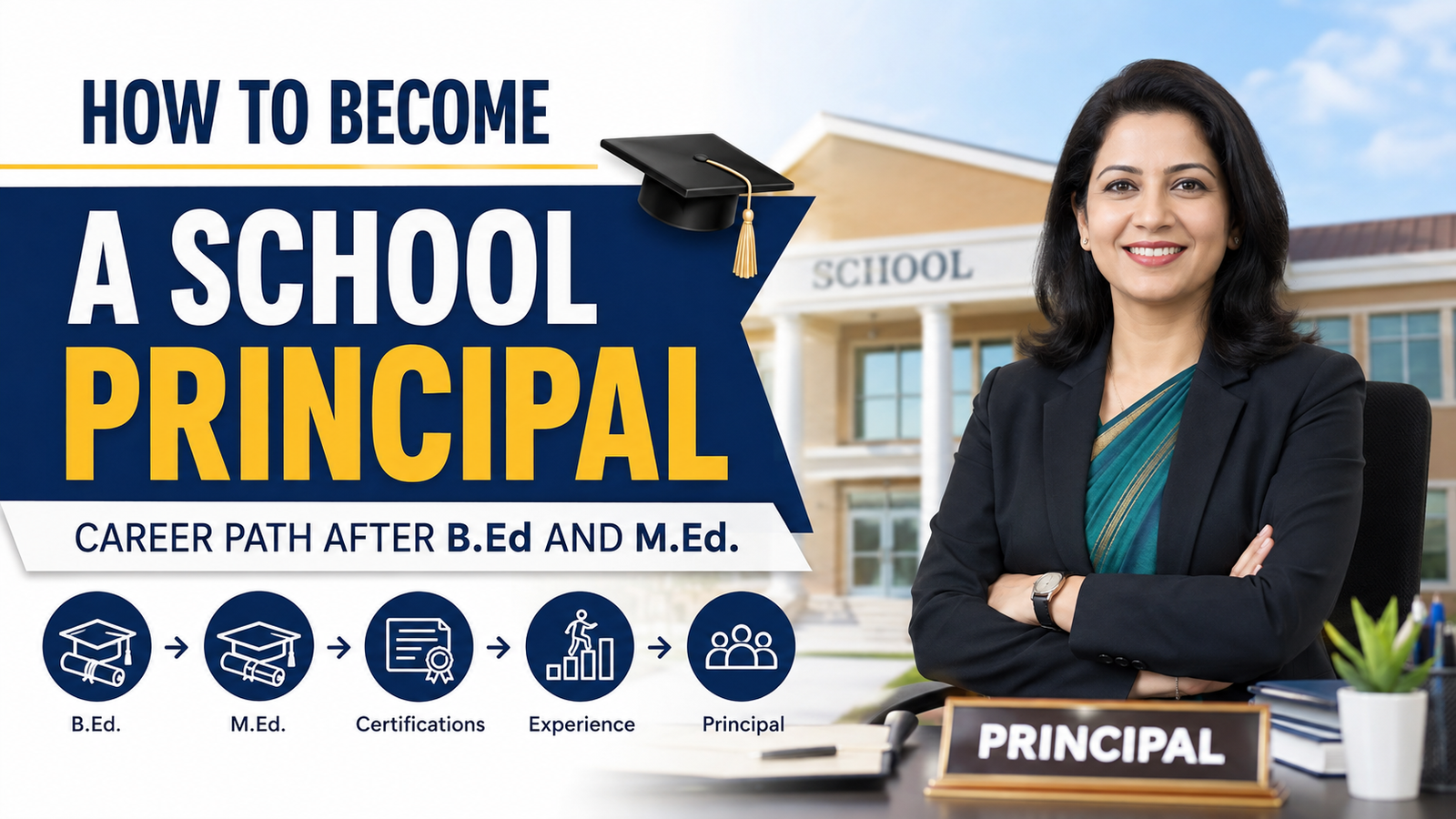
Becoming a school principal is a rewarding career for educators who aspire to lead, inspire, and shape the future of education. After completing a B.Ed and M.Ed, aspiring principals can advance through years of teaching experience, leadership roles, and continuous professional development. This guide explains the eligibility criteria, step-by-step career path, essential skills, salary prospects, and growth opportunities to help you understand how to become a successful school principal in India.
School principals play a crucial role in shaping the future of students, teachers, and educational institutions. They are not just administrators—they are leaders, mentors, and decision-makers responsible for creating a positive learning environment. If you have completed or are planning to pursue a Bachelor of Education (B.Ed) or Master of Education (M.Ed), becoming a school principal can be a fulfilling and prestigious career choice.
In this comprehensive guide, we'll explain the eligibility requirements, career path, skills, salary, and growth opportunities to help you understand how to become a successful school principal in India.
A school principal is the head of an educational institution responsible for managing its academic, administrative, and operational activities. They ensure that students receive quality education while supporting teachers, coordinating with parents, and maintaining compliance with educational policies.
A principal's responsibilities extend far beyond managing day-to-day school operations. Their key duties include:
A successful principal inspires both students and teachers while creating an environment that promotes learning and growth.
The eligibility criteria for becoming a school principal may vary depending on the school board, institution type, and state regulations. However, most schools look for the following qualifications.
Candidates must first complete a bachelor's degree in any recognized discipline from a reputed university.
A B.Ed degree is generally essential for becoming a qualified teacher, making it the first major step toward school leadership.
Although not always mandatory, an M.Ed degree significantly improves career prospects and is preferred by many private, CBSE, ICSE, and international schools when hiring principals.
Most schools require candidates to have 5–10 years of classroom teaching experience before applying for principal positions. Many institutions also expect prior experience in academic coordination or school administration.
There is no universal age limit for becoming a school principal. Selection is usually based on qualifications, leadership abilities, teaching experience, and administrative expertise.
Different education boards may have additional eligibility requirements:
Becoming a school principal is a gradual process that combines education, teaching experience, and leadership development.
The journey begins with earning a bachelor's degree in a subject you wish to teach, such as English, Mathematics, Science, Social Science, Commerce, or Arts.
A strong academic foundation prepares you for professional teacher training.
A Bachelor of Education (B.Ed) is the standard qualification required to become a trained teacher in India.
During the course, you develop skills in:
Teaching experience gained after B.Ed forms the backbone of future leadership roles.
Before becoming a principal, schools generally expect candidates to have several years of teaching experience.
Teaching helps you:
Many aspiring principals begin as subject teachers before progressing into senior teaching roles.
A Master of Education (M.Ed) enhances your understanding of educational leadership, curriculum development, research, and school administration.
Some useful specialization areas include:
An M.Ed can strengthen your profile and prepare you for management responsibilities.
Academic qualifications alone are not enough. Effective principals must also possess strong leadership qualities.
Essential leadership skills include:
Leadership training workshops and certification programs can further enhance these competencies.
Before becoming a principal, many educators gain administrative experience through intermediate leadership positions such as:
These roles provide practical exposure to school management and decision-making.
Once you meet the eligibility requirements, you can begin applying for principal vacancies.
Prepare by:
Many schools also assess candidates through presentations or case-study discussions during the recruitment process.
Outstanding principals combine educational expertise with effective management skills.
Motivating teachers, guiding students, and creating a shared vision for school success.
Building strong relationships with teachers, parents, students, and governing bodies.
Managing timetables, academic calendars, budgets, staffing, and school operations efficiently.
Understanding budgeting, resource allocation, and financial planning.
Handling conflicts, emergencies, and academic challenges with confidence.
Supporting teachers and students with empathy while maintaining professionalism.
Using educational technology, learning management systems, and digital tools to improve teaching outcomes.
Setting long-term academic goals and implementing continuous improvement strategies.
An M.Ed is not mandatory for every principal position, but it is highly valued.
Many private and international schools prefer candidates with postgraduate qualifications because they demonstrate advanced knowledge of educational leadership.
In some government schools, promotions are based on seniority, departmental rules, and experience rather than only academic qualifications.
Overall, pursuing an M.Ed can improve your career prospects, increase promotion opportunities, and strengthen your leadership profile.
The journey usually takes 8 to 15 years, depending on your qualifications, experience, and career progression.
A typical career timeline may look like this:
Candidates who actively pursue leadership opportunities and professional development often advance more quickly.
Principal salaries vary depending on school type, location, experience, and qualifications.
Approximate salary: ₹5 lakh to ₹12 lakh per year
Approximate salary: ₹8 lakh to ₹18 lakh per year
Approximate salary: ₹15 lakh to ₹35 lakh+ per year
Salary depends on state government pay scales and generally includes additional allowances and benefits.
Several factors influence earnings, including:
Becoming a principal opens the door to several senior leadership positions.
Potential career opportunities include:
Experienced principals may also transition into higher education, teacher training, or educational consulting.
Although rewarding, the role comes with significant responsibilities.
Common challenges include:
Strong leadership, adaptability, and continuous learning help principals overcome these challenges successfully.
If your goal is to lead a school effectively, consider these practical tips:
Becoming a school principal is a rewarding career path for educators who aspire to make a lasting impact on students, teachers, and the education system. The journey typically begins with a bachelor's degree, followed by a B.Ed, years of classroom teaching, and often an M.Ed to strengthen leadership and administrative expertise.
Beyond academic qualifications, successful principals are effective communicators, strategic thinkers, and inspiring leaders who foster a positive learning environment. By gaining practical teaching experience, taking on leadership responsibilities, and continuously updating your knowledge of educational practices and policies, you can confidently progress toward this respected role.
If you are passionate about shaping the future of education, investing in your professional growth today can pave the way to becoming a successful school principal tomorrow.
