

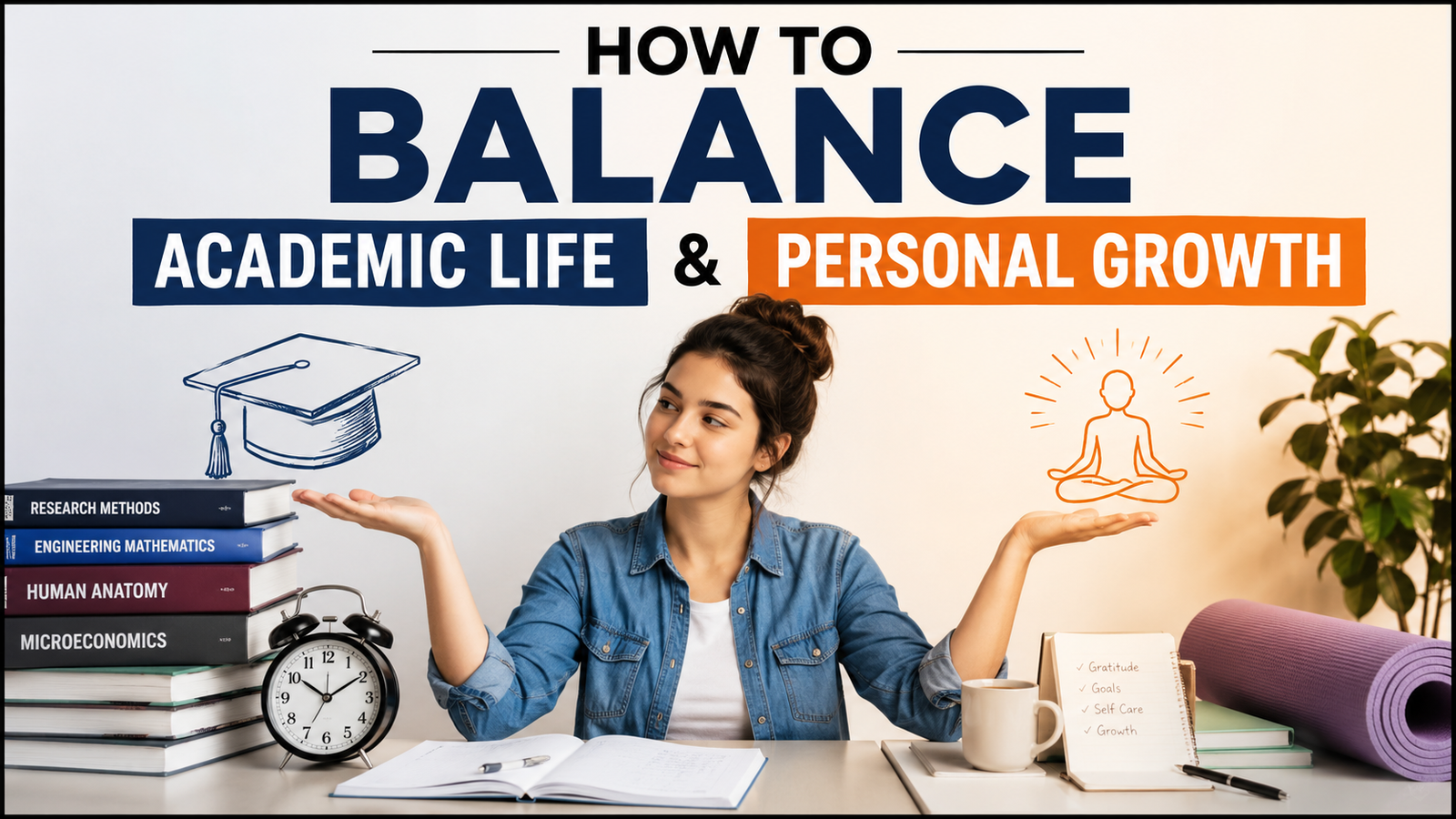
Balancing academic responsibilities with personal growth is essential for every student aiming for long-term success. While grades and academic achievements are important, true development also involves building confidence, communication skills, healthy habits, creativity, and emotional strength. This blog explores practical strategies to help students manage their studies, set meaningful goals, improve time management, maintain well-being, and make time for personal development. Discover how a balanced approach can help students become more confident, capable, and well-rounded individuals.
Student life is an important phase where individuals build the foundation for their future careers and personal identities. However, many students often find it challenging to balance academic responsibilities with personal growth. The pressure to achieve higher grades, complete assignments, prepare for exams, and meet academic expectations can sometimes leave little time for self-development.
While academic success is important, true growth goes beyond marks and certificates. Developing confidence, communication skills, creativity, emotional intelligence, and healthy habits are equally essential for long-term success. A student who focuses only on academics may miss opportunities to explore their interests and develop important life skills.
Maintaining a balanced lifestyle allows students to become well-rounded individuals who are prepared to face both academic challenges and real-world situations. By managing time effectively and giving importance to personal development, students can achieve success in education while also growing as individuals.
Academic life involves various responsibilities that help students gain knowledge, improve skills, and achieve educational goals. These responsibilities include attending classes regularly, completing assignments and projects, preparing for examinations, and developing a strong understanding of different subjects.
Regular class attendance helps students stay connected with lessons and understand concepts better. Completing assignments on time improves discipline, research abilities, and problem-solving skills. Exam preparation, when done consistently, reduces last-minute stress and improves confidence.
However, managing academic responsibilities does not mean spending every hour studying. Effective academic planning helps students organize their workload, avoid unnecessary pressure, and maintain a healthy balance between studies and personal activities.
Creating a study schedule, setting realistic deadlines, and reviewing lessons regularly can make academic tasks more manageable. When students plan their academic responsibilities properly, they can achieve better performance while still having time for personal growth.
One of the most important steps toward balancing academic life and personal growth is setting clear goals. Students should identify what they want to achieve in both their academic and personal lives.
Goals can be divided into short-term and long-term objectives. Short-term goals may include completing an assignment, improving a particular skill, or preparing for an upcoming test. Long-term goals may involve career planning, developing expertise in a field, or building personal qualities.
Prioritizing tasks helps students focus on what matters most. Understanding the difference between urgent and important tasks prevents unnecessary stress and improves productivity.
Some useful strategies include:
When students have clear priorities, they can use their time more effectively and maintain progress in both academics and personal development.
Time management is a key skill that helps students balance their studies, hobbies, relationships, and personal responsibilities. Without proper time management, students may feel overwhelmed and struggle to complete their tasks effectively.
Creating a realistic timetable is one of the best ways to manage time. A good schedule should include dedicated study hours, breaks, personal activities, and relaxation time. Students should avoid creating unrealistic plans that are difficult to follow.
Another important aspect of time management is avoiding procrastination. Delaying tasks often leads to increased stress and reduced productivity. Completing small tasks regularly is more effective than trying to finish everything at the last moment.
Focused study techniques, such as studying in distraction-free sessions with short breaks, can improve concentration. At the same time, students should remember that relaxation is also necessary for maintaining energy and motivation.
Personal growth plays an important role in shaping a student's personality, confidence, and future success. Education is not limited to textbooks; students also learn through experiences, creativity, and exploration.
Students can focus on personal development by:
These activities help students discover their strengths and interests. They also improve teamwork, creativity, decision-making, and confidence.
Balancing academics with personal growth allows students to develop abilities that are valuable in professional and personal life.
Health is an important part of academic success and personal development. Students who take care of their physical and mental well-being are better able to concentrate, manage stress, and perform effectively.
Some essential habits for maintaining good health include:
Academic pressure can sometimes lead to stress and anxiety. Learning how to manage emotions and maintain a positive mindset helps students handle challenges more effectively.
A healthy body and a calm mind create the right environment for learning, creativity, and personal growth.
Personal growth is not only about individual achievements; it also involves building meaningful relationships and improving social skills. Communication, teamwork, and empathy are important qualities that help students succeed in different areas of life.
Students should take opportunities to:
Strong relationships provide emotional support and create opportunities for learning from others. Working with different people also improves collaboration and leadership skills.
Developing social abilities during student life prepares individuals for future professional and personal situations.
Classroom learning provides essential knowledge, but real-world experiences help students apply that knowledge in practical situations. Personal growth often happens when students step outside traditional learning environments.
Students can explore opportunities such as:
These experiences help students understand real-world challenges and develop valuable skills. They also allow students to explore career interests and gain confidence.
Learning beyond the classroom encourages curiosity and helps students become independent thinkers.
Many students experience pressure to achieve perfect grades, complete every task flawlessly, or meet unrealistic expectations. While aiming for excellence is positive, constantly chasing perfection can create unnecessary stress.
Students should focus on progress rather than perfection. Every mistake provides an opportunity to learn and improve. Developing a growth mindset helps students see challenges as opportunities for development.
Self-reflection is also important. Students should regularly evaluate their strengths, weaknesses, achievements, and areas for improvement. Continuous learning and improvement are more valuable than trying to achieve perfection in every situation.
A balanced daily routine helps students manage academic responsibilities while making time for personal growth. Small habits can create a significant positive impact over time.
A healthy routine may include:
Students should create routines that match their individual needs and learning styles. A balanced schedule improves productivity while preventing burnout.
Consistency is the key to maintaining a healthy relationship between studies and personal development.
Technology can be a valuable tool for improving academic performance and personal growth when used correctly. Digital resources provide students with opportunities to learn, organize, and develop new skills.
Students can use technology through:
However, technology can also become a distraction, especially through excessive social media use. Students should develop healthy digital habits by setting limits and using technology purposefully.
When used wisely, technology can help students save time and enhance their learning experience.
Balancing academic life and personal growth is essential for becoming a successful and confident individual. Academic achievements provide knowledge and qualifications, while personal development builds skills, character, and resilience.
Students do not need to choose between academic success and personal growth. With proper planning, effective time management, healthy habits, and continuous learning, they can achieve both.
A balanced approach to student life creates individuals who are not only successful in their careers but also prepared to handle challenges, build relationships, and contribute positively to society. True success comes from growing academically while becoming a better version of oneself.
