

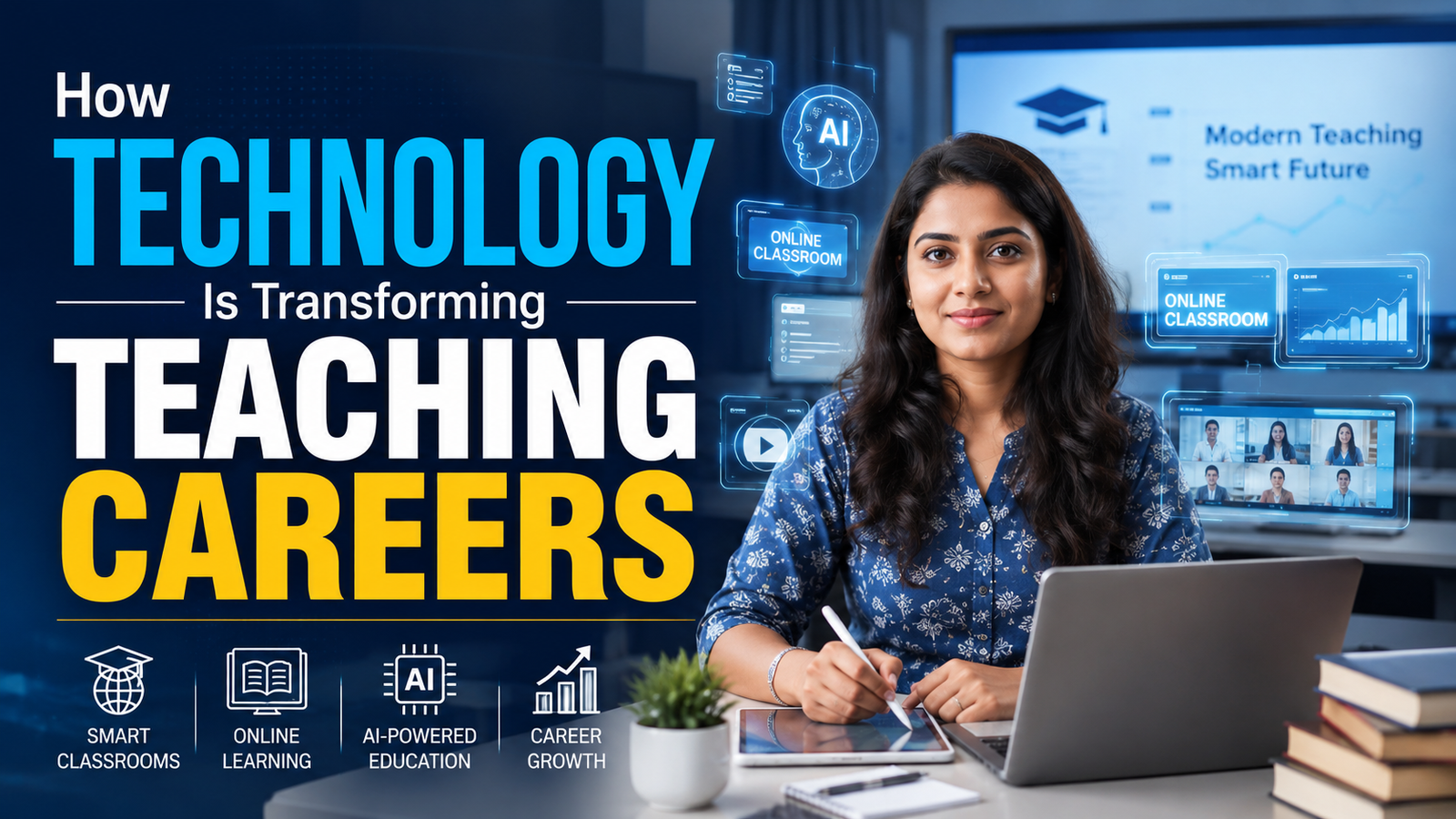
Technology is revolutionizing teaching careers by transforming how educators teach, engage students, and manage classrooms. From AI-powered lesson planning and personalized learning to virtual classrooms and emerging EdTech roles, digital innovation is creating new opportunities while reshaping traditional teaching practices. Discover how technology is empowering educators, the skills needed to succeed in the digital age, and what the future holds for teaching careers.
Education is undergoing one of the most significant transformations in its history. Digital technologies, artificial intelligence, cloud computing, and online learning platforms have changed not only how students learn but also how teachers teach. The traditional image of educators standing in front of a classroom delivering lectures is rapidly evolving into a more dynamic, technology-enabled role.
As schools, colleges, and training institutions embrace digital innovation, teaching careers are evolving faster than ever before. Educators are no longer limited to physical classrooms; they can teach globally, create digital learning experiences, and leverage data-driven insights to improve student outcomes.
This article explores how technology is transforming teaching careers, the opportunities it creates, the challenges educators face, and the skills needed to thrive in the future of education.
For decades, teaching primarily relied on textbooks, chalkboards, and face-to-face instruction. Teachers were the primary source of information, and students depended heavily on classroom lectures for learning.
Today, technology-enabled learning environments provide students with access to information anytime and anywhere. Digital platforms, multimedia content, and interactive tools have made learning more engaging, flexible, and personalized.
Several innovations have significantly influenced modern education:
These developments have transformed teaching from a content-delivery model into an interactive learning experience.
Modern educators are increasingly acting as facilitators, mentors, and learning coaches. Rather than simply providing information, teachers guide students in critical thinking, problem-solving, collaboration, and independent learning.
Platforms such as Google Classroom, Moodle, and Canvas help teachers organize coursework, distribute assignments, track student progress, and communicate efficiently with learners.
Benefits include:
Video conferencing tools have made remote and hybrid learning possible. Teachers can conduct live classes, host discussions, and interact with students regardless of geographical location.
Key advantages include:
Interactive displays and smart classroom technologies allow teachers to present lessons using multimedia content, animations, and real-time collaboration tools.
This creates a more engaging and interactive learning environment.
Teachers now have access to thousands of educational applications that support:
These tools help educators meet diverse learning needs.
Platforms such as Google Workspace and Microsoft 365 enable real-time collaboration among students and teachers.
Benefits include:
Artificial Intelligence is emerging as one of the most transformative technologies in education.
AI tools can assist teachers by:
This significantly reduces preparation time.
AI-powered systems can evaluate quizzes, assignments, and objective assessments quickly and accurately.
Advantages include:
AI can analyze student performance data and recommend personalized learning paths based on individual strengths and weaknesses.
This allows teachers to provide targeted support where it is needed most.
Virtual assistants can answer common student questions, provide learning support, and offer 24/7 assistance outside classroom hours.
Teachers can focus on higher-value instructional activities while AI handles routine tasks.
While AI offers numerous benefits, it also presents challenges:
Opportunities:
Challenges:
Educators must learn to use AI responsibly while maintaining human-cantered teaching practices.
Technology is creating entirely new career paths for educators.
Teachers can now reach learners globally through virtual classrooms and online tutoring platforms.
Instructional designers create engaging learning experiences using educational technology, multimedia content, and learning science principles.
These professionals develop:
EdTech specialists help institutions implement and optimize technology solutions for teaching and learning.
Consultants work with schools and organizations to integrate technology into curriculum design and instructional strategies.
Automation tools help streamline:
This allows teachers to spend more time focusing on student learning.
Interactive content, multimedia resources, and gamification increase student participation and motivation.
Digital classroom management tools enable teachers to monitor student progress and maintain organized learning environments.
Learning analytics provide valuable insights into:
Teachers can make informed instructional decisions based on real data.
Technology enables educators to teach from virtually anywhere, opening new possibilities for flexible work arrangements.
Teachers must be comfortable using various digital tools and platforms to support learning effectively.
Understanding student performance data helps educators personalize instruction and improve outcomes.
Virtual teaching requires skills in:
Educators should understand how AI tools work and how to integrate them responsibly into teaching practices.
Teachers play a critical role in promoting safe and ethical technology use among students.
The pace of innovation requires continuous learning and adaptation.
Extended screen time and constant connectivity can contribute to teacher stress and exhaustion.
Protecting student data and maintaining digital safety remain major priorities.
Not all students have equal access to devices, internet connectivity, or digital resources.
Technology should enhance—not replace—the relationships that form the foundation of effective education.
Successful educators embrace lifelong learning to stay current with emerging technologies.
Professional certifications help teachers build expertise in:
Many institutions now offer specialized training programs that prepare teachers for technology-rich learning environments.
Teachers who invest in digital skills are better positioned for leadership roles and emerging career opportunities.
AI will increasingly support personalized instruction, assessment, and student engagement.
Augmented and Virtual Reality will create highly interactive learning experiences that improve understanding and retention.
Flexible learning environments combining online and face-to-face instruction will become more common.
Technology will enable individualized learning experiences for large numbers of students.
Continuous professional growth will become a core component of every teaching career.
Avoid overwhelming yourself by gradually adopting new tools and techniques.
Attend workshops, webinars, and certification programs to build digital expertise.
Connect with fellow educators to share best practices, resources, and experiences.
Use AI to enhance productivity while maintaining your role as the primary guide and mentor.
Technology should support meaningful learning experiences rather than simply digitizing traditional teaching methods.
Technology is transforming teaching careers in profound and exciting ways. From AI-powered lesson planning and personalized learning to virtual classrooms and emerging educational roles, digital innovation is reshaping the future of education.
Importantly, technology is not replacing teachers—it is empowering them. The most successful educators will be those who embrace change, continuously develop new skills, and use technology to create richer, more engaging learning experiences.
As education continues to evolve, adaptable and technologically proficient teachers will play a critical role in preparing students for an increasingly digital world. By embracing innovation while maintaining the human connection at the heart of learning, educators can build rewarding and future-ready careers in the modern educational landscape.
