

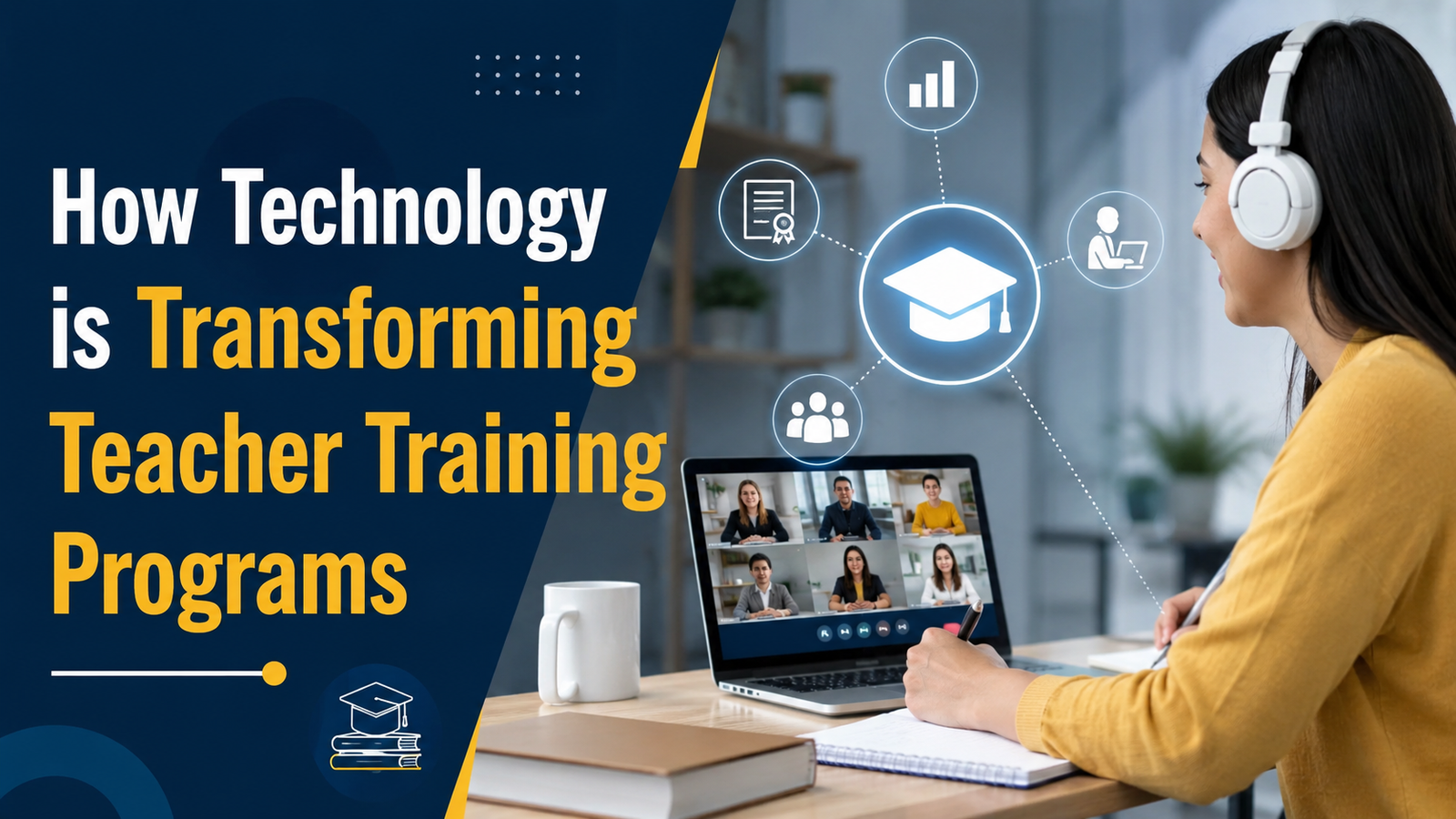
Technology is revolutionizing teacher training programs by transforming how educators learn, develop skills, and prepare for modern classrooms. From digital learning platforms and artificial intelligence to virtual reality and data-driven insights, technology is making professional development more flexible, personalized, and accessible. This blog explores how innovative tools are empowering teachers with continuous learning opportunities, enhancing teaching effectiveness, and shaping the future of education.
Education has always evolved alongside society, and today’s classrooms are changing faster than ever. Traditional teacher training programs that relied mainly on workshops, seminars, and face-to-face sessions are gradually being transformed by digital technologies. Modern educators are expected not only to have strong subject knowledge and teaching skills but also to understand how technology can improve learning experiences.
The rise of digital classrooms, online learning environments, and technology-driven teaching tools has created a need for digitally skilled teachers. Educators must now learn how to use digital resources, analyze student performance data, create engaging online content, and adapt teaching strategies for diverse learning needs.
Technology is playing a significant role in improving teacher preparation by making training more accessible, personalized, and continuous. Instead of attending occasional professional development sessions, teachers can now participate in ongoing learning experiences anytime and anywhere. From artificial intelligence and virtual reality to online communities and mobile learning applications, technology is reshaping how teachers develop their skills and prepare for the classrooms of the future.
One of the biggest changes in teacher training is the growth of digital learning platforms. Online professional development programs have made it easier for teachers to access high-quality training resources without geographical limitations.
Digital platforms provide flexible learning opportunities where teachers can develop new skills according to their schedules. This is especially beneficial for educators who cannot regularly attend in-person training sessions due to workload, location, or time constraints.
Teachers can complete training modules at their own speed. They can revisit difficult concepts, review lessons multiple times, and choose courses based on their professional goals.
Live online sessions allow teachers to interact with trainers, ask questions, participate in discussions, and collaborate with educators from different locations.
Recorded lectures and demonstrations provide continuous access to learning materials, allowing teachers to learn whenever they have time.
Online certifications help teachers validate their skills and demonstrate their commitment to professional growth.
Through digital learning platforms, educators no longer need to leave their classrooms or travel long distances to improve their teaching abilities. Professional development has become more convenient, inclusive, and accessible.
Artificial Intelligence is introducing a new level of personalization into teacher development programs. Instead of providing the same training experience to every educator, AI-powered systems can analyze individual learning patterns and recommend customized resources.
AI helps teachers identify areas where they need improvement and provides opportunities for targeted skill development.
AI systems can suggest courses, resources, and activities based on a teacher’s experience, interests, and learning progress.
AI tools can analyze teaching videos, classroom interactions, and assessments to provide feedback on teaching strategies and effectiveness.
Teachers can use AI-powered applications to create lesson plans, generate classroom activities, design quizzes, and develop learning materials more efficiently.
AI can analyze learning data and provide insights that help teachers understand their strengths and identify areas for improvement.
By supporting personalized learning and reducing administrative workload, AI allows teachers to focus more on creativity, classroom engagement, and student success.
Virtual Reality is bringing a new dimension to teacher preparation by creating realistic classroom experiences in a safe digital environment. Instead of only learning teaching strategies theoretically, educators can practice handling classroom situations through immersive simulations.
VR-based training allows teachers to experience different scenarios before facing them in real classrooms.
For new teachers, VR simulations can provide valuable confidence-building experiences. They can experiment with different approaches, receive feedback, and improve their skills before entering an actual classroom.
As VR technology becomes more affordable and accessible, it has the potential to become an important part of teacher preparation programs worldwide.
Data analytics is helping education institutions make teacher training more effective and evidence-based. Instead of relying only on traditional evaluations, training providers can use data to understand teacher progress, learning preferences, and professional development needs.
Digital platforms can monitor course completion, assessment results, and participation levels.
Teachers and training providers can view detailed reports showing skill development and areas requiring additional support.
Data analysis helps create customized learning pathways based on individual teacher needs.
Schools and institutions can use data insights to design better professional development programs.
By using data effectively, teacher training becomes more targeted, measurable, and impactful.
Mobile technology has made professional learning more accessible than ever. With smartphones and tablets becoming common educational tools, teachers can participate in training programs even while managing their daily responsibilities.
Mobile learning supports continuous skill development through short, focused learning experiences.
Micro-learning is especially valuable because teachers can learn new concepts in small sessions rather than completing lengthy courses at once. A teacher can watch a short lesson on classroom management, explore a new teaching technique, or access digital resources during convenient moments.
Mobile learning ensures that professional development is not limited to training centers but becomes a continuous part of a teacher’s professional journey.
Technology has connected teachers beyond traditional school boundaries. Online communities allow educators to share knowledge, exchange ideas, and learn from each other’s experiences.
Virtual teacher networks create opportunities for collaboration among educators from different regions and educational backgrounds.
These communities encourage teachers to explore innovative teaching methods and stay updated with educational trends. Learning from fellow educators often provides practical insights that traditional training programs may not always offer.
Through collaboration, technology transforms teacher development from an individual activity into a shared learning experience.
Assessment is an essential part of teacher training, and digital tools are improving how educators receive feedback on their skills and progress.
Technology allows training providers to evaluate teaching abilities more efficiently and provide timely recommendations.
Teachers can test their understanding of educational concepts and teaching strategies through digital assessments.
Educators can maintain online records of lesson plans, projects, certifications, and professional achievements.
Teachers can record classroom sessions and receive detailed feedback from mentors or digital evaluation systems.
Technology enables quick responses, helping teachers understand their strengths and make improvements faster.
Continuous feedback encourages teachers to keep learning and refining their teaching practices.
Gamification is making professional learning more engaging by incorporating game-based elements into training programs. It motivates teachers by turning learning activities into interactive experiences.
Gamified training encourages participation and helps teachers remain motivated throughout their learning journey. It can make complex topics easier to understand by presenting them through engaging activities and challenges.
While technology offers many benefits, implementing digital teacher training programs also comes with challenges.
Not all teachers have the same level of confidence or experience with digital tools. Training programs must include basic technology support to ensure everyone can participate effectively.
Reliable internet access and digital devices remain challenges in some regions. Without proper infrastructure, technology-based training opportunities may not reach all educators equally.
Teachers need ongoing assistance to troubleshoot problems and effectively use new technologies.
Although technology improves accessibility, personal interaction, mentorship, and collaboration remain important aspects of teacher development.
The most effective training programs combine digital tools with meaningful human support.
The future of teacher training will likely be shaped by more advanced and personalized technologies. As digital tools continue to develop, educators will have access to smarter ways of improving their skills.
AI systems may provide real-time guidance, teaching suggestions, and personalized improvement plans.
Future training programs will increasingly adapt to each teacher’s experience, goals, and learning style.
Improved VR and augmented reality technologies may create even more realistic classroom training experiences.
A combination of online learning and face-to-face training will provide flexibility while maintaining personal connections.
Technology will continue to support teachers by making professional development more continuous, interactive, and effective.
Technology is transforming teacher training programs by making professional development more accessible, personalized, and engaging. Digital platforms, artificial intelligence, virtual reality, data analytics, and mobile learning tools are helping educators develop the skills needed for modern classrooms.
However, technology is not replacing teachers. Instead, it is empowering them with better resources, deeper insights, and new opportunities for growth. The most successful education systems will be those that combine innovative technology with the creativity, empathy, and expertise of teachers.
A digitally empowered teacher is better prepared to inspire students, adapt to changing learning needs, and create meaningful educational experiences. As technology continues to evolve, teacher training will become a continuous journey of learning, improvement, and innovation.
