

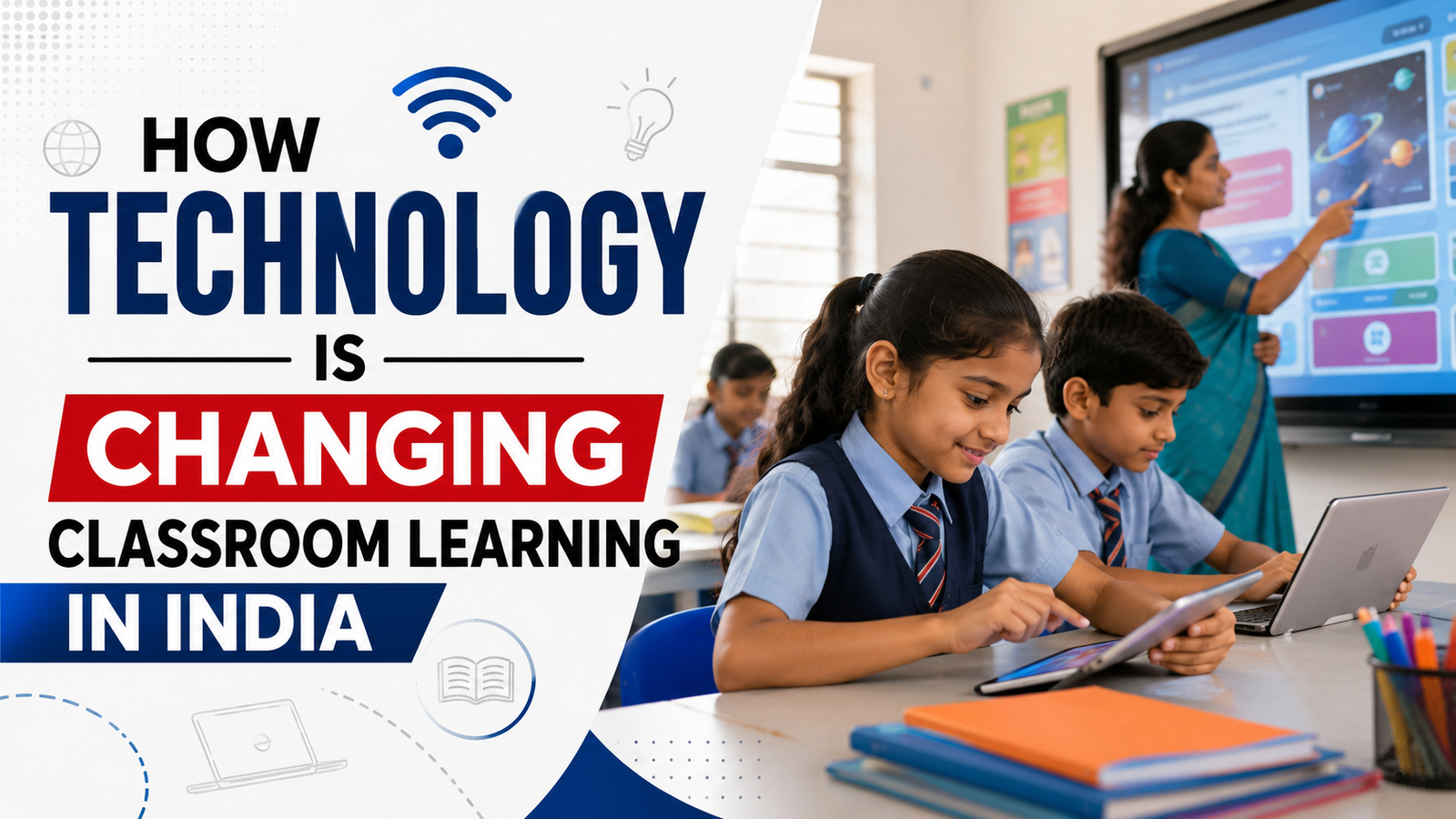
Technology is revolutionizing classroom learning in India by transforming traditional teaching methods into interactive, personalized, and engaging educational experiences. From smart classrooms and AI-powered learning tools to virtual reality and online learning platforms, digital innovations are helping students learn more effectively while equipping them with essential future-ready skills. In this blog, explore how technology is reshaping Indian education, its key benefits, the challenges schools face, government initiatives driving digital transformation, and what the future holds for technology-enabled classrooms.
Education in India has undergone a remarkable transformation over the past few decades. Traditional classrooms, once dominated by chalkboards, textbooks, and teacher-led lectures, are gradually evolving into technology-enabled learning environments. The integration of digital tools has reshaped how teachers teach, students learn, and schools operate.
The rapid adoption of smartphones, affordable internet access, government-led digital education initiatives, and the growth of educational technology (EdTech) have accelerated this transformation. Today, classrooms across India are embracing smart boards, online learning platforms, artificial intelligence (AI), and interactive learning applications to provide students with engaging and personalized educational experiences.
Technology has become more than just an additional teaching aid—it is now an essential component of modern education. It helps bridge learning gaps, supports diverse learning styles, and prepares students with the digital skills needed to thrive in the 21st century.
In this blog, we'll explore how technology is changing classroom learning in India, the benefits it offers, the challenges schools face, government initiatives supporting digital education, and what the future holds for technology-driven classrooms.
Indian classrooms have witnessed a significant shift from traditional teaching methods to digitally enhanced learning. Earlier, teachers relied mainly on textbooks, blackboards, and verbal explanations. Today, many schools use interactive smart boards, digital projectors, online assessments, and cloud-based learning platforms to make education more engaging and effective.
Government initiatives such as Digital India, PM eVIDYA, and the National Education Policy (NEP) 2020 have encouraged schools to adopt technology at a faster pace. At the same time, private educational institutions have invested heavily in smart classrooms, digital libraries, and virtual learning tools to improve the quality of education.
The increasing availability of affordable smartphones, laptops, tablets, and high-speed internet has also made digital learning more accessible than ever before. Students can now access learning resources beyond classroom walls, enabling continuous learning anytime and anywhere.
Technology is transforming education through innovative tools that make learning more interactive, personalized, and efficient.
Smart boards have replaced traditional blackboards in many schools. These interactive displays allow teachers to present multimedia content, annotate lessons in real time, and conduct interactive quizzes.
Benefits include:
Subjects like mathematics, science, and geography become easier to understand with animations, videos, and simulations.
Digital learning platforms have become valuable classroom companions. Students can access video lectures, digital textbooks, quizzes, assignments, and practice tests from anywhere.
These platforms support:
Online platforms also enable teachers to assign homework digitally, monitor progress, and provide instant feedback.
Artificial Intelligence is making education smarter and more personalized.
AI-powered educational tools can:
AI chatbots and virtual tutors are also helping students receive immediate assistance whenever they face difficulties with concepts or assignments.
This personalized approach ensures that every student learns according to their own pace and capability.
Virtual Reality and Augmented Reality are introducing immersive learning experiences that were once impossible in traditional classrooms.
Students can:
These technologies make abstract concepts easier to understand while increasing student curiosity and engagement.
Learning Management Systems have simplified classroom administration.
An LMS allows schools to manage:
Teachers save valuable administrative time while students enjoy easy access to educational resources from a single platform.
Technology has introduced several advantages that improve both teaching and learning outcomes.
Interactive videos, animations, quizzes, educational games, and multimedia presentations capture students' attention and encourage active participation during lessons.
Every student learns differently. Technology allows learners to study at their own speed while receiving customized recommendations based on their strengths and weaknesses.
Cloud-based collaboration tools enable students to work together on projects, share ideas, and communicate effectively even outside classroom hours.
Students can instantly access:
This reduces dependence on physical textbooks alone.
Teachers can automate routine tasks such as attendance, grading, assignment distribution, and report generation, allowing them to spend more time on effective teaching.
Technology exposure helps students develop essential digital skills such as online research, responsible internet usage, communication, and problem-solving—skills that are increasingly important in higher education and future careers.
Despite its many benefits, technology adoption in Indian classrooms still faces several challenges.
Many rural schools still lack reliable internet connectivity, computers, or smart devices. This creates unequal learning opportunities between urban and rural students.
Stable internet remains a challenge in several remote regions, affecting access to online learning resources and virtual classrooms.
Technology is only effective when educators know how to use it efficiently. Continuous professional development and digital training programs are essential.
Installing smart classrooms, purchasing devices, maintaining software licenses, and upgrading infrastructure require significant financial investment.
Excessive use of digital devices may lead to eye strain, reduced physical activity, and other health concerns. Schools should encourage balanced use of technology alongside traditional learning methods.
Schools must protect student information through secure platforms, strong passwords, cybersecurity awareness, and responsible data management practices.
The Government of India has launched several initiatives to accelerate digital learning across the country.
The Digital India Mission focuses on expanding digital infrastructure, improving internet connectivity, and promoting digital literacy among citizens, including students and teachers.
PM eVIDYA integrates television, online learning platforms, radio, and digital resources to ensure uninterrupted education for learners across India.
DIKSHA is a national digital platform providing teachers and students with curriculum-aligned learning materials, teacher training modules, assessments, and interactive educational resources.
SWAYAM offers free online courses developed by leading educational institutions, helping learners access quality education regardless of their geographical location.
NEP 2020 strongly emphasizes technology integration in education. It promotes digital learning, online teacher training, virtual laboratories, multilingual educational resources, and innovative teaching methodologies.
Technology does not replace teachers—it enhances their capabilities.
Modern educators have evolved from being information providers to learning facilitators who guide students in exploring knowledge independently.
Teachers now:
Continuous upskilling is essential for teachers to stay updated with emerging educational technologies and teaching practices.
Technology has significantly improved students' overall learning experiences.
Interactive learning methods help students understand concepts more effectively, leading to improved academic outcomes.
Project-based learning, coding activities, digital research, and problem-solving exercises encourage students to think critically and develop creative solutions.
Students acquire essential skills such as:
These competencies prepare them for higher education and future careers.
Technology encourages independent learning, helping students build confidence in researching topics, completing assignments, and presenting their ideas effectively.
The future of education in India will continue to be driven by technological innovation.
AI tutors will provide real-time guidance, personalized explanations, and adaptive practice based on individual student performance.
Learning systems will automatically adjust lesson difficulty according to each student's progress and learning needs.
Educational games, reward systems, leaderboards, and interactive challenges will make learning more enjoyable and motivating.
Schools will increasingly combine classroom instruction with online learning, giving students greater flexibility and access to diverse learning resources.
Learning analytics will help educators identify struggling students early, track progress, and make informed instructional decisions.
Coding, robotics, and STEM-based learning will become an integral part of school curricula, preparing students for careers in emerging technologies.
To maximize the benefits of educational technology, schools should adopt a balanced and strategic approach.
Technology is reshaping classroom learning in India by making education more interactive, inclusive, and personalized. From smart classrooms and AI-powered learning tools to virtual reality experiences and digital learning platforms, technology is helping students develop the knowledge and skills required for the future.
However, successful technology integration goes beyond installing digital devices. It requires well-trained teachers, equitable access to resources, reliable infrastructure, and thoughtful implementation that complements traditional teaching methods.
As India continues its journey toward digital transformation, educational institutions have an incredible opportunity to create smarter, more engaging, and more inclusive classrooms. By embracing innovation responsibly, schools can empower every learner to reach their full potential and prepare them for success in an increasingly digital world.
