

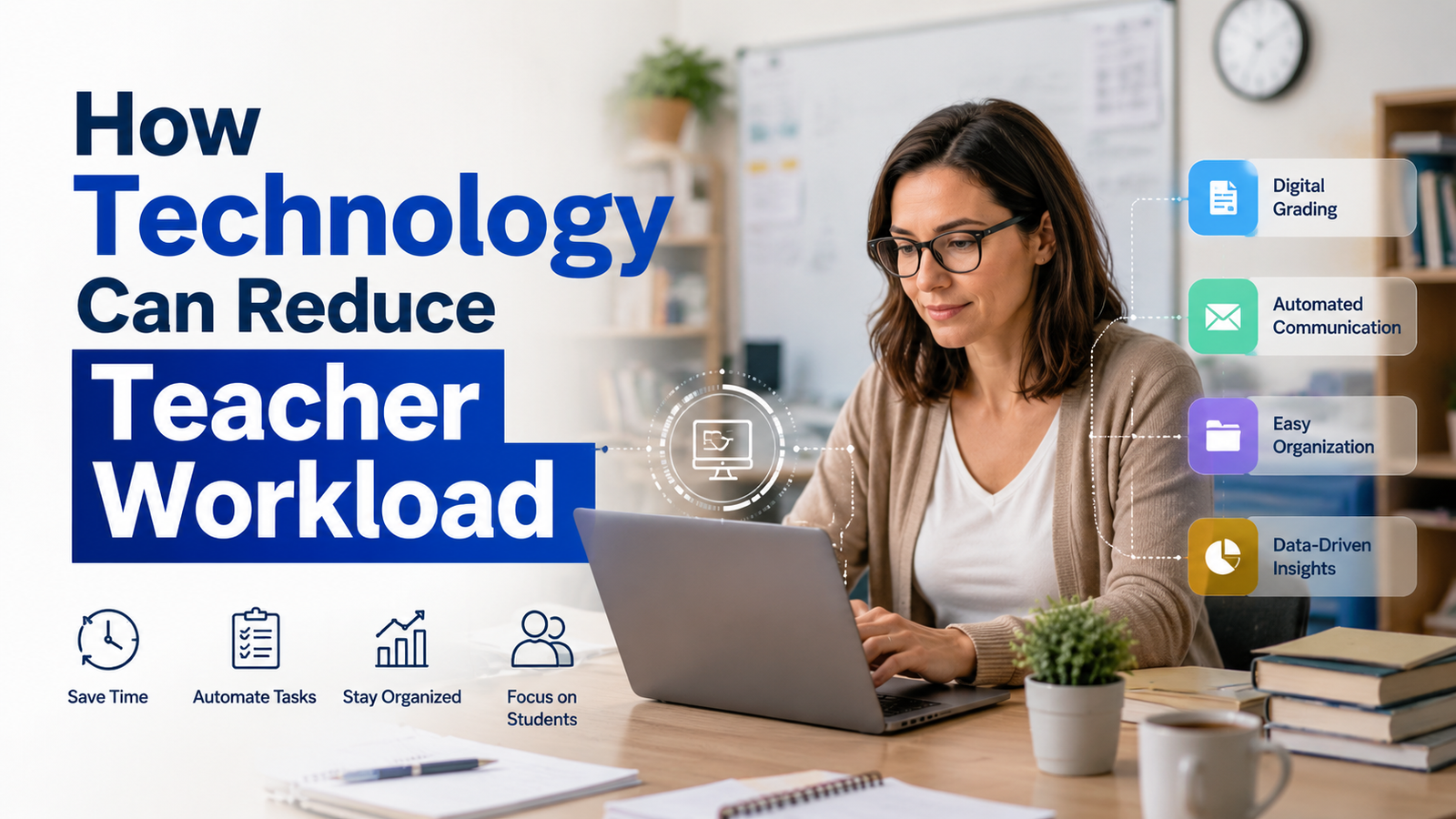
Teachers today do much more than deliver lessons. From planning engaging activities and grading assignments to managing administrative tasks and communicating with parents, educators often carry a workload that extends far beyond the classroom. Technology is transforming the way teachers work by reducing repetitive tasks, improving efficiency, and providing smarter tools for everyday challenges. From automated attendance systems and digital lesson planning tools to AI-powered assistants and online assessment platforms, technology helps educators save valuable time and focus on what truly matters—supporting students, encouraging creativity, and building meaningful learning experiences. By using digital solutions as a partner rather than a replacement, schools can empower teachers to work smarter, reduce stress, and create more impactful classrooms.
Teaching has always been one of the most impactful professions, but the responsibilities of modern educators extend far beyond classroom instruction. Today’s teachers are expected to plan engaging lessons, evaluate student performance, maintain records, communicate with parents, manage classrooms, prepare reports, and continuously adapt to changing educational needs.
While teaching itself requires creativity, patience, and personal connection, many administrative and repetitive tasks consume a significant amount of teachers’ time. Lesson preparation, manual grading, attendance tracking, paperwork, and data management often add hours to their workload outside regular teaching hours.
This is where technology plays an important role. Digital solutions are not designed to replace teachers; instead, they act as supportive tools that help educators work more efficiently. By automating routine tasks and providing smarter ways to manage learning, technology allows teachers to focus on what matters most—guiding students, encouraging creativity, and building meaningful relationships.
Administrative responsibilities are among the biggest contributors to teacher workload. Tasks such as taking attendance, maintaining student records, preparing reports, and organizing documents can take valuable time away from teaching.
Digital platforms simplify these responsibilities by automating many routine processes. Online attendance systems can record student presence instantly, while digital student information systems help teachers manage academic records, performance data, and important documents in one place.
With automated administrative tools, teachers no longer need to spend hours managing paperwork or searching through physical files. Instead, they can dedicate more time to lesson delivery, student support, and classroom engagement.
Lesson planning is essential for effective teaching, but creating high-quality learning materials regularly can be time-consuming. Teachers often spend hours developing presentations, worksheets, activities, and assessments.
Technology provides access to digital libraries, educational resources, templates, and online teaching materials that make lesson preparation easier. Teachers can find inspiration, adapt existing resources, and create engaging content more quickly.
Artificial intelligence-powered tools are also helping educators generate lesson ideas, create quizzes, suggest classroom activities, and prepare learning materials. These tools allow teachers to customize content according to different learning levels and student requirements.
Instead of starting from scratch, educators can use technology to enhance their creativity and spend more time improving the learning experience.
Assessment and grading are important parts of teaching, but they can become overwhelming, especially with large numbers of students. Reviewing assignments, checking answers, and providing feedback manually requires significant time and effort.
Online assessment platforms help reduce this workload by automating quiz creation, scoring, and performance tracking. Teachers can create digital tests that provide instant results, allowing students to receive quick feedback on their learning progress.
Data analytics tools also help educators understand student performance patterns. Teachers can identify areas where students are struggling and provide targeted support without spending countless hours analyzing results manually.
Technology makes assessment more efficient while helping teachers make better decisions based on real-time information.
Managing a classroom involves more than teaching lessons. Teachers must organize assignments, track deadlines, monitor participation, and ensure students stay engaged.
Digital classroom management tools provide a centralized platform where teachers can manage learning activities more effectively. Assignments, announcements, schedules, and student progress can all be organized digitally.
These platforms reduce repetitive tasks such as reminding students about deadlines or manually tracking completed work. Teachers gain better visibility into student progress and can quickly identify students who may need additional support.
By simplifying classroom organization, technology creates a smoother learning environment for both teachers and students.
Effective communication between teachers, students, and parents plays an important role in student success. However, managing frequent updates and messages can increase teacher workload.
Educational communication platforms allow teachers to share announcements, assignments, academic updates, and important information quickly. Automated notifications reduce the need for repeated manual messages.
Parents can stay informed about their child’s learning progress, upcoming activities, and school updates through digital communication channels. This creates stronger collaboration between schools and families while reducing communication pressure on teachers.
Every student learns differently. Understanding individual learning needs and providing personalized support can be challenging when teachers have limited time.
Technology helps educators analyze student performance and learning patterns. Adaptive learning platforms can provide customized activities based on a student’s strengths and areas for improvement.
Instead of creating separate materials manually for every learner, teachers can use digital tools to support personalized learning experiences.
This allows educators to focus more on mentoring, encouragement, and guidance while technology assists with delivering suitable learning resources.
Artificial Intelligence (AI) is becoming an increasingly valuable support system for educators. Rather than replacing teachers, AI helps reduce repetitive workload and provides assistance with everyday teaching tasks.
AI tools can support teachers by helping with:
By handling time-consuming tasks, AI allows teachers to focus on creativity, classroom interaction, emotional support, and student development.
The role of AI in education is to strengthen teachers’ abilities and make their work more manageable.
Teachers often create resources, solve classroom challenges, and develop new teaching strategies independently. Technology makes collaboration easier by connecting educators through online platforms and professional communities.
Teachers can share lesson plans, teaching materials, classroom ideas, and best practices with colleagues. This reduces duplicated effort and encourages teamwork among educators.
Digital collaboration platforms help build stronger teaching communities where educators can learn from one another and improve their methods.
Paper-based documentation can create significant workload for teachers. Maintaining files, organizing records, and preparing reports manually requires time and effort.
Digital transformation reduces dependence on physical paperwork. Cloud-based storage allows teachers to securely store and access documents whenever needed. Digital records are easier to organize, update, and share.
By reducing paperwork, technology improves efficiency and allows teachers to spend more time on educational activities rather than administrative work.
Although technology offers many benefits, successful implementation requires careful planning. Schools and educators may face challenges such as:
To maximize the benefits of technology, teachers need proper training and ongoing support. Technology should be introduced as a practical solution that fits educators’ needs rather than adding complexity to their work.
The future of education will involve a combination of human expertise and digital innovation. Technology can manage repetitive and time-consuming tasks, but teachers remain essential for creativity, empathy, motivation, and meaningful student connections.
A successful classroom is not one where technology replaces teachers—it is one where technology empowers teachers.
When educators have access to effective digital tools, they can focus more on inspiring students, encouraging critical thinking, and creating engaging learning experiences.
Technology has the potential to significantly reduce teacher workload by simplifying administrative tasks, improving lesson preparation, automating assessments, and supporting personalized learning.
The goal of educational technology is not to reduce teachers’ responsibilities but to make their work more efficient and impactful. By removing repetitive tasks, technology gives educators more time to focus on teaching, mentoring, and connecting with students.
As schools continue to embrace digital transformation, technology will remain a powerful partner in creating better learning environments and supporting the educators who shape the future.
