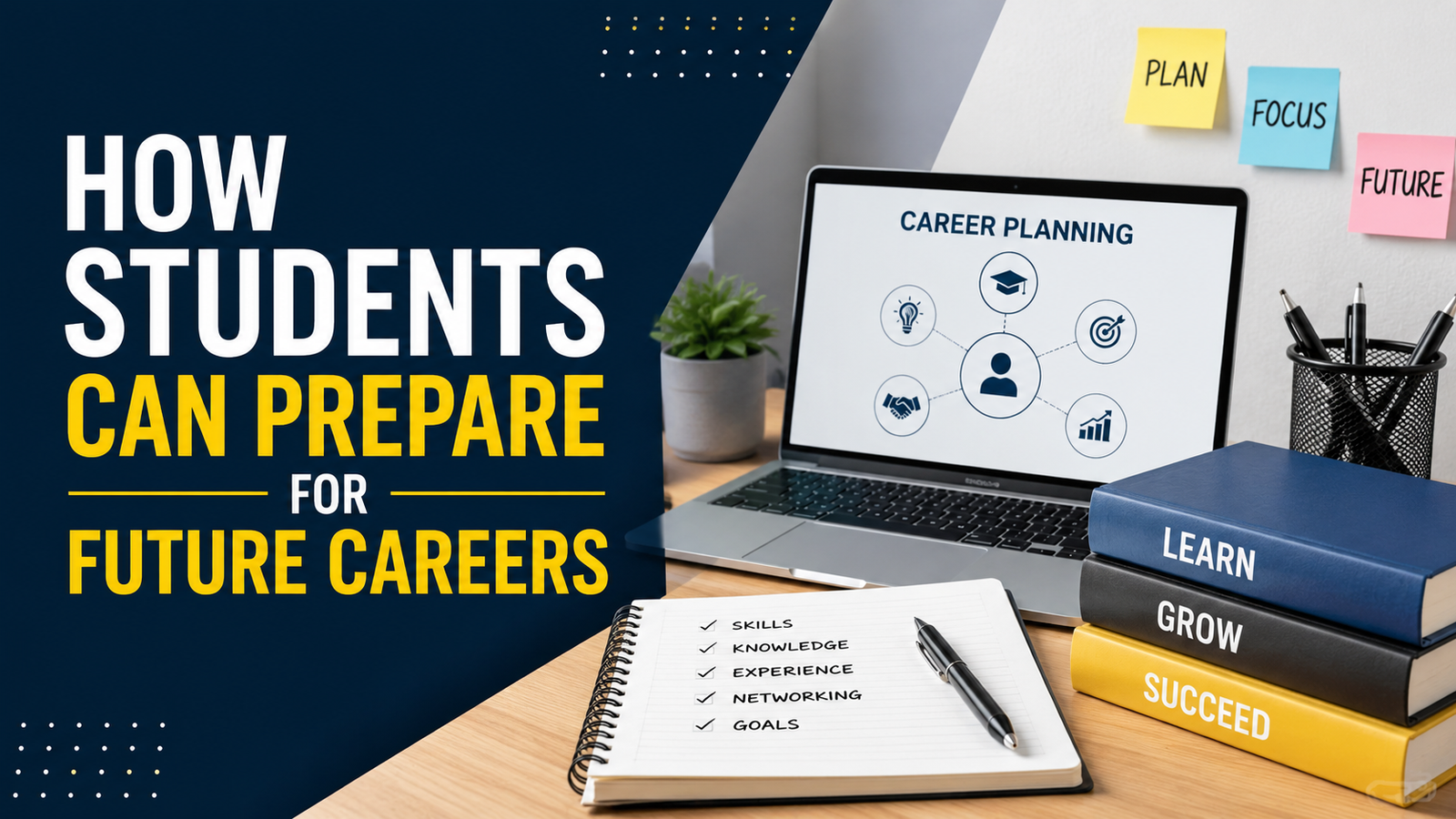
Preparing for a successful career starts long before graduation. As technology transforms industries and employers seek future-ready professionals, students need more than just academic excellence to stand out. Developing essential skills, gaining practical experience, embracing digital literacy, and adopting a lifelong learning mindset can significantly improve career prospects. This blog explores practical strategies students can follow to build a strong foundation for future careers, adapt to changing job markets, and confidently achieve their professional goals.
The world of work is evolving faster than ever before. Rapid advancements in technology, changing business models, and the rise of new industries are transforming the skills employers look for in graduates. While earning good grades remains important, academic success alone is no longer enough to guarantee a rewarding career. Students today need to develop a combination of technical knowledge, practical experience, and essential life skills to thrive in an increasingly competitive job market.
Career preparation should begin long before graduation. By exploring interests, building relevant skills, and gaining hands-on experience during school or college, students can make informed career decisions and confidently step into the professional world. The earlier students start preparing, the better positioned they are to seize opportunities and adapt to future challenges.
In this guide, we'll explore practical strategies that can help students prepare for successful careers in the modern workforce.
Before preparing for a career, students need to understand how the job market is changing. Many traditional jobs are evolving, while entirely new roles are emerging due to technological innovation.
Industries such as artificial intelligence, data science, cybersecurity, renewable energy, healthcare technology, digital marketing, robotics, cloud computing, and sustainability continue to create exciting career opportunities. Employers are increasingly looking for professionals who can adapt to change, learn new technologies, and solve complex problems.
Rather than preparing for just one specific profession, students should focus on becoming adaptable learners. Career paths today are rarely linear, and professionals often switch roles or industries several times throughout their careers. Building transferable skills allows students to remain relevant regardless of how industries evolve.
Academic learning remains the cornerstone of career success. Subjects like mathematics, science, language, and social studies provide the analytical and communication skills needed across almost every profession.
Students should strive to understand concepts rather than simply memorize information for examinations. Developing critical thinking, logical reasoning, and problem-solving abilities enables them to approach real-world challenges confidently.
Equally important is cultivating a mindset of continuous learning. Technology and industries evolve rapidly, making lifelong education essential. Students who enjoy learning and remain curious are better equipped to keep pace with changing workplace demands.
Technical knowledge may help students secure opportunities, but soft skills often determine long-term career success.
Effective communication enables students to express ideas clearly, collaborate with colleagues, and build strong professional relationships. Both written and verbal communication are equally valuable.
Most workplaces require employees to work in teams. Learning to cooperate, respect diverse perspectives, and contribute toward common goals prepares students for collaborative environments.
Leadership isn't limited to management positions. Taking initiative, solving problems, motivating others, and accepting responsibility demonstrate leadership qualities that employers highly value.
Understanding emotions, managing stress, and empathizing with others help students navigate workplace relationships and improve decision-making.
Balancing studies, extracurricular activities, internships, and personal commitments teaches students how to prioritize tasks and meet deadlines effectively.
Career paths rarely unfold exactly as planned. Students who embrace change, recover from setbacks, and continue learning are better prepared for long-term success.
Technology plays a central role in almost every industry today. Students should develop digital competencies beyond basic computer usage.
Key digital skills include:
Learning how to use emerging technologies responsibly gives students a competitive advantage while preparing them for increasingly digital workplaces.
Practical experience bridges the gap between classroom learning and professional expectations.
Internships expose students to real workplace environments, helping them understand industry practices while developing practical skills.
Volunteering builds leadership, teamwork, communication, and social responsibility while allowing students to contribute positively to their communities.
Even jobs outside a student's intended career can teach valuable workplace skills such as customer service, responsibility, punctuality, and teamwork.
Students with skills in writing, graphic design, programming, video editing, or digital marketing can gain professional experience through freelance projects.
Participating in academic competitions, hackathons, science fairs, and entrepreneurship challenges helps students apply theoretical knowledge in practical settings while strengthening their resumes.
Education no longer happens only inside classrooms. Online learning platforms provide students with access to high-quality educational content from industry experts worldwide.
Online certifications allow students to:
Certifications in programming, digital marketing, project management, cloud computing, cybersecurity, business analytics, and design can significantly strengthen a student's profile.
A portfolio showcases a student's abilities beyond academic transcripts.
Students should include:
Maintaining an updated resume and creating a professional online profile helps recruiters evaluate a student's skills more effectively. A well-organized portfolio demonstrates initiative, consistency, and practical experience.
Professional relationships often create valuable career opportunities.
Students can build networks by:
Networking allows students to learn from experienced professionals, receive career guidance, discover internships, and stay informed about industry developments.
Financial literacy is an essential life skill that prepares students for responsible career planning.
Students should understand:
Learning financial management early enables students to make informed career and lifestyle decisions.
Strong communication skills open doors across industries and leadership positions.
Students should continuously improve:
Speaking confidently before audiences builds self-confidence and leadership abilities.
Professional emails, reports, proposals, and documentation require clear and effective writing.
Presenting ideas using visual aids helps students communicate complex concepts effectively.
Knowing multiple languages can create international career opportunities while improving cross-cultural communication.
Students who establish clear goals often make better educational and career decisions.
Career planning should involve:
Career goals may evolve over time, and that's perfectly normal. Regular self-assessment helps students stay aligned with their changing interests and industry trends.
Learning doesn't end after graduation. Successful professionals continuously upgrade their knowledge throughout their careers.
Students should develop habits such as:
A commitment to lifelong learning ensures students remain competitive in a constantly changing job market.
Career success depends not only on professional skills but also on personal well-being.
Students should prioritize:
Healthy students are more productive, focused, resilient, and better prepared to handle academic and professional challenges.
Many students unintentionally delay career preparation. Avoiding these common mistakes can make a significant difference.
Career planning should begin during school or college rather than after completing a degree.
Excellent technical knowledge alone isn't enough. Communication, teamwork, and adaptability are equally important.
Employers increasingly value practical experience, certifications, and extracurricular achievements alongside academic performance.
Real-world experience strengthens resumes and provides valuable workplace exposure.
Networking creates opportunities for mentorship, internships, collaborations, and future employment.
Students can begin preparing for future careers today by following this practical checklist:
Preparing for a successful career is no longer something students should postpone until graduation. In today's rapidly changing world, career readiness involves much more than earning good grades. Students must develop technical expertise, strengthen soft skills, embrace digital technologies, gain practical experience, and remain committed to lifelong learning.
The most successful professionals are those who continuously adapt, learn, and grow throughout their careers. By taking small but consistent steps today—whether learning a new skill, completing an internship, networking with professionals, or building a personal portfolio—students can create a strong foundation for long-term success.
The future belongs to learners who are curious, adaptable, and proactive. Start preparing today, stay committed to your goals, and remember that every new skill and experience brings you one step closer to a fulfilling and successful career.
