

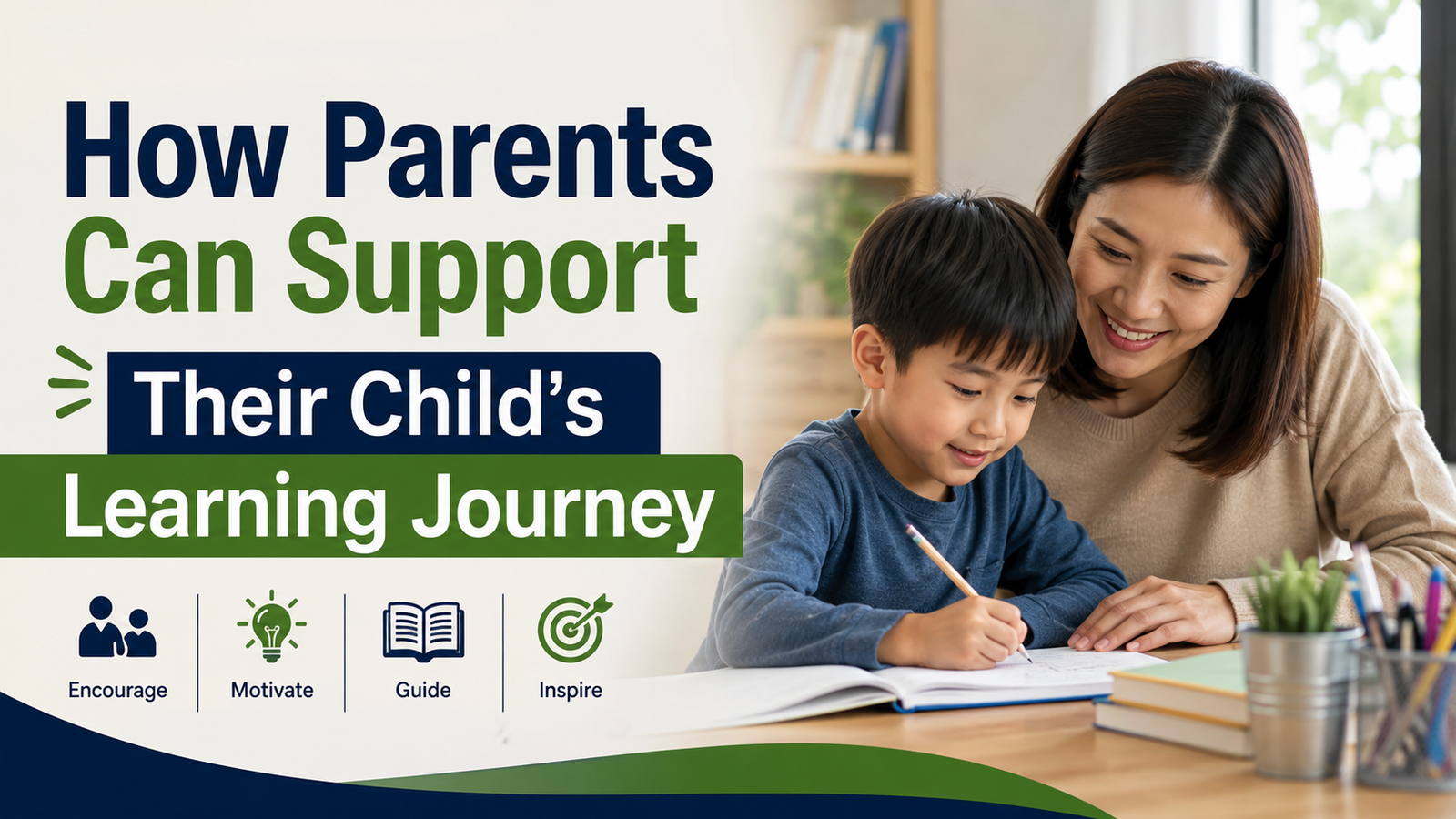
Parents play a vital role in shaping their child's educational journey. Beyond helping with homework, their encouragement, guidance, and involvement can foster confidence, curiosity, and a lifelong love for learning. From creating a positive study environment at home to building healthy study habits and supporting emotional well-being, small, consistent efforts can make a lasting impact. In this blog, discover practical strategies that empower parents to become active partners in their child's academic success and personal growth.
Every child embarks on a unique learning journey, shaped by their personality, interests, abilities, and experiences. While schools and teachers play a crucial role in education, parents are a child's first and most influential educators. The encouragement, guidance, and support children receive at home significantly impact their academic success, emotional well-being, and lifelong love for learning.
In today's rapidly evolving educational landscape, parental involvement extends beyond helping with homework. Parents are now partners in fostering critical thinking, creativity, resilience, and independent learning skills. By creating a supportive environment and maintaining open communication, parents can empower their children to reach their full potential.
In this blog, we'll explore practical ways parents can actively support their child's learning journey—from understanding learning styles and building healthy study habits to nurturing emotional well-being and partnering with teachers.
Every child learns differently. Recognizing your child's preferred learning style allows you to provide support that matches their natural strengths.
Visual learners absorb information best through images, diagrams, charts, videos, and colorful notes. Parents can use flashcards, mind maps, and educational videos to make learning more engaging.
Children who learn by listening benefit from discussions, storytelling, podcasts, and verbal explanations. Reading aloud together or encouraging them to explain concepts in their own words can reinforce understanding.
These children enjoy books, note-taking, journaling, and written instructions. Providing access to books and encouraging regular writing activities can strengthen their learning.
Hands-on learners understand concepts through movement and practical experiences. Science experiments, building projects, role-playing, and educational games are excellent learning tools for these children.
Beyond learning styles, parents should observe their child's strengths and areas where they need additional support. Rather than expecting every child to excel in the same way, adapt your guidance to meet their individual needs.
A supportive home environment lays the foundation for successful learning.
Start by creating a dedicated study area that is comfortable, organized, and free from unnecessary distractions. The space doesn't need to be large or expensive—it simply needs to help your child focus.
Ensure that basic learning materials such as notebooks, pencils, internet access (where possible), and reference books are readily available. Keeping everything organized reduces stress and saves valuable study time.
Establishing a consistent daily routine is equally important. Designate regular times for homework, reading, breaks, and relaxation. Predictable schedules help children develop discipline and manage their time more effectively.
Parents can also reduce distractions by limiting television, unnecessary mobile phone usage, and excessive background noise during study hours.
Learning becomes meaningful when children are genuinely curious.
Instead of simply asking, "How was school today?" encourage deeper conversations by asking open-ended questions like:
These questions stimulate critical thinking and encourage children to reflect on their learning experiences.
Developing strong reading habits is another powerful way to nurture curiosity. Reading together, visiting libraries, and allowing children to choose books that match their interests can significantly improve language skills and imagination.
Educational games, puzzles, science kits, coding activities, and creative projects make learning enjoyable while strengthening problem-solving skills.
Parents should also encourage hobbies such as music, painting, sports, gardening, or robotics. These activities help children discover new talents and develop confidence beyond academics.
Strong study habits are developed over time through consistency rather than pressure.
Help your child set realistic academic goals that are achievable and measurable. Instead of aiming to "get better at math," encourage goals like "complete five practice problems every day."
Teach effective time management by breaking homework into manageable sections with short breaks in between. Large assignments become less overwhelming when divided into smaller tasks.
Encourage your child to use planners, calendars, or checklists to stay organized and remember deadlines.
Most importantly, emphasize understanding over memorization. Encourage children to ask questions whenever they don't understand something instead of simply trying to complete assignments quickly.
Supporting your child does not mean completing their work for them.
Parents should guide children through challenges rather than solving every problem. When your child struggles with an assignment, ask questions that help them think independently instead of immediately providing answers.
For example, instead of saying, "Here's the correct answer," try asking:
This approach develops confidence, critical thinking, and resilience.
Celebrate effort as much as achievement. Praise persistence, improvement, and willingness to learn rather than focusing solely on grades or test scores.
Children perform better academically when they feel emotionally supported.
Create opportunities for daily conversations about school, friendships, successes, and challenges. Listen carefully without interrupting or judging.
When children know they can openly discuss their concerns, they become more comfortable seeking help before problems become overwhelming.
Encourage them to express both positive and negative emotions. Let them know that making mistakes is a normal part of learning and growth.
Strong communication builds trust, strengthens relationships, and creates a safe environment where children feel valued and understood.
Parents and teachers share the common goal of helping children succeed.
Attend parent-teacher meetings whenever possible and stay informed about classroom expectations, assignments, and academic progress.
If concerns arise regarding academic performance, behavior, or emotional well-being, communicate with teachers early rather than waiting until problems escalate.
Parents can reinforce classroom learning at home by reviewing concepts, discussing school projects, and encouraging positive attitudes toward education.
A collaborative relationship between home and school creates a stronger support system for every child.
Academic success is closely connected to emotional health.
Children experiencing stress, anxiety, or burnout often struggle to concentrate and perform at their best.
Parents should watch for warning signs such as:
Encourage healthy routines that include sufficient sleep, balanced nutrition, regular physical activity, and opportunities for relaxation.
Teach resilience by helping children understand that setbacks are temporary and provide valuable learning experiences. Instead of fearing failure, children should learn to view challenges as opportunities for growth.
Technology has transformed education, offering access to countless learning opportunities.
Parents can introduce educational apps, interactive learning platforms, online libraries, and virtual learning resources that support classroom instruction.
However, balance is essential.
Establish healthy screen-time limits and encourage breaks from digital devices. Monitor online activity to ensure children use the internet safely and responsibly.
Teach digital citizenship by discussing respectful online behavior, privacy, and responsible use of technology.
When used thoughtfully, technology becomes a valuable learning tool rather than a distraction.
Children who believe they can improve through effort are more likely to persevere through challenges.
Instead of praising intelligence alone, recognize qualities such as determination, curiosity, creativity, and hard work.
For example, replace:
"You are so smart."
with:
"I'm proud of how hard you worked to solve that problem."
Encourage children to see mistakes as valuable learning opportunities rather than failures.
Parents can model lifelong learning by reading books, learning new skills, or sharing their own experiences of overcoming challenges. Children often develop attitudes toward learning by observing the adults around them.
Every achievement, no matter how small, deserves recognition.
Celebrate improvements such as completing a difficult project, improving reading skills, mastering multiplication tables, or becoming more organized.
Simple rewards like words of encouragement, family celebrations, certificates, or extra playtime can motivate children without creating unhealthy competition.
Regularly reflect on progress together by discussing what has improved and identifying new goals for continued growth.
Celebrating progress builds confidence and encourages children to stay motivated throughout their educational journey.
Even with the best intentions, some parenting habits can unintentionally hinder learning.
Avoid comparing your child with siblings, classmates, or relatives. Every child develops at their own pace and possesses different strengths.
Excessive academic pressure may increase anxiety and reduce motivation. Encourage excellence while maintaining realistic expectations.
Over-scheduling extracurricular activities can leave little time for rest, family interaction, or independent play.
Parents should also avoid focusing exclusively on grades. Academic scores are important, but qualities such as curiosity, creativity, kindness, resilience, and problem-solving are equally valuable for long-term success.
Finally, never overlook your child's emotional needs. A happy, confident child is more likely to become an engaged learner.
Young children learn best through play and exploration.
Read stories together every day, sing songs, build routines, encourage imaginative play, and introduce simple educational games that develop language, motor, and social skills.
As children begin formal education, establish homework routines and encourage regular reading.
Help them organize school materials, teach responsibility by assigning small household tasks, and celebrate their growing independence.
Older students benefit from increased independence balanced with parental support.
Encourage them to set personal goals, explore career interests, develop effective study strategies, and manage their own schedules.
Offer guidance during exam preparation while avoiding unnecessary pressure. Emotional support often becomes just as important as academic assistance during adolescence.
Every child's learning journey is unique, and there is no single formula for success. What matters most is consistent encouragement, understanding, and a genuine interest in your child's growth.
Parents don't need to have all the answers or become professional teachers. Simply providing a supportive home environment, encouraging curiosity, maintaining open communication, and celebrating progress can make an extraordinary difference in a child's educational experience.
Remember, learning is not just about achieving high grades—it's about developing confidence, resilience, creativity, and a lifelong passion for discovering new ideas. By becoming an active partner in your child's education, you are helping shape not only their academic future but also the skills and mindset they will carry throughout life.
