

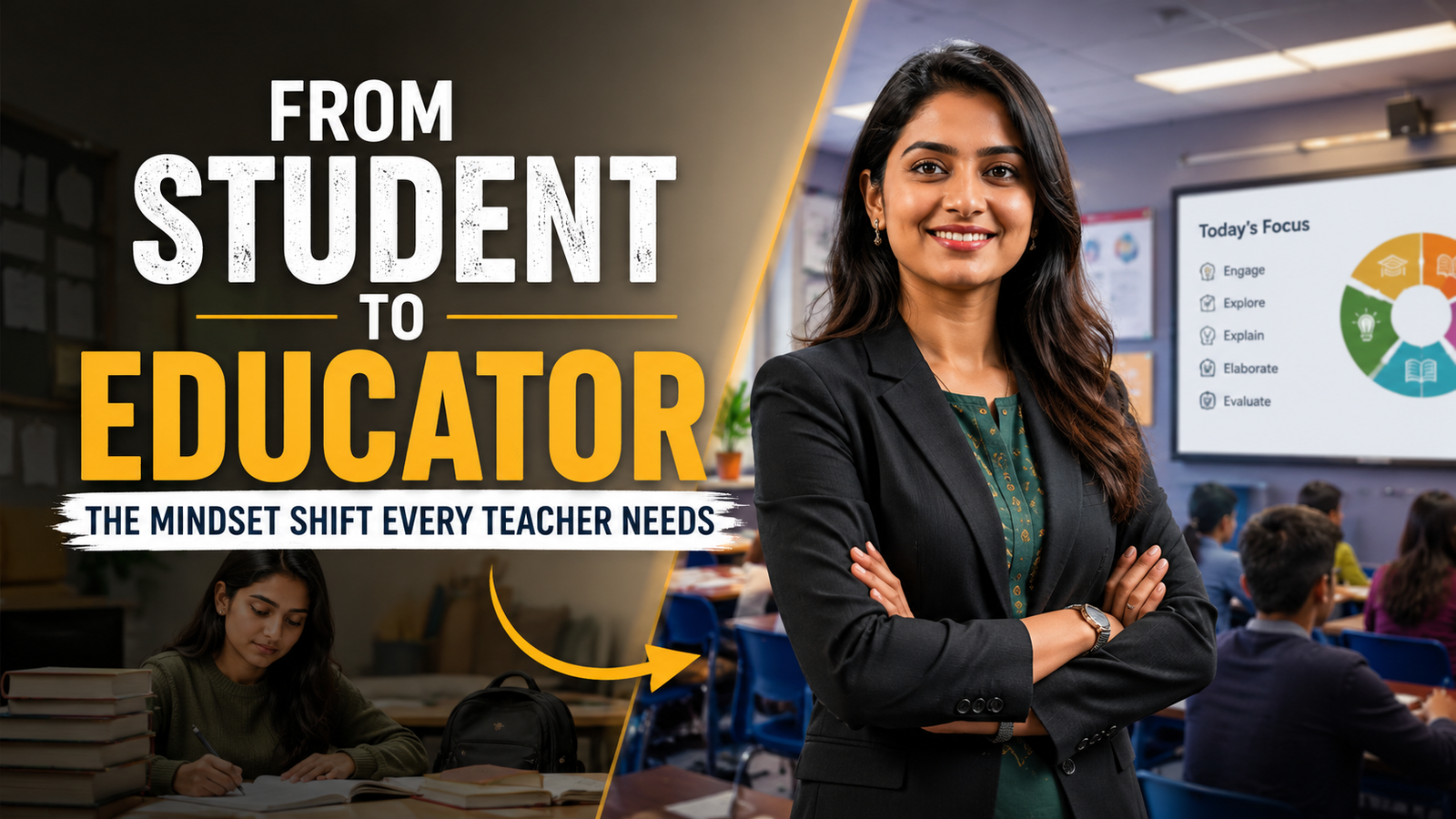
Teaching is more than delivering lessons—it is a transformation from focusing on personal success to guiding the growth of others. This blog explores the essential mindset shift every teacher must make when transitioning from student life to becoming an educator. From emotional intelligence and classroom leadership to adaptability and lifelong learning, discover how great teachers inspire, mentor, and shape future generations beyond textbooks and exams.
Becoming a teacher is more than earning a degree or mastering a subject. It is a journey of transformation—a shift from focusing on personal success to shaping the growth and future of others. While students spend years learning information, educators dedicate their lives to guiding, inspiring, and empowering learners.
The transition from student to teacher is not automatic. It requires a complete change in mindset, attitude, communication, and responsibility. Subject knowledge is important, but mindset is what truly defines a great educator.
“A great teacher is not someone who stops learning—but someone who learns how to guide others.”
In today’s rapidly changing education system, teachers are expected to be mentors, leaders, motivators, and lifelong learners. Understanding this transformation is the first step toward becoming an impactful educator.
As students, most individuals are naturally focused on their own development and achievements. Their priorities often include:
Students usually operate within a structured environment where teachers guide them, solve their doubts, and evaluate their progress. Their responsibility is limited primarily to their own performance.
However, entering the teaching profession changes everything.
New educators often struggle because they unknowingly carry the “student mindset” into the classroom. They may focus too much on delivering information instead of ensuring understanding. They may expect students to learn exactly the way they did, without realizing that every learner is different.
This transition can feel overwhelming because teaching demands emotional maturity, patience, leadership, and adaptability—qualities that are rarely developed fully during student life.
One of the biggest mindset shifts teachers must make is moving from:
“What can I learn?”
to
“How can I help others learn?”
Teaching is not simply explaining chapters or completing a syllabus. It is about helping students discover their potential and develop confidence in themselves.
Great educators understand that:
This is where empathy becomes essential.
Teachers must learn to:
An educator is not just an achiever anymore—they become a mentor, guide, and motivator.
Teachers hold tremendous influence over students, both academically and emotionally. Their words, actions, and behavior can shape student confidence, discipline, and even future career choices.
Unlike students, teachers carry responsibilities such as:
Professionalism is one of the most important qualities new educators must develop. Students observe everything—from communication style and body language to punctuality and emotional control.
A teacher’s influence extends beyond the classroom. The values educators demonstrate often become lessons students remember for life.
In modern education, emotional intelligence is just as important as academic knowledge.
Students today face:
Teachers who understand emotions create stronger learning environments.
Emotional intelligence in teaching includes:
Emotionally intelligent teachers know how to motivate struggling students without humiliating them. They build trust, encourage participation, and make students feel respected and heard.
When students feel emotionally safe, they become more engaged, curious, and confident learners.
Every classroom contains students with different learning preferences and abilities.
Some students learn best through:
Modern educators must move beyond traditional “one-size-fits-all” teaching methods.
Effective teachers use:
The goal is not simply to complete the syllabus but to make learning meaningful and engaging.
Teachers who encourage curiosity rather than rote memorization help students develop critical thinking and creativity—skills essential for the future.
Many new teachers enter classrooms believing they must be perfect. They fear making mistakes, losing control, or being judged by students.
But great teaching is not about perfection—it is about growth.
Even experienced educators continue learning through:
Confidence grows with practice.
New teachers should remember:
Self-confidence, combined with a willingness to improve, creates stronger educators over time.
The best teachers remain lifelong learners.
Education is evolving rapidly with:
Teachers who stop learning eventually struggle to connect with modern students.
Today’s educators must continuously improve:
Technology will continue transforming education, but adaptable teachers will always remain valuable.
A teacher who keeps learning inspires students to do the same.
Strong educators develop leadership skills that create discipline, inspiration, and positivity within classrooms.
Classroom presence involves:
Students naturally respond to teachers who display confidence, consistency, and enthusiasm.
Leadership in education does not mean controlling students harshly. Instead, it means guiding students with clarity, fairness, and encouragement.
A teacher’s energy often becomes the emotional atmosphere of the classroom.
Many beginner teachers struggle because they focus on authority instead of connection.
Common mistakes include:
Teaching is not about proving intelligence—it is about helping others succeed.
Students remember teachers who make learning enjoyable, supportive, and inspiring.
Developing the mindset of an educator takes time and consistent effort.
Here are some practical ways new teachers can grow:
Measure success by student understanding and confidence, not personal ego.
Strong communication improves classroom engagement and trust.
Learning from skilled teachers helps develop practical classroom strategies.
Constructive feedback is essential for professional growth.
The best educators continue learning throughout their careers.
The future of education is changing rapidly.
Teachers are no longer seen only as knowledge providers. They are becoming:
Technology and AI will support teachers by automating repetitive tasks and improving access to learning resources. However, human connection, empathy, and inspiration can never be replaced by machines.
Students may learn information online, but they still need educators who:
The human side of teaching will always remain essential.
The journey from student to educator is not simply a career change—it is a mindset transformation.
Great teachers combine:
Becoming an educator means learning how to guide others, inspire confidence, and create meaningful impact in students’ lives.
The most successful teachers are not those who know everything, but those who continuously learn while helping others grow.
“Students remember lessons for a while, but they remember inspiring teachers for life.”
