

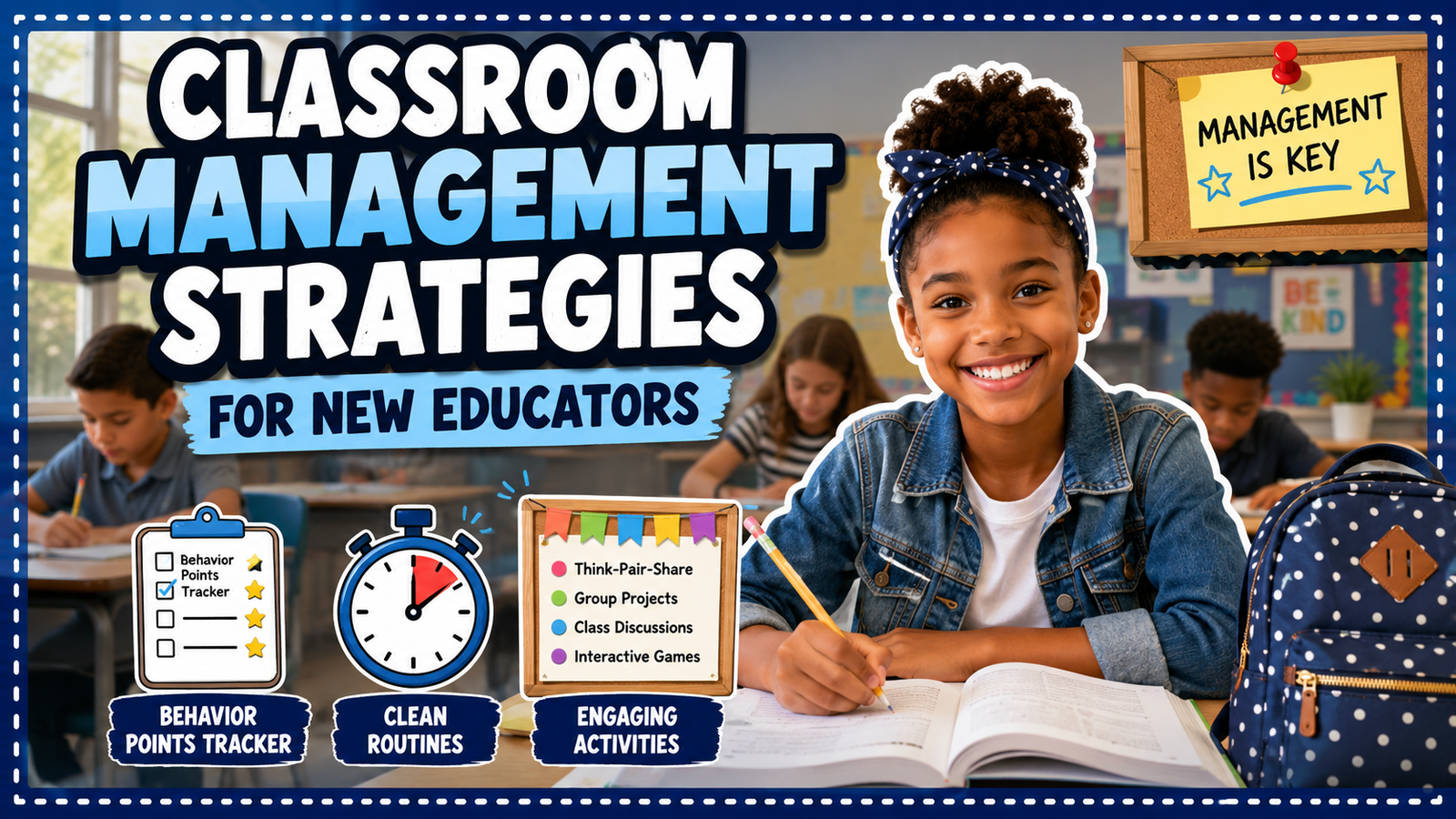
Effective classroom management is the foundation of successful teaching, especially for new educators entering the profession. By establishing clear expectations, building positive relationships, creating engaging lessons, and maintaining consistent routines, teachers can foster a productive learning environment where students feel supported and motivated to succeed. This guide explores practical classroom management strategies that help new teachers increase student engagement, reduce disruptions, and build confidence in the classroom.
Stepping into a classroom for the first time as an educator can be both exciting and challenging. While having strong subject knowledge is important, managing a classroom effectively is often what determines whether students thrive academically and socially. Classroom management refers to the techniques and strategies teachers use to maintain a productive, respectful, and engaging learning environment.
For new educators, mastering classroom management is essential because it helps establish order, minimizes disruptions, and creates a positive atmosphere where students can focus on learning. Research and experience consistently show that a well-managed classroom contributes significantly to student success, engagement, and overall academic achievement.
This article explores practical classroom management strategies that can help new educators build confidence, foster positive relationships, and create an environment where every student can succeed.
Classroom management is the process of organizing classroom activities, maintaining student behaviour, and creating conditions that support effective learning. It involves much more than handling discipline issues; it encompasses the overall structure and culture of the classroom.
Many new teachers mistakenly associate classroom management solely with discipline. However, discipline focuses on correcting inappropriate behaviour, while classroom management is proactive and aims to prevent problems before they occur.
Effective classroom management offers numerous benefits, including increased student engagement, improved academic performance, stronger teacher-student relationships, and reduced stress for educators. Nevertheless, new teachers often face challenges such as managing diverse learning needs, addressing behavioural issues, and establishing authority while maintaining positive relationships with students.
Classroom management serves as the foundation for successful teaching and learning. When students understand expectations and feel safe in their environment, they are more likely to participate actively and stay focused on learning tasks.
A well-managed classroom promotes a positive learning atmosphere where students feel respected and supported. It reduces disruptions and behavioural issues, allowing teachers to maximize instructional time. Effective management also encourages academic achievement by helping students remain engaged and motivated.
For new educators, successful classroom management builds confidence and creates a sense of control that makes teaching more enjoyable and rewarding.
One of the most effective classroom management strategies is establishing clear rules and expectations from the very beginning of the school year.
Students need to understand what behaviours are acceptable and what is expected of them. Classroom rules should be simple, specific, and easy to remember. Examples include respecting others, arriving prepared, following instructions, and participating actively.
Involving students in the creation of classroom rules can increase their sense of ownership and responsibility. When students contribute to establishing expectations, they are often more likely to follow them.
Consistency is equally important. Teachers should enforce rules fairly and consistently to maintain credibility and ensure students understand the importance of classroom expectations.
Strong teacher-student relationships are at the heart of effective classroom management. Students are more likely to respect and cooperate with teachers who show genuine interest in their well-being and success.
New educators should make an effort to learn students' names, interests, strengths, and challenges. Taking time to connect with students on a personal level helps build trust and mutual respect.
Encouraging open communication also creates a supportive environment where students feel comfortable sharing concerns and asking questions. An inclusive classroom culture that values diversity and promotes belonging can significantly improve student behavior and engagement.
Communication is a critical component of classroom management. Teachers must communicate expectations, instructions, and feedback clearly and effectively.
Giving concise directions helps prevent confusion and ensures students understand tasks and responsibilities. Positive language can encourage cooperation and reduce resistance. For example, saying "Please walk quietly" is often more effective than saying "Don't run."
Active listening is equally important. Teachers who listen attentively demonstrate respect and gain valuable insights into students' needs and perspectives.
Non-verbal communication, including facial expressions, gestures, eye contact, and classroom presence, also plays a powerful role in maintaining order and engagement.
Student engagement is one of the best forms of behaviour management. When students are actively involved in learning, they are less likely to become distracted or disruptive.
New educators should design lessons that encourage participation through discussions, collaborative activities, hands-on projects, and problem-solving exercises. Incorporating real-world examples can make learning more meaningful and relevant.
Differentiated instruction is another valuable strategy. By adapting lessons to accommodate different learning styles and abilities, teachers can ensure that all students remain challenged and engaged.
Predictability helps students feel secure and understand what is expected throughout the school day. Establishing routines and procedures can significantly reduce confusion and disruptions.
Teachers should clearly define procedures for entering the classroom, submitting assignments, transitioning between activities, and seeking assistance. Practicing these routines early in the school year helps students develop positive habits.
Consistent routines improve efficiency, reduce downtime, and allow teachers to focus more on instruction rather than behavior correction.
Positive reinforcement encourages desired behaviours by recognizing and rewarding student efforts and achievements.
Simple forms of recognition, such as verbal praise, positive notes, certificates, or classroom privileges, can motivate students to continue demonstrating appropriate behaviour.
Effective reinforcement focuses on specific actions rather than general compliments. For example, saying "I appreciate how you worked quietly during group time" provides clear feedback and reinforces expectations.
While praise is important, teachers should balance encouragement with accountability to maintain high standards and support student growth.
Even in well-managed classrooms, disruptive behaviors occasionally occur. The key is to address issues calmly, consistently, and professionally.
Teachers should first seek to understand the root causes of disruptive behavior, which may include frustration, boredom, personal challenges, or unmet learning needs.
Preventive strategies such as engaging instruction, clear expectations, and positive relationships can reduce many behavioral problems before they arise. When intervention is necessary, teachers should focus on correcting behavior rather than criticizing the student.
In cases of persistent or serious concerns, collaboration with parents, counselors, or administrators may be necessary to provide additional support.
Technology can be a valuable classroom management tool when used effectively. Digital platforms can help streamline attendance, assignment tracking, communication, and student engagement.
Educational apps and learning management systems can support organization and facilitate interactive learning experiences. However, teachers must establish clear guidelines for device usage to minimize distractions.
By balancing technology with instructional goals, educators can enhance learning while maintaining classroom control and focus.
Empowering students to take responsibility for their learning and behavior promotes independence and self-discipline.
Teachers can encourage ownership by involving students in goal-setting, self-assessment, and classroom decision-making. Assigning leadership roles, such as classroom helpers or group leaders, can further develop responsibility.
When students understand that their actions contribute to the success of the classroom community, they become more accountable and engaged.
New teachers often learn valuable lessons through experience. A few practical tips can help ease the transition into the profession:
Classroom management is a skill that develops over time, and continuous learning is an important part of becoming an effective educator.
Many classroom management challenges stem from avoidable mistakes. New educators should be aware of common pitfalls, including:
Applying rules inconsistently can confuse students and undermine teacher authority.
Responding emotionally to small disruptions may escalate situations unnecessarily.
Poor planning often leads to student disengagement and behavioral problems.
Focusing only on negative actions can reduce student motivation and morale.
Strong relationships are essential for creating trust, respect, and cooperation.
Recognizing and avoiding these mistakes can help teachers create a more positive and productive learning environment.
Effective classroom management is one of the most important skills new educators can develop. By establishing clear expectations, building positive relationships, communicating effectively, creating engaging lessons, and maintaining consistent routines, teachers can create classrooms where students feel supported and motivated to learn.
Classroom management is not about controlling students—it is about creating an environment that encourages respect, responsibility, and academic success. As new educators gain experience and refine their strategies, they will become more confident and effective in meeting the diverse needs of their students.
With patience, consistency, and a commitment to continuous improvement, every new teacher can build a classroom culture that promotes learning, growth, and success for all students.
