
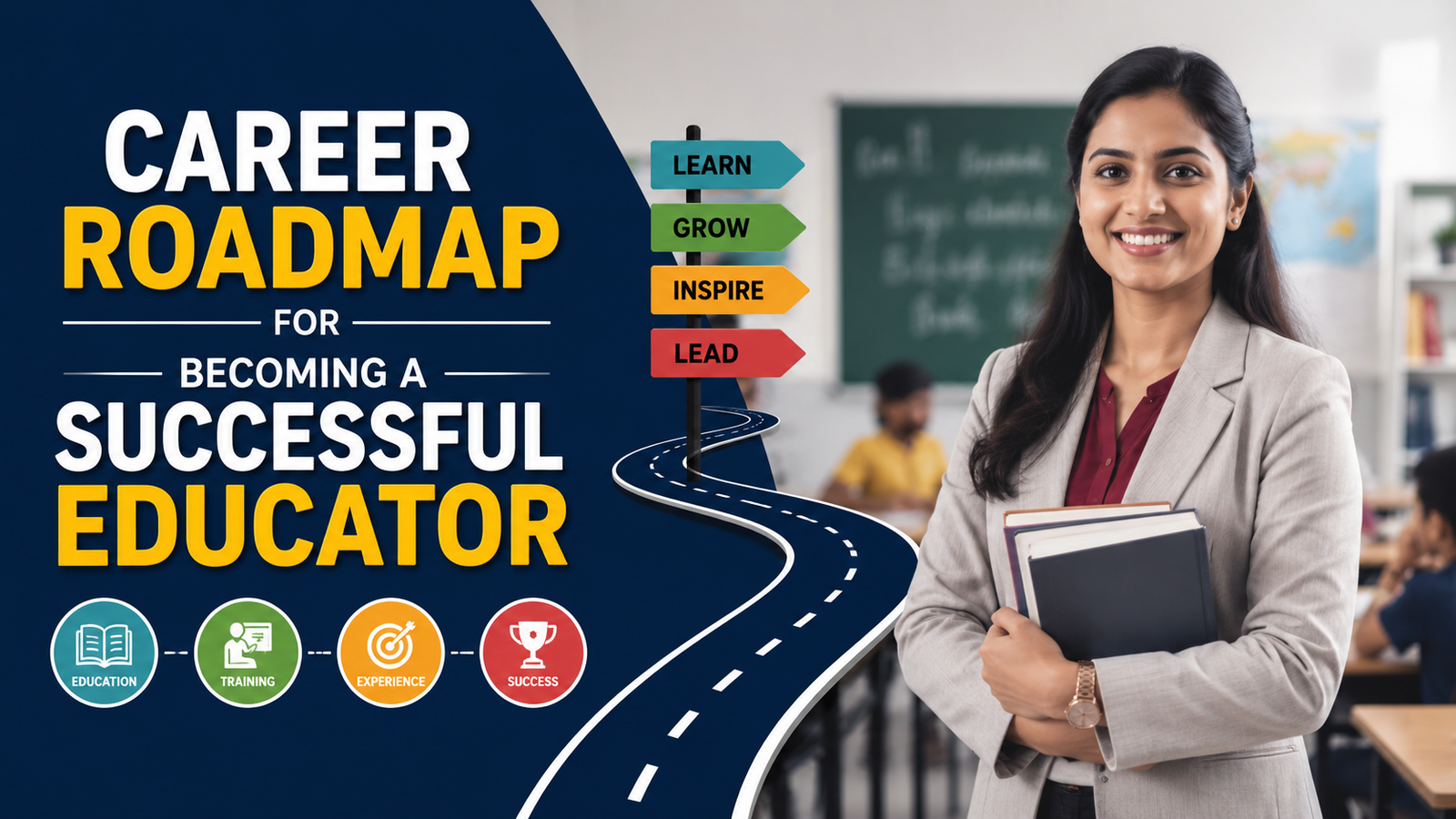
Teaching is more than a profession—it's an opportunity to inspire, guide, and shape the future. As education continues to evolve with digital learning, AI-powered tools, and innovative teaching methods, the demand for skilled and adaptable educators has never been greater. Whether you're an aspiring teacher, a recent graduate, or a professional looking to transition into education, having a clear career roadmap can help you build a rewarding and impactful career. In this guide, we'll walk you through every stage of becoming a successful educator—from choosing the right qualifications and developing essential teaching skills to gaining practical experience, earning certifications, embracing modern educational technologies, and advancing your career. Follow this step-by-step roadmap to confidently navigate your journey and become an educator who inspires lifelong learning and makes a lasting difference in students' lives.
Teaching is far more than a profession—it is a lifelong commitment to shaping minds, inspiring curiosity, and empowering future generations. Every successful doctor, engineer, entrepreneur, artist, or scientist has likely been influenced by an educator who helped them discover their potential. In today's rapidly evolving world, educators are no longer limited to traditional classrooms. They serve as mentors, facilitators, innovators, and lifelong learners who adapt to new technologies and changing educational needs.
The demand for qualified educators continues to grow as schools, universities, online learning platforms, corporate training organizations, and educational institutions seek professionals capable of delivering engaging and meaningful learning experiences. Digital transformation, personalized learning, and artificial intelligence have further expanded opportunities for educators worldwide.
Whether you are a student considering teaching as a career, a graduate planning your professional journey, or someone looking to transition into education, having a clear roadmap can make the process smoother and more rewarding.
In this comprehensive guide, you'll learn the essential qualifications, skills, certifications, career opportunities, and professional development strategies required to build a successful and fulfilling career as an educator.
Choosing education as a profession offers numerous personal and professional rewards.
One of the greatest advantages of becoming an educator is the opportunity to make a meaningful difference in people's lives. Helping students overcome challenges, achieve academic success, and develop confidence provides immense personal satisfaction.
Education remains one of the most stable career sectors globally. Schools, colleges, universities, vocational institutes, and online education companies consistently require qualified educators, offering long-term career security.
Educators play a vital role in shaping future generations. Beyond academic knowledge, they help students develop ethics, critical thinking, communication skills, and responsible citizenship.
Qualified educators can work in:
With the rise of remote learning, teaching opportunities now extend beyond geographical boundaries.
Before beginning your career journey, it's important to understand what being an educator truly involves.
Modern educators do much more than deliver lectures.
Their responsibilities include:
Depending on your interests and qualifications, you can pursue careers such as:
Each role requires unique skills but shares the common objective of facilitating meaningful learning experiences.
Selecting the appropriate academic pathway is one of the most important steps toward becoming an educator.
The qualifications required depend on the teaching level.
Generally, educators may need:
Many countries require professional teaching licenses or certification exams before educators can teach in public institutions.
These certifications verify that teachers possess the required knowledge, ethics, and instructional skills.
Educators may also specialize in:
Selecting a specialization aligned with your interests can significantly improve your career prospects.
Successful educators combine academic expertise with strong interpersonal and professional skills.
Effective communication enables educators to explain complex concepts clearly while encouraging active classroom participation.
Managing student behavior, maintaining discipline, and creating an inclusive learning environment are essential teaching competencies.
Teachers naturally become leaders who motivate, guide, and inspire students to achieve their goals.
Modern classrooms encourage educators to use storytelling, real-life examples, interactive activities, and project-based learning to increase student engagement.
Technology has become an integral part of education.
Educators should become familiar with:
Understanding students' emotions, learning styles, and personal challenges helps educators create supportive learning environments.
Every classroom presents unique situations requiring quick thinking and effective decision-making.
Strong problem-solving abilities help educators respond confidently to unexpected challenges.
Experience bridges the gap between theory and practice.
Teaching internships allow aspiring educators to observe experienced teachers while practicing classroom instruction.
Many teacher education programs include supervised teaching experiences that build classroom confidence.
Community teaching programs and educational NGOs provide valuable practical exposure.
Private tutoring helps educators strengthen subject knowledge while developing personalized teaching techniques.
Teaching through online platforms enables educators to gain digital teaching experience while building an international student base.
A professional portfolio demonstrates your teaching abilities and achievements.
Include:
A well-organized portfolio increases your credibility during interviews and career advancement opportunities.
Education is continuously evolving.
Successful educators embrace innovation and adapt to emerging trends.
AI-powered tools help personalize learning, automate assessments, and provide instant feedback.
Combining classroom instruction with online learning creates flexible and engaging educational experiences.
Modern educators increasingly use digital tools to enhance collaboration, assessment, and interactive learning.
Recognizing that every learner is unique allows educators to tailor instruction according to individual learning styles and abilities.
Educational games, quizzes, and reward systems increase motivation and student participation.
Encouraging students to solve real-world problems promotes creativity, teamwork, and critical thinking.
Professional certifications enhance your qualifications and demonstrate commitment to continuous improvement.
Examples include:
Benefits include:
Networking plays a crucial role in career growth.
Ways to build your professional network include:
Networking opens doors to collaboration, mentorship, research opportunities, and job referrals.
Learning never stops for successful educators.
Professional development activities include:
Continuous learning ensures educators remain effective in changing educational environments.
The education sector offers diverse career paths.
Some popular options include:
Many educators also become authors, public speakers, education entrepreneurs, or learning experience designers.
Although rewarding, teaching comes with several challenges.
Lesson planning, grading, meetings, and administrative responsibilities can become demanding.
Students possess varying learning abilities, cultural backgrounds, and educational needs.
Keeping up with rapidly evolving educational technology requires continuous learning.
Maintaining student motivation remains one of the biggest teaching challenges.
Balancing professional responsibilities with personal well-being requires effective time management.
Successful educators consistently demonstrate the following habits:
Avoid these common pitfalls during your teaching journey:
Learning from these mistakes can significantly accelerate professional growth.
The future of education is exciting and filled with opportunities.
Emerging trends include:
Educators who embrace innovation and adaptability will remain highly valuable in the evolving education sector.
Use this roadmap as your guide toward becoming a successful educator:
Remember, becoming a successful educator is a journey of lifelong learning, dedication, and passion. Every lesson you teach has the potential to inspire, empower, and transform lives.
A successful educator is not defined solely by academic qualifications but by a commitment to lifelong learning, adaptability, empathy, and a genuine passion for helping others succeed. By following a structured career roadmap—building strong foundational knowledge, gaining practical experience, embracing technology, and continuously developing your professional skills—you can create a rewarding career that positively influences countless lives. The education sector continues to evolve, offering exciting opportunities for those who are prepared to grow alongside it. Whether your goal is to teach in a classroom, lead an institution, or educate learners around the world online, your journey begins with a single step toward becoming an inspiring educator.
