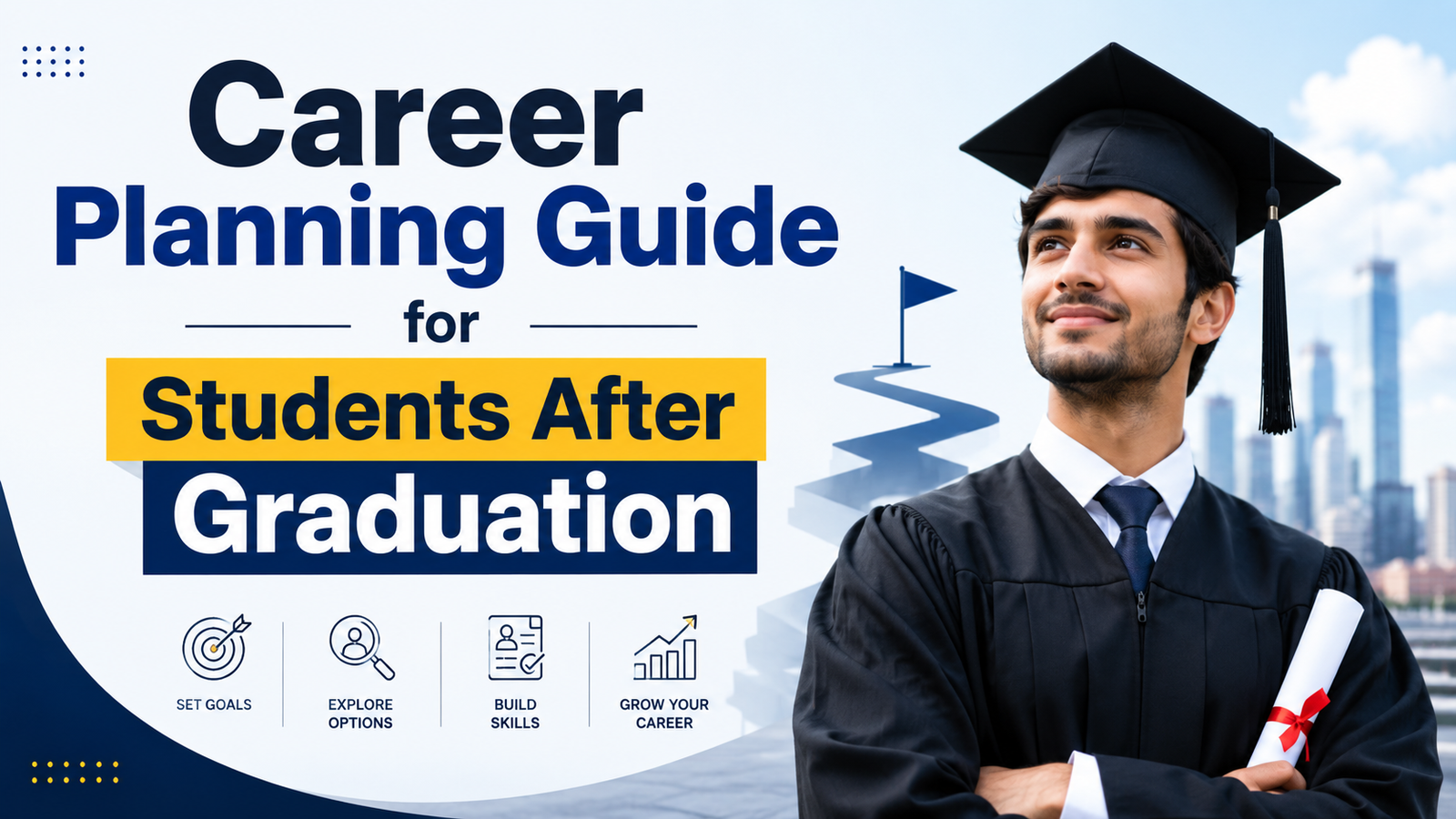
Graduation marks the beginning of an exciting yet challenging journey toward a successful career. With countless opportunities and changing industry demands, students often find it difficult to decide the right career path. This career planning guide helps graduates understand their strengths, explore career options, develop essential skills, build a strong professional profile, and prepare for future opportunities. From self-assessment and skill development to job search strategies and higher education choices, this guide provides practical steps to help students create a clear roadmap for professional success.
Graduation is an exciting milestone that marks the beginning of a new chapter. After years of studying, attending classes, completing assignments, and preparing for exams, students finally enter the professional world. However, this transition from student life to career life can often feel challenging and confusing.
Many graduates struggle with questions like: Which career path should I choose? Should I start working or continue my education? What skills do employers expect? How can I find the right job opportunity?
Without proper planning, students may make career decisions based on trends, pressure from others, or limited information. A well-defined career plan helps graduates understand their goals, identify opportunities, develop necessary skills, and take confident steps toward professional success.
Career planning is not just about finding a job; it is about building a meaningful career that matches your interests, abilities, and long-term aspirations.
The first step in career planning is understanding yourself. Before exploring job opportunities, students should analyze their interests, strengths, skills, and career expectations.
Every individual has unique abilities and preferences. A career that works well for one person may not be suitable for another. Self-assessment helps students make informed decisions rather than following choices made by others.
Start by asking yourself:
Understanding your strengths helps you identify suitable career options, while recognizing weaknesses allows you to focus on improvement.
College education provides more than academic knowledge. Students develop various skills through projects, presentations, teamwork, internships, and extracurricular activities.
These skills may include:
Recognizing these abilities can help graduates present themselves effectively to employers.
Your personality plays an important role in career satisfaction. Some people enjoy creative roles, while others prefer analytical, research-oriented, or leadership positions.
Consider:
A career decision should not only focus on immediate opportunities. Think about where you want to be in the next five or ten years.
Ask yourself:
After understanding yourself, the next step is exploring available career opportunities.
The job market is constantly changing, and new industries and roles are emerging every year. Students should research different career paths instead of limiting themselves to traditional options.
Your academic background can open multiple career opportunities. For example:
Understanding different possibilities helps students choose a career aligned with their interests.
Some growing career areas include:
Technology has created opportunities in fields such as:
Businesses increasingly require professionals skilled in:
Students interested in innovation and business creation can explore entrepreneurship by developing ideas, building startups, or working with growing companies.
Students passionate about learning and innovation can consider:
Government careers continue to attract students because of stability, social impact, and diverse opportunities.
A degree provides a foundation, but employers often look for practical skills and industry readiness.
Students should compare their current abilities with the skills required in their chosen career field.
Depending on your career choice, technical knowledge may include:
Strong communication helps professionals:
Employers value candidates who can analyze challenges and find practical solutions.
Leadership is useful not only for managers but for anyone who wants to take initiative and grow professionally.
Basic understanding of digital tools is essential in almost every modern workplace.
Students can:
Continuous learning increases career opportunities and confidence.
A resume is often the first impression employers have of a candidate. A well-prepared resume highlights your abilities and demonstrates your professional potential.
A good resume should include:
Avoid adding unnecessary information and focus on achievements that show your abilities.
A professional online presence can improve career opportunities.
Students should:
Building a personal brand helps employers understand your skills and interests.
Many employers prefer candidates who have practical exposure along with academic knowledge.
Students can gain experience through:
Internships provide:
Freelancing allows students to:
Practical projects demonstrate your ability to apply knowledge in real situations.
Participating in:
can help students improve skills and meet industry experts.
Finding the right job requires planning and strategy.
Students can explore:
Instead of applying randomly:
Interview preparation should include:
Avoid mistakes such as arriving unprepared, giving unclear answers, or failing to research the company.
For some students, continuing education can improve career opportunities.
Higher education may be useful when:
Options include:
Before choosing further education, consider:
Networking plays an important role in career development. Professional relationships can provide guidance, opportunities, and valuable industry knowledge.
Students can connect through:
A mentor can help students:
Building relationships early can create valuable career opportunities.
Many graduates face challenges because of common career mistakes.
Avoid:
Career decisions should be based on your interests, abilities, and goals.
A degree alone may not be enough. Continuous learning is essential.
Understand the role, company, and required skills before applying.
Every person's career path is different. Focus on your own progress.
Successful professionals continue learning throughout their careers.
A structured plan helps students stay focused.
Focus on:
Work on:
Focus on:
Graduation is not the end of learning; it is the beginning of professional growth. A successful career requires planning, continuous improvement, adaptability, and dedication.
Students who understand their strengths, explore opportunities, develop relevant skills, and create a clear career roadmap can make better decisions about their future.
Remember, career success does not happen overnight. It is built through consistent effort, learning, experience, and informed choices. Start planning today and take confident steps toward building the career you want tomorrow.
