
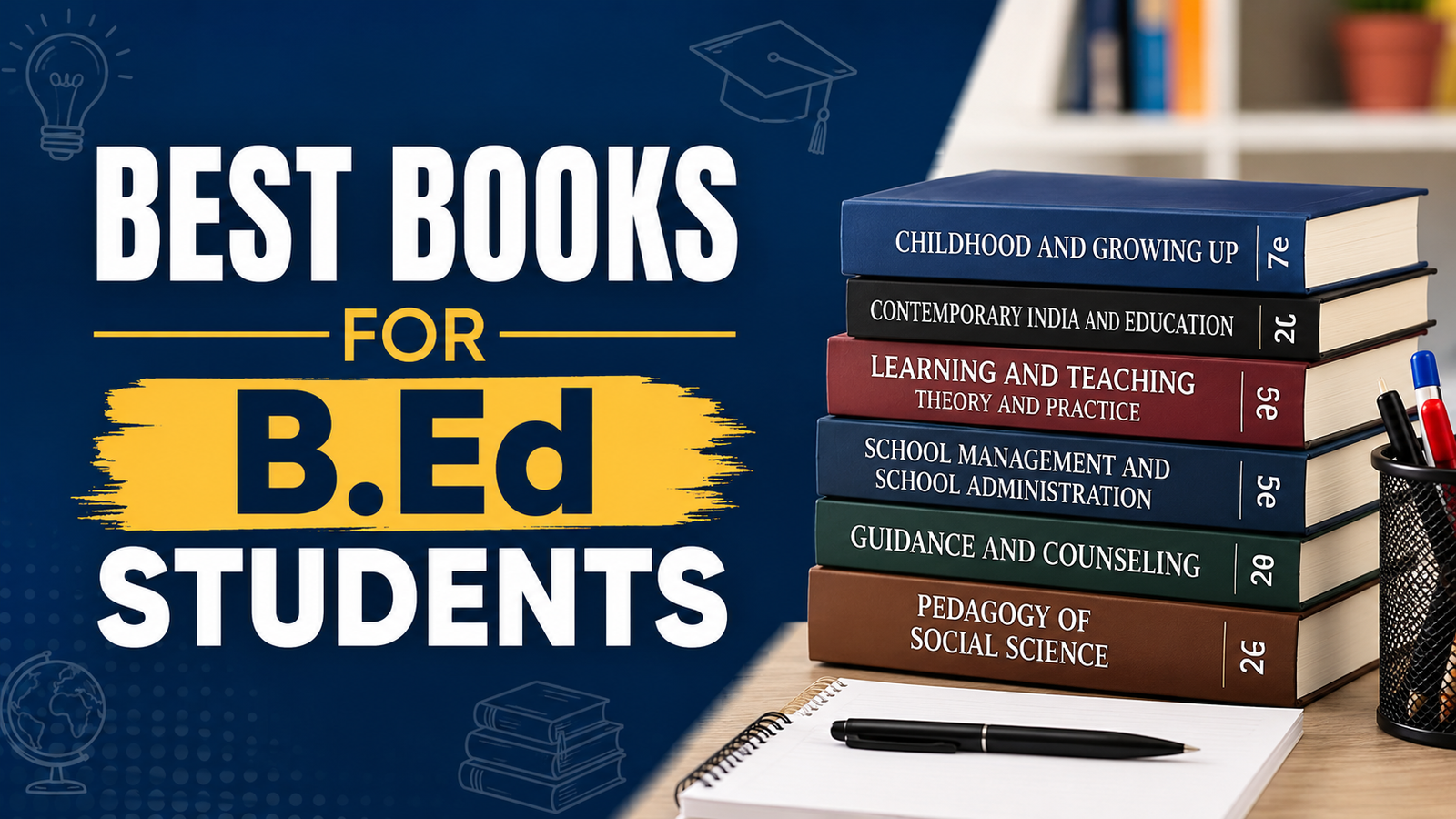
Choosing the right books is one of the most important steps in a successful B.Ed journey. From educational psychology and pedagogy to lesson planning and classroom management, the right study materials help future teachers build strong concepts, perform well in university exams, and prepare for teaching eligibility tests like CTET and TET. This guide highlights the best books for B.Ed students, subject-wise recommendations, exam preparation resources, and practical study tips to help you become a confident and effective educator.
A Bachelor of Education (B.Ed) is more than just a degree—it's the foundation of a successful teaching career. Whether you aspire to become a school teacher, prepare for CTET/TET examinations, or build a long-term career in education, selecting the right books can make a significant difference in your academic and professional journey.
The best B.Ed books not only help you score well in university examinations but also strengthen your understanding of educational psychology, pedagogy, classroom management, lesson planning, and modern teaching methodologies. Quality study materials bridge the gap between theory and practical teaching, enabling future educators to develop confidence and teaching competence.
In this comprehensive guide, we'll explore the best books for B.Ed students, subject-wise recommendations, entrance exam preparation resources, practical teaching books, study tips, and answers to frequently asked questions.
Choosing the right books is essential because they provide a solid academic foundation while preparing you for real classroom situations.
A good B.Ed book explains educational theories, learning principles, and teaching methods in a clear and practical manner. Strong conceptual understanding helps teachers adapt to different classroom environments.
Most universities follow prescribed syllabi, and recommended books cover important topics, previous-year questions, and exam-oriented content.
Educational psychology helps teachers understand children's learning behavior, motivation, intelligence, emotional development, and classroom interactions.
The right books teach classroom discipline, student engagement strategies, inclusive education practices, and effective communication techniques.
Education is constantly evolving. Updated editions include digital learning, activity-based teaching, experiential learning, NEP 2020 concepts, and technology integration.
Before purchasing study material, consider the following factors.
Always choose books based on your university syllabus and the latest curriculum guidelines.
Books written by experienced educationists and renowned academicians provide accurate and reliable content.
A book should explain concepts in simple language with practical examples rather than using overly technical terminology.
Case studies, classroom situations, lesson plans, and teaching activities improve conceptual understanding.
Books containing solved university papers and practice questions help students prepare effectively.
Education policies and teaching methods change regularly. Always buy the latest available edition.
Author: S. K. Mangal
Students studying Educational Psychology and Child Development.
Author: J. C. Aggarwal
Understanding educational philosophy and sociology.
Author: Various university-recommended authors
Understanding effective classroom teaching.
Author: J. C. Aggarwal
Students interested in technology-integrated teaching.
Author: R. P. Singh
Future teachers interested in student welfare.
Learning modern evaluation methods.
Understanding learners from early childhood to adolescence.
Understanding curriculum planning in schools.
Understanding current educational developments in India.
If you're planning to appear for B.Ed entrance examinations, consider books covering multiple subjects.
Focus on teaching methodologies, classroom situations, and educational principles.
Prepare current affairs, Indian education, history, geography, and polity.
Practice logical reasoning, verbal reasoning, and analytical questions.
Improve grammar, comprehension, vocabulary, and sentence correction.
Solving previous papers helps identify question patterns and improves time management.
Mock tests enhance confidence and exam readiness.
Practical teaching is one of the most important aspects of B.Ed.
Useful study materials include:
These resources help students during teaching practice, demonstrations, and internships.
After completing B.Ed, many graduates prepare for teaching eligibility exams.
Recommended study resources include:
Choose books according to your state's syllabus and examination pattern.
Useful for DSSSB, KVS, NVS, and other teaching recruitment exams.
This subject carries significant weight in almost every teaching examination.
Books should be complemented with online learning resources.
Digital books allow students to study anytime and anywhere.
Visit trusted education portals for notes, assignments, and syllabus updates.
Educational channels provide visual explanations, lesson demonstrations, and exam strategies.
Practice tests improve speed, accuracy, and confidence.
Reading educational research keeps future teachers informed about modern teaching practices.
Following a systematic study routine increases productivity.
Allocate dedicated time for each subject every week.
Writing notes improves memory retention and simplifies revision.
Practice regularly to understand exam patterns.
Revision strengthens long-term understanding.
Design lesson plans based on different teaching methods.
Collaborative learning improves understanding and motivation.
Avoid these common errors.
Educational policies and syllabi are updated regularly.
Guidebooks help with exams but should not replace standard textbooks.
Teaching practice, lesson planning, and classroom observation are equally important.
Always verify that your books match your university's prescribed curriculum.
Reference books provide deeper understanding and improve professional knowledge.
Choosing the best books for your B.Ed journey is an investment in your future as an educator. High-quality textbooks help you understand educational theories, master teaching methodologies, excel in university examinations, and prepare confidently for competitive teaching exams such as CTET and State TETs.
Remember, becoming an effective teacher requires more than reading books. Combine your study with classroom observations, lesson planning, internships, teaching practice, online learning resources, and continuous self-improvement. Building a personal library of trusted educational books will support your professional growth long after you complete your B.Ed degree.
Whether you are a first-year B.Ed student or preparing for a teaching career, the right study materials will equip you with the knowledge, skills, and confidence needed to inspire future generations of learners.
