

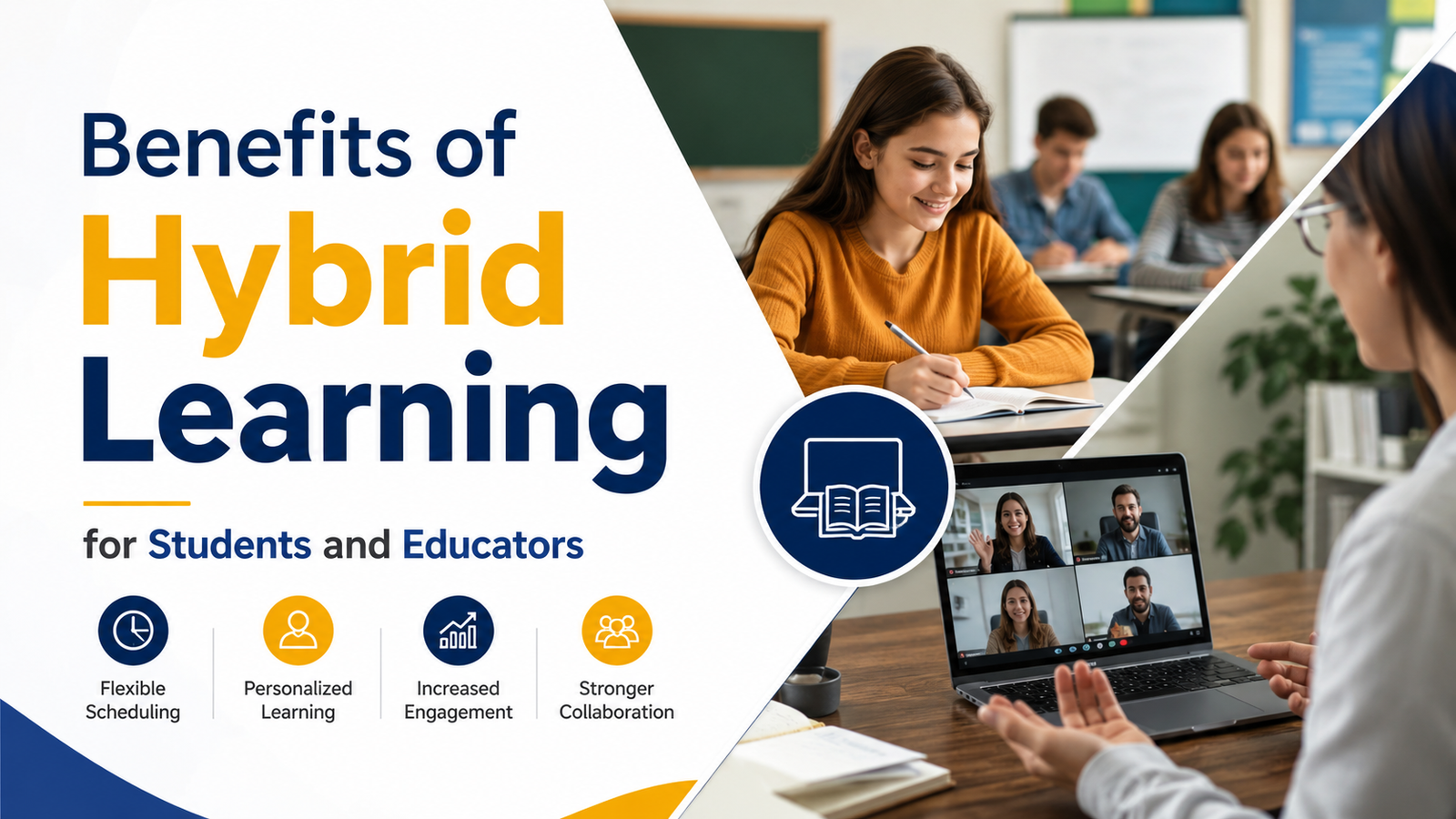
Hybrid learning is transforming the way students learn and educators teach by combining the best of traditional classroom instruction with the flexibility of online education. This modern approach allows learners to access educational resources anytime, personalize their learning experiences, and develop essential digital skills for the future. For educators, hybrid learning provides innovative tools to enhance teaching methods, track student progress, and create more engaging learning environments. As technology continues to shape education, hybrid learning is becoming an effective solution for building a more flexible, inclusive, and student-centered learning experience.
The education landscape has experienced a significant transformation with the integration of technology into traditional teaching methods. One of the most impactful changes is the adoption of hybrid learning, an approach that combines face-to-face classroom instruction with online learning experiences.
Unlike traditional education models that rely entirely on physical classrooms, hybrid learning allows students to benefit from both in-person interaction and digital resources. It creates a flexible learning environment where technology complements the role of teachers rather than replacing them.
With advancements in digital platforms, virtual classrooms, and online educational resources, schools and universities are increasingly adopting hybrid learning models. This approach helps institutions provide more accessible, engaging, and personalized learning experiences while enabling educators to use innovative teaching strategies.
One of the biggest advantages of hybrid learning is the flexibility it provides to students. Learners are no longer limited by fixed classroom schedules or physical locations. They can access study materials, recorded lectures, assignments, and learning resources at a time and place that suits them.
This flexibility allows students to learn at their own pace. Those who need additional time to understand a topic can revisit online lessons, while advanced learners can explore additional resources to expand their knowledge.
Hybrid learning also helps students maintain a better balance between academics and personal responsibilities. Whether managing extracurricular activities, part-time work, or other commitments, students can organize their learning schedules more effectively.
Every student has a unique learning style, pace, and set of academic needs. Hybrid learning supports personalized education by combining teacher guidance with digital learning tools.
Online platforms can provide customized resources, interactive exercises, and adaptive learning materials based on individual student performance. This allows learners to focus on areas where they need improvement while progressing through subjects at a comfortable pace.
Students also gain greater ownership of their education. Instead of being passive recipients of information, they become active participants who can choose resources, explore topics independently, and take responsibility for their learning journey.
Hybrid learning expands access to educational content beyond the traditional classroom. Students can use digital libraries, e-books, recorded lectures, online courses, and interactive learning materials to enhance their understanding of different subjects.
This approach removes geographical barriers and allows students from different locations to access quality education. Learners who may not be able to attend physical classes regularly can continue their studies through online platforms.
Additionally, easy access to resources encourages independent learning and research skills. Students learn how to find reliable information, analyze content, and develop a habit of continuous learning.
Hybrid learning creates multiple opportunities for students to engage with teachers and classmates. Digital tools such as online discussion forums, virtual classrooms, collaborative documents, and interactive quizzes make learning more dynamic.
Students can participate in discussions, share ideas, and collaborate on projects even outside the physical classroom. This promotes teamwork, communication skills, and creative thinking.
By combining classroom interaction with digital collaboration, hybrid learning creates a more engaging educational experience that keeps students actively involved in the learning process.
Technology plays an important role in improving the effectiveness of hybrid education. Digital resources such as videos, simulations, animations, and interactive presentations help explain complex concepts in a more understandable way.
The combination of traditional teaching methods and technology allows students to learn through multiple formats, making lessons more engaging and easier to remember.
Online assessments and learning analytics also help track student progress. Teachers can identify areas where students may be struggling and provide timely support to improve learning outcomes.
Hybrid learning provides educators with new ways to design and deliver lessons. Teachers can combine classroom discussions with digital resources to create more interactive learning experiences.
Educators can use online tools, multimedia content, and virtual activities to make lessons more engaging. This approach encourages creativity and allows teachers to experiment with different teaching strategies.
Digital learning platforms provide valuable insights into student performance. Educators can analyze participation levels, assignment results, and learning patterns to understand student progress.
With this information, teachers can identify learning gaps and provide personalized guidance. Faster feedback helps students improve their understanding and stay motivated.
Hybrid learning can help educators manage their workload more efficiently. Recorded lectures, online resources, and automated assessments can reduce repetitive tasks and allow teachers to focus more on mentoring and supporting students.
By using technology effectively, educators can spend more time creating meaningful learning experiences rather than managing administrative activities.
In today’s technology-driven world, digital skills are essential for academic and professional success. Hybrid learning helps students develop important skills such as digital literacy, time management, self-discipline, communication, and problem-solving.
Students learn how to use online tools, collaborate virtually, and adapt to new technologies. These skills prepare them for modern workplaces where digital communication and remote collaboration are becoming increasingly common.
Hybrid education also encourages lifelong learning by teaching students how to independently find information and continue developing their knowledge beyond formal education.
While hybrid learning offers many benefits, it also comes with certain challenges. Limited access to technology, unreliable internet connections, and lack of digital skills can create barriers for some learners.
Maintaining student motivation and engagement in online learning environments can also be challenging. Students need proper guidance, structured schedules, and support to stay focused.
To overcome these challenges, educational institutions should invest in reliable technology infrastructure, provide digital training for teachers and students, and create a balanced approach that combines the strengths of both online and offline learning.
Hybrid learning represents the future of modern education by combining the personal connection of traditional classrooms with the flexibility and innovation of digital learning.
For students, it offers greater accessibility, personalized learning, and opportunities to develop essential future skills. For educators, it provides powerful tools to improve teaching methods, monitor progress, and create engaging learning experiences.
Rather than replacing traditional classrooms, hybrid learning enhances them by creating a more flexible, inclusive, and technology-enabled education system that meets the evolving needs of learners and educators.
